Trademark Tips for Wellness Coaches Launching a Product Line

Published on November 17, 2026 | Updated on November 20, 2026
Estimated Read Time: 12 minutes

Key Takeaways
- A coaching trademark does not automatically provide registered coverage for new physical products.
- Distinctive business names, program titles, logos, and product brands may qualify for protection.
- Educational coaching, health services, and supplements can fall into different trademark classes.
- A clearance search should examine similar names and related products.
- Intent-to-use applications may be available before a product launch.
- Accurate ownership, product descriptions, and evidence of use are important for registration.
Quick Answer: Trademark protection for wellness coaches can cover business names, signature programs, and product brands. Before launching supplements, journals, or skincare products, check your existing trademark coverage, search for conflicting names, and identify the correct USPTO classes.
Expanding from wellness coaching into physical products can create valuable growth opportunities, but it also raises new trademark questions.
According to the USPTO's April 2026 report, the agency received 431,734 trademark application classes during the first half of fiscal year 2026, a 7% increase from the same period in 2025.
For wellness entrepreneurs, this highlights the importance of researching brand names before investing in packaging or inventory.
Understanding trademark for wellness coaches helps you protect your identity while expanding into supplements, skincare, journals, or educational programs.
This guide explains the decisions to make before launching.
Why Trademark Protection Matters When Your Coaching Business Expands
Trademark protection helps customers identify the source of your services and products. However, federal registration covers the mark in connection with the goods or services identified in the registration.
Imagine a fictional coaching business called Evermora Wellness.
The company provides online fitness workshops and later introduces branded supplements and wellness journals.
Before launching, the owner should review the existing registration to see which offerings it identifies.
This matters because an LLC name, domain, or social media account does not automatically provide federal trademark registration.
Federal registration may offer important legal benefits, including a presumption of ownership and nationwide rights for the covered goods or services, subject to applicable legal limitations.
The USPTO's trademark protection guidance explains these benefits.
Practical tip: Review your existing trademark registration before ordering new product packaging.
If you are still building your brand, Trademark Engine's guide on how to trademark a wellness brand provides additional background.
What Can Wellness Coaches Trademark?
Wellness coaches may seek protection for distinctive business names, logos, program names, and product brands. Each must identify the commercial source of goods or services rather than simply describe an offering.
Coaching Business Names and Logos
A wellness coaching business name trademark helps distinguish one provider from another.
For example, a fictional name such as Evermora may be more distinctive than Professional Wellness Coaching.
The latter directly describes the services, making it potentially harder to register.
A company may also apply to register its logo.
A standard-character application generally protects wording without restricting it to a particular font or design. A special-form application covers the specific design representation submitted.
Because one application covers one mark, protecting a name and a separate logo design may involve different applications.
Signature Programs and Memberships
A trademark coaching program name may qualify when customers recognize it as identifying a service provider.
Examples include:
- A branded mindfulness workshop series
- A recurring fitness education program
- A named nutrition coaching membership
- An ongoing wellness training course
The important distinction is between a brand identifier and a descriptive course title.
A phrase such as Six-Week Wellness Course mainly describes the offering. A distinctive program name may offer stronger trademark possibilities.
The name must function as a trademark, and titles used only for single creative works face additional limitations.
Supplements and Physical Product Brands
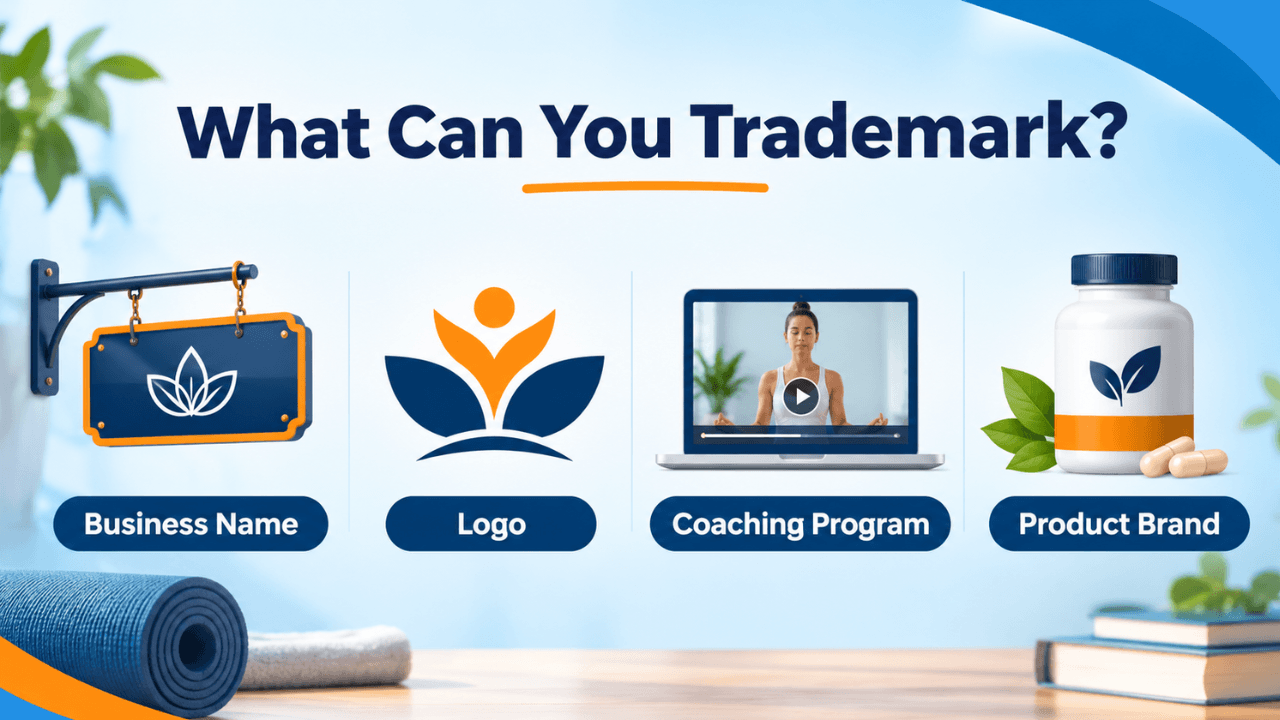
A wellness product line may introduce separate product names under the main business brand.
Suppose Evermora Wellness launches a supplement collection called Evermora Daily.
The company name identifies the overall business, while the collection name may function as an additional trademark.
However, descriptions such as Mint Flavor, Vitamin C, or 60 Capsules generally identify product characteristics rather than independent brands.
Focus on names that customers recognize as identifying who provides the products.
Which Trademark Classes Cover Wellness Coaching and Products?
The appropriate trademark class for a wellness coach depends on the specific goods or services offered.
The USPTO uses 45 international classes to organize trademark applications.
Common Classes for Wellness Businesses
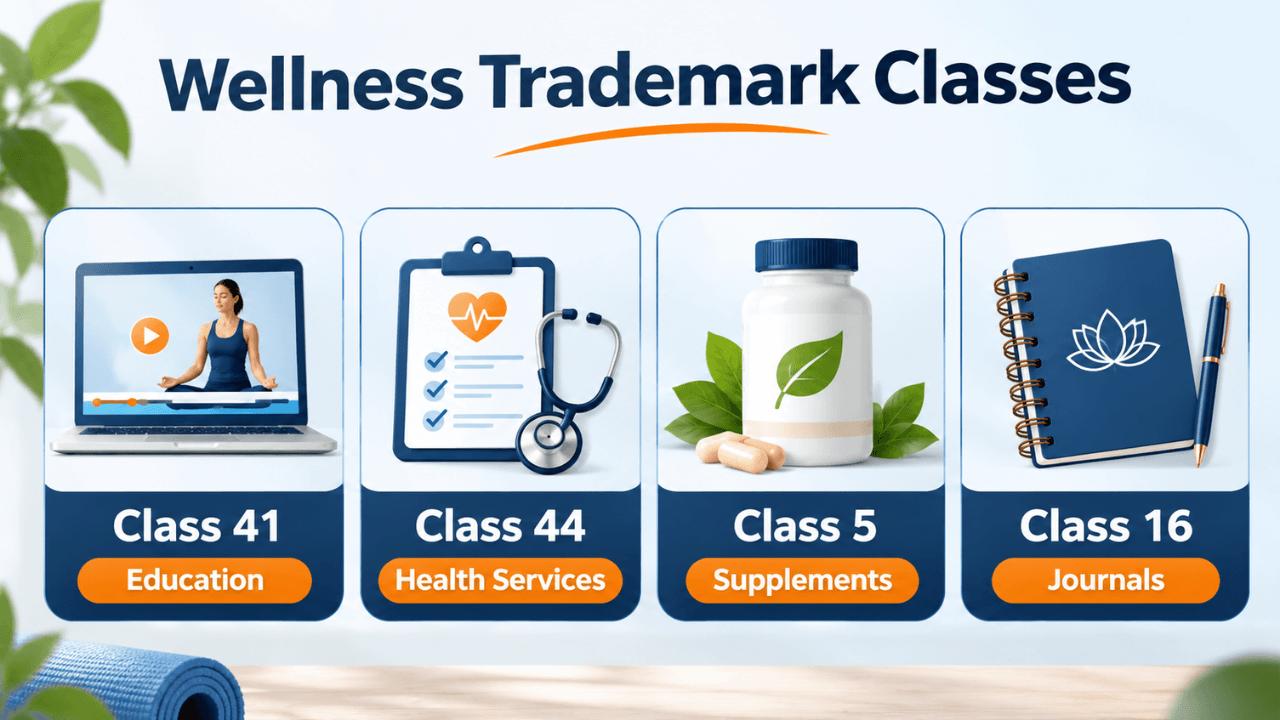
| Offering | Potential Class | Example |
|---|---|---|
| Wellness education | 41 | Online fitness workshops |
| Health-related counseling | 44 | Nutritional counseling |
| Dietary supplements | 5 | Vitamin supplements |
| Printed wellness journals | 16 | Guided planners |
| Non-medicated skincare | 3 | Facial moisturizers |
| Ordinary herbal tea | 30 | Non-medicinal tea |
| Certain drinkware | 21 | Reusable water bottles |
These are general examples. The precise goods or services determine their classification.
The USPTO's goods and services guidance explains how descriptions affect applications.
Class 41 vs. Class 44 for Coaching
Class 41 generally covers education, training, and fitness instruction.
Class 44 generally covers certain medical, health, nutrition, and wellness-related care services.
For example, teaching a fitness education course may fall under Class 41, while qualifying nutritional counseling may fall under Class 44.
Some businesses offer services within both categories, but the word wellness alone does not determine classification.
Class 5 for Supplement Brands
A trademark supplement brand commonly involves Class 5, as dietary and nutritional supplements generally fall under this category.
However, not every herbal product is a supplement.
Ordinary herbal tea may fall under Class 30, while certain herbal dietary supplements generally fall under Class 5.
Non-medicated skincare products commonly fall under Class 3.
Review the 2026 USPTO Nice Classification and Trademark ID Manual before choosing your descriptions.
Does Your New Product Line Need Another Trademark Application?
Not every new product requires a separate trademark application. The answer depends on whether you are using an existing mark, introducing a different mark, or adding goods outside your current registration.
For example:
| Business Expansion | Trademark Consideration |
|---|---|
| Additional educational workshop | Review existing Class 41 coverage |
| Dietary supplement collection | Consider Class 5 coverage |
| Printed guided journal | Consider Class 16 coverage |
| Distinctive product sub-brand | Evaluate a separate mark application |
| New flavor of an existing product | A new mark may be unnecessary |
An existing registration generally cannot be broadened after filing to add entirely new goods or services.
Three Questions to Ask Before Filing
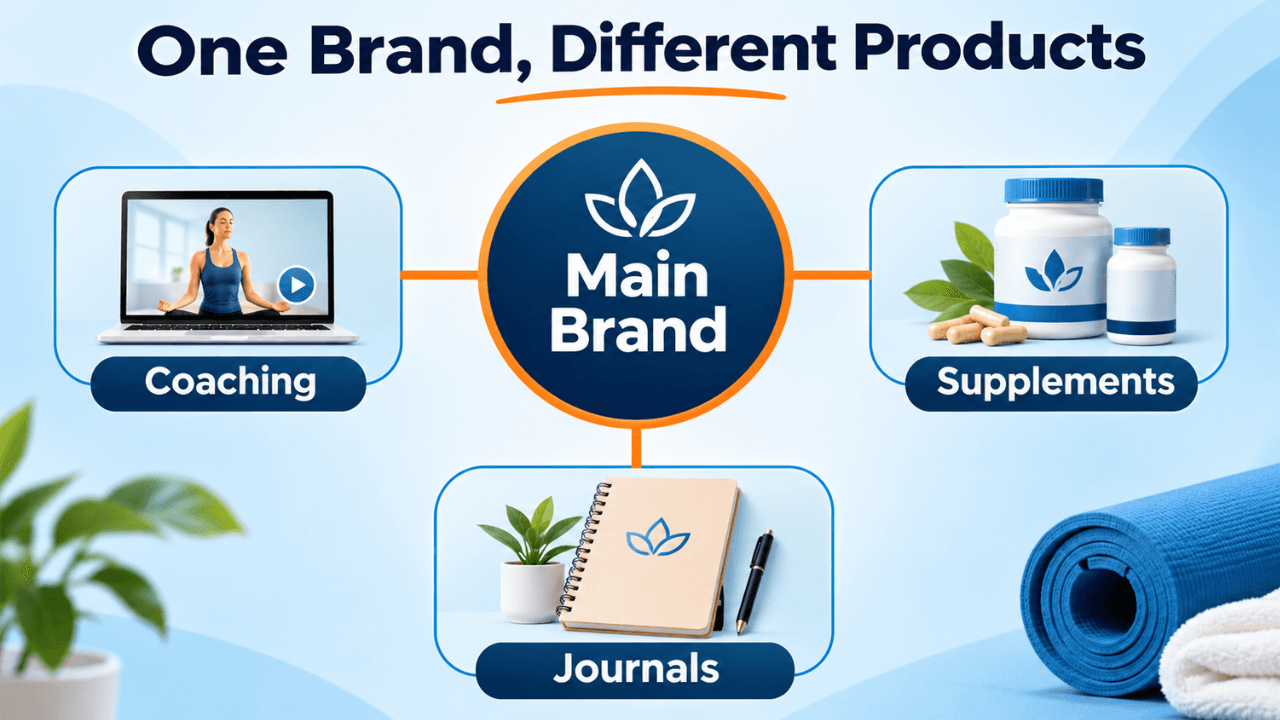
Use these questions to decide whether additional protection may be appropriate.
- Will you use the same brand name? One mark can identify different offerings, but each relevant category needs appropriate coverage.
- Does your existing registration identify the new goods? Review the exact description rather than relying on the class number alone.
- Will the product have its own distinctive identity? A separate product brand may justify another application.
For example, an Evermora Wellness journal may require additional goods coverage for the existing brand. A journal sold under a completely different name would raise a separate trademark question.
Trademark Engine's guide on whether to trademark a brand name or product name first can help with that decision.
How to Search and Register a Wellness Brand Trademark
A federal application requires more than selecting a business name. You must evaluate potential conflicts, identify the correct owner, select a filing basis, and provide accurate information.
Step 1: Conduct a Comprehensive Trademark Search
A USPTO trademark search should examine both identical and potentially confusingly similar marks.
Search for:
- Exact business and product names
- Similar spellings and pronunciations
- Related words and meanings
- Pending federal applications and registrations
- Relevant unregistered marketplace uses
For example, changing Evermora to Evermoura would not necessarily avoid a potential conflict.
Products also do not need to belong to the same trademark class for confusion to arise.
The USPTO recommends a comprehensive clearance search, which may include state databases and marketplace research.
Step 2: Confirm the Legal Owner
Your application must name the actual trademark owner.
Depending on your business structure, this may be an individual, LLC, or corporation.
For private-label products, review who owns and controls the customer-facing brand.
A manufacturer producing supplements under your name does not automatically own the mark. Relevant contracts and the actual business relationship matter.
An incorrect owner designation can create serious application problems.
Step 3: Select the Appropriate Filing Basis
Two common U.S. filing bases are:
Section 1(a) — Use in Commerce: The mark is already used in qualifying commerce for the identified offerings.
Section 1(b) — Intent to Use: The applicant has a bona fide intention to use the mark but has not yet begun qualifying use.
| Business Situation | Potential Filing Basis |
|---|---|
| Coaching services already offered in qualifying commerce | Section 1(a) |
| Supplement still being developed | Section 1(b) |
| Product already sold in qualifying commerce | Section 1(a), if requirements are met |
| Product without genuine launch plans | Do not include speculative goods |
An intent-to-use filing does not eliminate the requirement to establish qualifying use before registration.
The USPTO's filing-basis guidance explains the requirements.
Step 4: Prepare Evidence of Actual Use
A trademark specimen shows how customers encounter the mark in commerce.
For physical products, potential specimens include:
- Labels displaying the mark
- Actual product packaging
- Qualifying ecommerce pages with purchasing information
For coaching services, an advertisement or webpage may qualify when it clearly connects the mark with services being provided.
Webpage specimens must include the URL and the date accessed or printed.
Unused packaging concepts and digitally altered mockups generally do not establish qualifying commercial use.
See the USPTO's specimen requirements.
Step 5: Submit and Monitor the Application
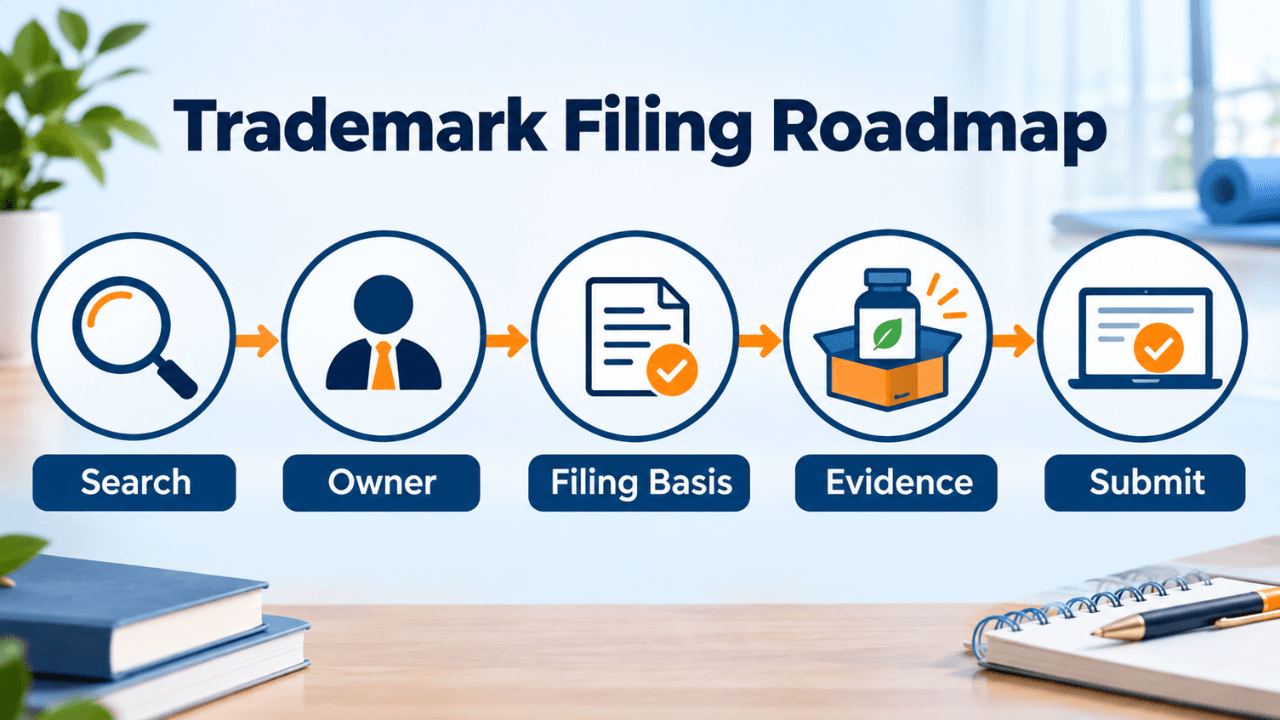
New federal trademark applications are filed through the USPTO's Trademark Center.
After submission, an examining attorney reviews the application. If the USPTO identifies legal or procedural issues, it may issue an Office Action.
Applicants should monitor official notices, follow the stated deadlines, and complete any additional filings required.
Review Trademark Engine's pre-filing trademark checklist before submission.
How Much Does Trademark Registration Cost?
The USPTO currently charges a base application fee of $350 per class for qualifying Section 1 and Section 44 applications.
| Application | Base Government Fee |
|---|---|
| One class | $350 |
| Two classes | $700 |
| Three classes | $1,050 |
For example, a coach applying for one mark covering educational coaching in Class 41 and dietary supplements in Class 5 would pay an initial base government fee of $700 if the application meets the relevant requirements.
If both classes use an intent-to-use basis, later Statements of Use would add $300, assuming one such filing for each class.
The USPTO currently charges $150 per class for an amendment to allege use or Statement of Use and $125 per class for a request to extend the Statement of Use deadline.
Additional government fees may apply.
Check the USPTO trademark fee schedule for current amounts.
These fees exclude Trademark Engine service charges or optional professional assistance.
Common Mistakes Wellness Founders Should Avoid
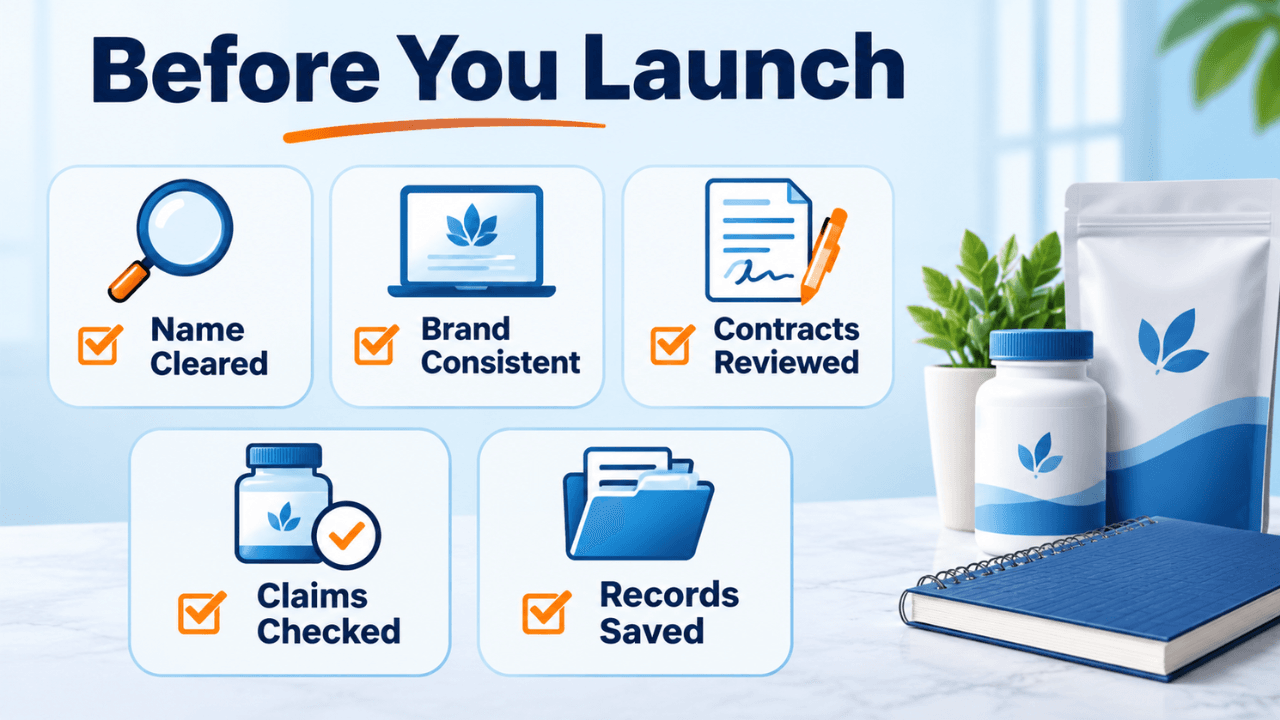
Product launches involve several practical issues beyond the application form.
1. Ordering Packaging Before Brand Clearance
Large packaging orders can become costly if you later need to change a product name.
2. Overlooking Manufacturing Agreements
Private-label founders should review contracts covering trademark ownership, branding permissions, quality control, and product responsibilities.
3. Using Inconsistent Branding
Different name variations across bottles, websites, and ecommerce listings can make brand recognition and trademark documentation more difficult.
4. Making Unsupported Health Claims
Trademark registration does not establish that supplements are safe, effective, or approved by the FDA.
The FDA's dietary supplement guidance explains manufacturers' responsibilities for applicable safety, labeling, and product requirements.
5. Failing to Preserve Commercial Records
Save dated packaging photographs, invoices, product listings, and website screenshots that document genuine trademark use.
These practices support brand protection alongside broader startup legal requirements and ongoing business legal requirements.
Conclusion
Launching a wellness product line requires thoughtful trademark planning before products reach customers. Review your existing brand rights, identify the goods you intend to sell, and check the appropriate classifications. A thorough clearance search and accurate filing can help prevent avoidable problems. By keeping ownership, product branding, and commercial-use records organized, you can build a stronger foundation for protecting your wellness business as it grows.
Start Protecting Your Wellness Brand With Trademark Engine
Planning to introduce supplements, journals, skincare products, or a new coaching program?
Explore Trademark Engine's trademark search and registration tools to review potential conflicts and prepare for federal filing.
Starting with a search can help you make informed decisions before investing in a product launch. The USPTO makes the final decision on registration.
Trademark Engine Editorial Team
Frequently Asked Questions
Yes. You can generally use ™ to show that you claim trademark rights in a name or logo without federal registration. The ® symbol should only be used after federal registration and in connection with the goods or services covered by that registration.
Yes, a distinctive slogan may qualify for trademark protection when consumers recognize it as identifying the source of goods or services. Common motivational phrases or wording used only as decoration may not function as trademarks.
Yes. A trademark owner may authorize another business to use a mark through a licensing agreement. The owner generally needs appropriate control over the nature and quality of the licensed goods or services. Written agreements can define permitted uses and responsibilities.
Federal registrations generally require a maintenance filing between the fifth and sixth years after registration. Additional filings are typically due between the ninth and tenth years and every ten years afterward. Missing applicable deadlines can result in cancellation or expiration.
No. U.S. federal trademark registration generally provides protection within the United States. Businesses planning international sales should review trademark requirements in the countries where they intend to operate. Additional national or international filings may be needed.
No. The USPTO does not generally require a wellness coaching certification for trademark registration. It evaluates whether the mark meets applicable registration requirements. Professional qualifications, licensing rules, and restrictions on particular health services are separate matters.
Get Trademark Tips and Compliance Guidance
Subscribe for updates, insights, and resources that help you stay compliant and grow your mission.