How to Trademark a Wellness Brand: A Step-by-Step U.S. Guide

Published on October 7, 2026 | Updated on October 16, 2026
Estimated Read Time: 9 minutes

Key Takeaways
- Search similar trademarks, not only exact name matches.
- Choose a distinctive mark instead of wording that simply describes a wellness product or benefit.
- Supplements, cosmetics, beverages, retail services, fitness programs, and health services may fall into different trademark classes.
- The USPTO's base application fee is currently $350 per class.
- A pre-launch business may be able to use an intent-to-use filing basis.
- Search and classify your brand before making large investments in packaging or promotion.
Quick Answer: To trademark a wellness brand in the U.S., search for conflicting marks, identify the goods and services connected to your brand, choose the correct trademark classes and filing basis, and file an application with the USPTO. Wellness businesses may need more than one class when they sell different products or provide separate services.
Wellness brands often grow from one supplement or skincare product into beverages, courses, retail services, or other offerings, so trademark planning should begin before you invest heavily in packaging and promotion. Timing also matters.
According to the U.S. Patent and Trademark Office (USPTO), data updated August 10, 2026, shows an average of 4.2 months from filing a new trademark application to the first examining action. That is not the total registration timeline, but it shows why early clearance and accurate filing are important. This guide explains how to search a wellness brand name, choose classes, understand fees, prepare evidence, and navigate the federal filing process.
Can You Trademark a Wellness Brand?
Yes. A wellness company name, product name, logo, slogan, or other source-identifying mark may qualify for federal trademark registration when it functions as a trademark and satisfies USPTO requirements.
A trademark helps consumers identify the source of goods or services. For that reason, the distinctiveness of your proposed brand name matters.
Choose a Distinctive Wellness Brand Name
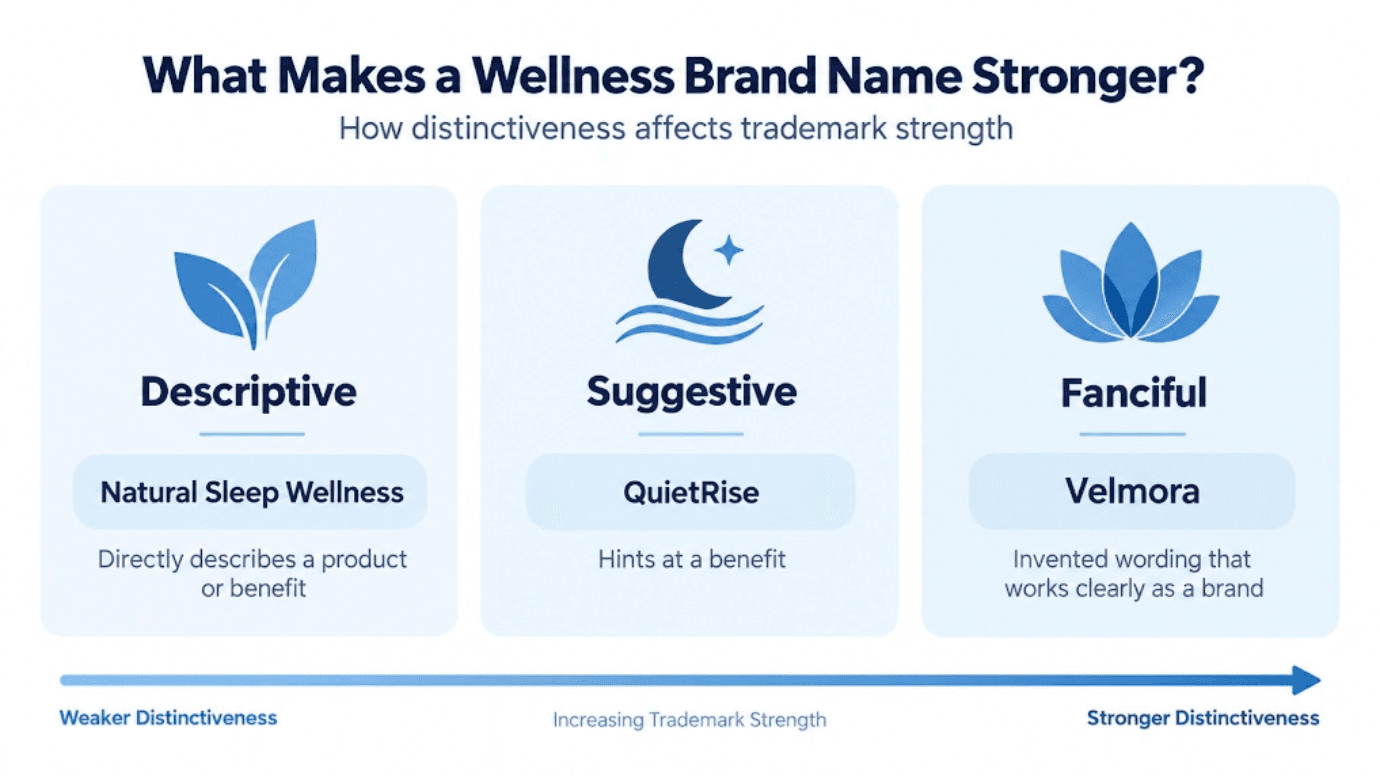
The USPTO generally treats fanciful, arbitrary, and suggestive marks as stronger than descriptive or generic terms. Descriptive wording tells buyers directly about a feature, quality, or purpose, while a distinctive mark does more to identify a specific source.
| Naming Approach | Fictional Example | Why It Matters |
|---|---|---|
| Descriptive | Natural Sleep Wellness | Directly describes a product or benefit |
| Suggestive | QuietRise | Hints at a benefit without describing it directly |
| Fanciful | Velmora | Invented wording can function clearly as a brand |
If you are researching how to trademark a wellness company name, begin by asking whether the wording can distinguish your business from others rather than simply describe what you sell.
How to Check If a Wellness Brand Name Is Available
A useful trademark clearance search looks at the exact name, confusingly similar marks, and relevant marketplace use.
The USPTO recommends searching for similar marks used with the same or related goods and services. A comprehensive search can also include state trademark databases and internet sources because earlier rights may exist outside federal registrations.
Use a Three-Layer Clearance Search
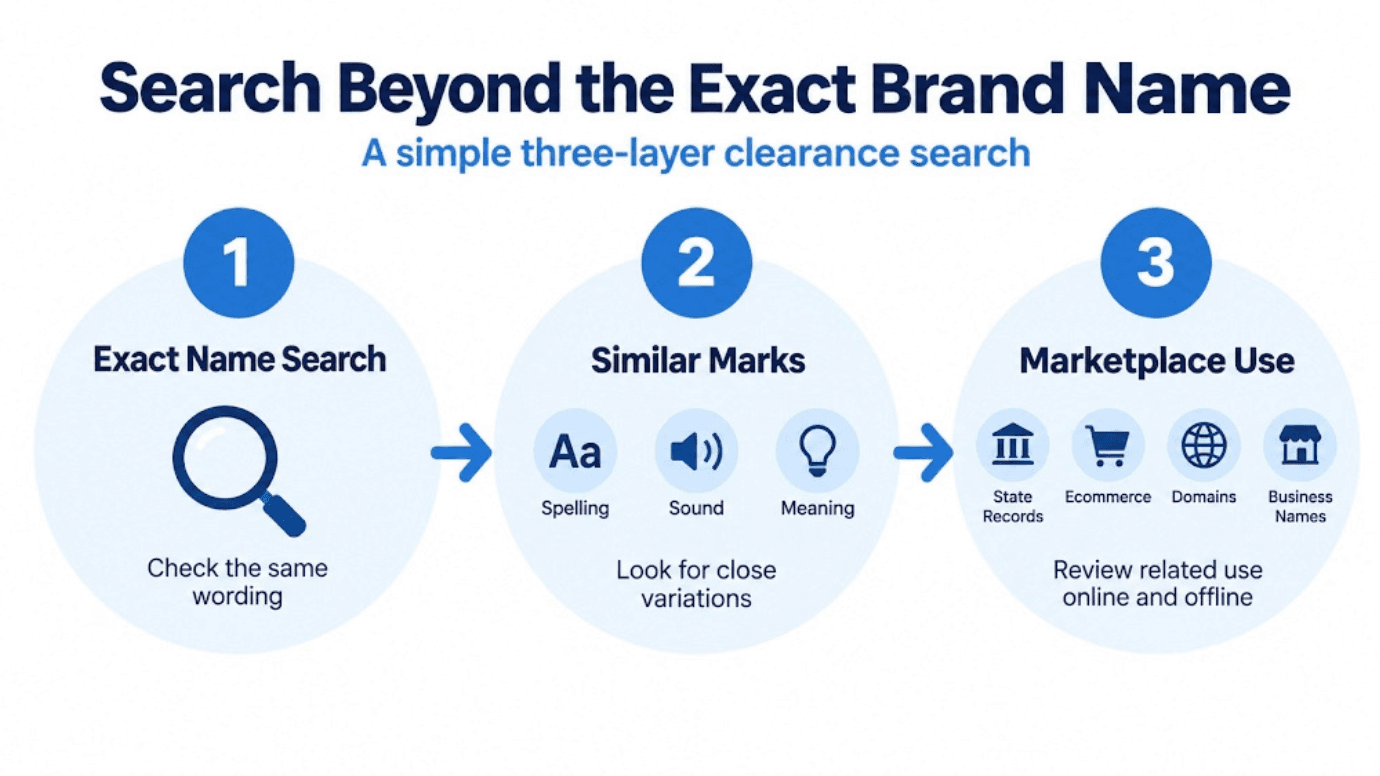
- Search the exact name. Look for pending applications and registered federal marks containing the same wording.
- Search similar marks. Check spelling variations, similar sounds, meanings, translations, shared wording, and commercial impressions.
- Search marketplace use. Review state records, company names, ecommerce sites, domains, and other relevant uses.
A one-letter spelling change may not solve a potential conflict if two marks still sound alike and identify related goods.
If you are learning how to check if a wellness brand name is available, Trademark Engine's free search can provide an initial screening.
A broader review may also help identify potential conflicts beyond an exact federal match.
Which Trademark Classes Apply to Wellness Brands?
The correct trademark class depends on the specific goods or services your business provides.
The USPTO organizes goods and services into 45 international classes. The current Nice Classification, Thirteenth Edition, version 2026, took effect on January 1, 2026.
| Wellness Offering | Class Commonly Worth Checking |
|---|---|
| Non-medicated skincare and cosmetics | 3 |
| Dietary and nutritional supplements | 5 |
| Certain medical or therapeutic devices | 10 |
| Tea and certain food products | 30 |
| Certain non-alcoholic beverages | 32 |
| Retail store services featuring wellness products | 35 |
| Fitness instruction and wellness education | 41 |
| Certain beauty, nutrition, medical, and health services | 44 |
These examples are starting points, not automatic classifications. Your application must identify the actual goods or services connected with the mark. The USPTO's ID Manual can help applicants select accepted descriptions.
Plan for Realistic Brand Expansion
Suppose your business starts with a dietary supplement but genuinely plans to add skincare and online fitness classes. Those offerings may fall into separate classes.
That is why how to trademark a wellness product depends on the actual offering rather than the broad label “wellness.”
Focus on goods and services you currently use or genuinely intend to launch instead of adding unrelated categories simply because they may be useful someday.
How Do You Trademark a Wellness Brand? 6 Practical Steps
Once the name and likely classes are clear, the federal application process comes down to six main decisions.
Identify the Correct Owner
Determine who legally owns the trademark before filing.
This deserves extra attention for private-label brands. A manufacturer may produce your supplements or cosmetics without owning the customer-facing brand. Review your company structure and agreements before identifying the applicant.
Confirm Your Clearance Results
Review the trademark search before investing heavily in labels, packaging, marketplace listings, advertising, or a product launch.
You do not need to repeat the entire search at this stage; the goal is to confirm that the proposed mark is still suitable for filing.
Define Your Goods and Services
Describe what customers actually buy from your company.
Terms such as “health and wellness” are too broad on their own. A supplement, skincare product, ecommerce retail service, fitness class, and nutrition service may require different descriptions and classifications.
Choose the Filing Basis
Two common U.S. filing bases are:
Use in Commerce: You already use the mark in qualifying commerce with the listed goods or services.
Intent to Use: You have a bona fide intention to use the mark but have not yet started qualifying use.
An intent-to-use application can be filed before launch, but the applicant must later meet the USPTO's use requirements before registration.
Prepare a Specimen When Required
A specimen is evidence showing how consumers actually encounter your trademark in commerce.
For goods, possible specimens include:
- labels or tags;
- packaging;
- the product itself; or
- a qualifying ecommerce product page where customers can order the goods.
For services, qualifying advertising, marketing material, or a website may work when it clearly connects the mark with the listed service.
For webpage specimens, the USPTO also requires the webpage URL and the date it was accessed or printed. Mockups and digitally created examples generally do not prove real commercial use.
File and Monitor the Application
New federal trademark applications are filed through the USPTO's Trademark Center.
After filing, monitor the application and read each USPTO notice carefully. Deadlines can vary depending on the type of communication, so the deadline stated in the notice controls.
How Much Does It Cost to Trademark a Wellness Brand?
The USPTO's current base filing fee is $350 per class for qualifying Section 1 and Section 44 applications.
Additional fees may apply depending on the completeness of the application, how goods and services are identified, and whether later intent-to-use filings are required.
For example, intent-to-use applications may incur later fees for an allegation of use or for extension requests. Current amounts should always be checked on the USPTO fee schedule before filing.
What Happens After You File?
After filing, a USPTO examining attorney reviews the application and searches for potential federal conflicts.
If the examiner identifies a legal or procedural issue, the USPTO may issue an Office Action. For most applications under Sections 1 and 44, applicants generally have three months to respond. An optional three-month extension may be available for a fee. Always follow the deadline stated in the specific notice.
If the application clears examination, the mark generally proceeds to publication for opposition. What happens after publication depends on the filing basis and whether anyone successfully challenges the application.
Common Wellness Trademark Mistakes to Avoid
Several avoidable mistakes can make the filing process more complicated:
- Investing in packaging too early: Search the name before ordering large quantities of labels, bottles, boxes, or promotional materials.
- Choosing classes based only on the word “wellness”: Classification depends on the actual goods and services.
- Naming the wrong owner: Check ownership carefully, especially with holding companies, founders, and private-label arrangements.
- Using artificial proof of use: A specimen should show genuine commercial use rather than a mockup.
- Assuming registration covers future products automatically: The registration is tied to the goods and services it identifies.
These distinctions are especially useful when learning how to protect a wellness business name, because business formation, trademark registration, product regulation, and domain ownership are separate issues.
Conclusion
Learning how to trademark a wellness business starts with a distinctive name, a meaningful clearance search, accurate goods and services, the right classes, and a filing basis that reflects how the brand actually operates. Because wellness companies often expand across products and services, making these decisions early can reduce avoidable filing problems and give your brand a clearer foundation for future growth and federal trademark protection.
Ready to Take the Next Step?
When you are ready to pursue federal registration, Trademark Engine's trademark registration service can help you prepare and submit your application.
Trademark Engine Editorial Team
Frequently Asked Questions
No. You do not generally need to form an LLC before applying for federal trademark registration. The application does, however, need to identify the correct owner of the mark.
Potentially. An intent-to-use filing basis may be available when you have a bona fide intention to use the mark in commerce but have not yet started qualifying use.
Dietary and nutritional supplements commonly fall within International Class 5. The exact wording depends on the product, so confirm the identification using the current USPTO classification guidance.
A standard-character word mark and a stylized logo are different trademark presentations. Because one application covers one mark, businesses often consider the name and logo as separate filing decisions.
There is no fixed total timeline. As of August 10, 2026, the USPTO reports an average of 4.2 months to the first examining action. Office Actions, publication, intent-to-use requirements, and other issues can extend the complete process.
U.S.-domiciled applicants are not generally required to hire a trademark attorney. Foreign-domiciled applicants must be represented by a U.S.-licensed attorney. Legal advice may still be useful for ownership, conflicts, specimens, or Office Actions.
Get Trademark Tips and Compliance Guidance
Subscribe for updates, insights, and resources that help you stay compliant and grow your mission.