How to Write Goods and Services Descriptions for a Trademark Application

Published on November 17, 2026 | Updated on November 20, 2026
Estimated Read Time: 11 minutes

Key Takeaways
- Goods and services descriptions identify the offerings associated with your trademark.
- The USPTO ID Manual contains acceptable wording for many products and services.
- The U.S. trademark system uses 45 international classes.
- Accurate identifications must match your filing basis.
- Free-form descriptions generally incur an additional $200 fee per affected class.
- You may generally narrow an identification after filing, but cannot broaden it.
Quick Answer: To write a goods and services description for a trademark application, identify your products or services, find accurate wording in the USPTO Trademark ID Manual, and select the appropriate classes. Your identification must reflect your actual business activities or genuine intent to use the trademark.
According to the USPTO's May 2026 report, trademark filings increased by 7% during the first half of fiscal year 2026 compared with the same period in 2025. For business owners preparing an application, accurate goods and services descriptions remain essential.
The USPTO requires clear wording that identifies what your brand actually offers. For example, "fashion products" may be too vague, while "T-shirts" identifies a specific product.
An incorrect description can lead to objections, extra fees, or delays.
This guide explains how to choose acceptable wording, use the USPTO ID Manual, select trademark classes, and avoid common filing mistakes.
What Is a Trademark Identification of Goods and Services?

A trademark identification of goods and services describes the products or activities associated with your mark. It helps establish the goods or services covered by your federal application.
The USPTO explains that goods are products customers purchase, while services are activities performed for someone else's benefit.
For example:
- Goods: Clothing, candles, handbags, and skincare products.
- Services: Business consulting, restaurant services, and graphic design.
A company may offer both. However, each identification must clearly reflect the relevant offering.
Why the Description Matters for Trademark Protection
The wording helps the USPTO understand the nature of your business activities and assess your application.
It also affects the scope of your identification. Simply including broad categories does not automatically give your mark wider protection.
The USPTO generally requires descriptions that use recognizable terms rather than phrases such as "miscellaneous products" or "general business services."
How to Write Goods and Services Descriptions for a Trademark Application
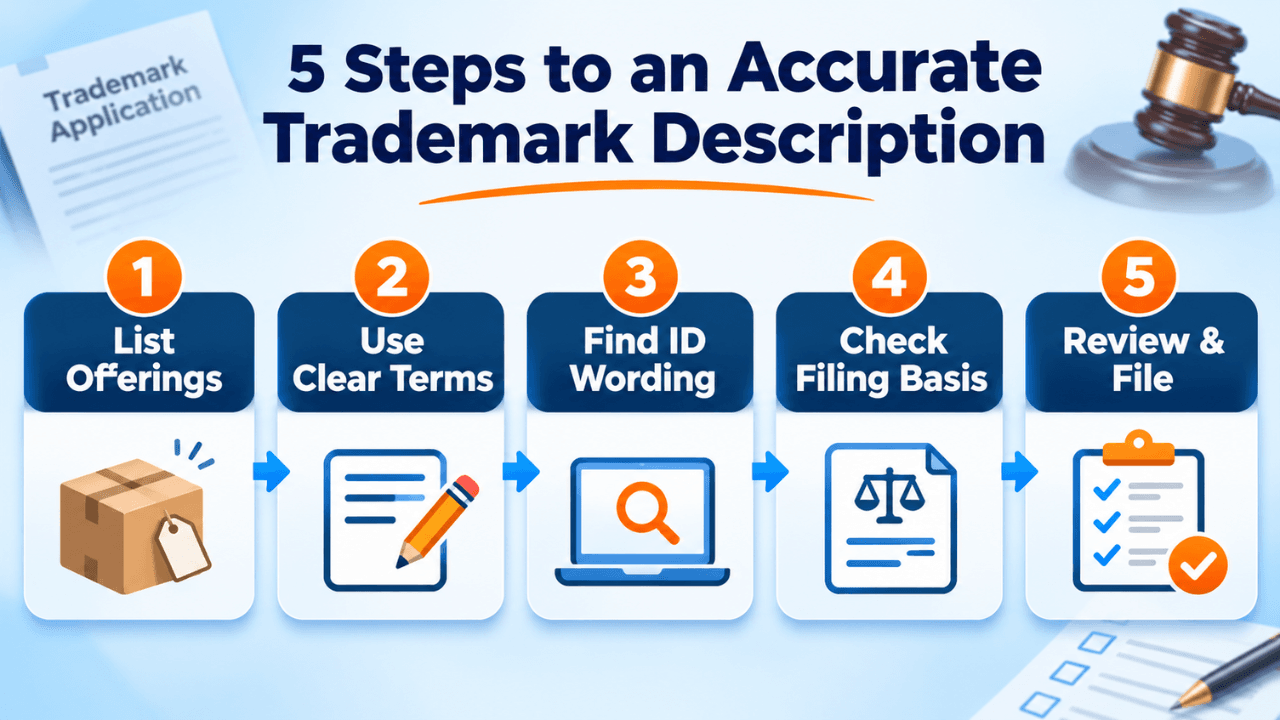
A suitable description identifies what you sell or provide without unnecessary marketing language.
Follow these five steps to prepare your application.
Step 1: List Your Actual Offerings
Start by writing down the products or services associated with your trademark.
For example, a clothing brand may sell:
- T-shirts
- Sweatshirts
- Baseball caps
- Jackets
A software business might provide downloadable applications or online software services.
Focus on recognizable offerings rather than general descriptions of your business.
Step 2: Use Clear Product or Service Names
Replace broad phrases with specific terms.
Instead of "beauty solutions," identify the type of cosmetics or skincare products you sell.
Likewise, a software company should explain whether customers download the program or access it online.
The Trademark Manual of Examining Procedure, Section 1402, provides detailed requirements for acceptable identifications.
Step 3: Find Suitable USPTO Wording
Search the official Trademark ID Manual for descriptions that accurately match your offerings.
Many common products and services already have acceptable entries.
Selecting appropriate wording can simplify the application process and help avoid additional identification fees.
Step 4: Match Your Filing Basis
Your application must reflect how you currently use or genuinely intend to use the mark.
Two common filing bases are:
| Filing basis | Requirement |
|---|---|
| Section 1(a): Use in Commerce | The mark is already used in qualifying commerce for the listed goods or services. |
| Section 1(b): Intent to Use | You have a bona fide intention to use the mark for the listed offerings. |
Use-based applications generally require evidence showing commercial use. Intent-to-use applications require additional steps before registration.
Learn more from the USPTO's application filing basis guide.
Step 5: Check Your Draft Before Filing
Review your identification to confirm that:
- The wording describes recognizable goods or services.
- Each entry matches your business.
- The classifications are appropriate.
- Your filing basis supports every listed item.
- The description does not claim unrelated offerings.
This process helps identify problems before you submit the application.
How to Search the USPTO Trademark ID Manual
The USPTO Trademark ID Manual is a database of acceptable goods and services descriptions and their classifications.
You can use it to find suitable wording before preparing your federal application.
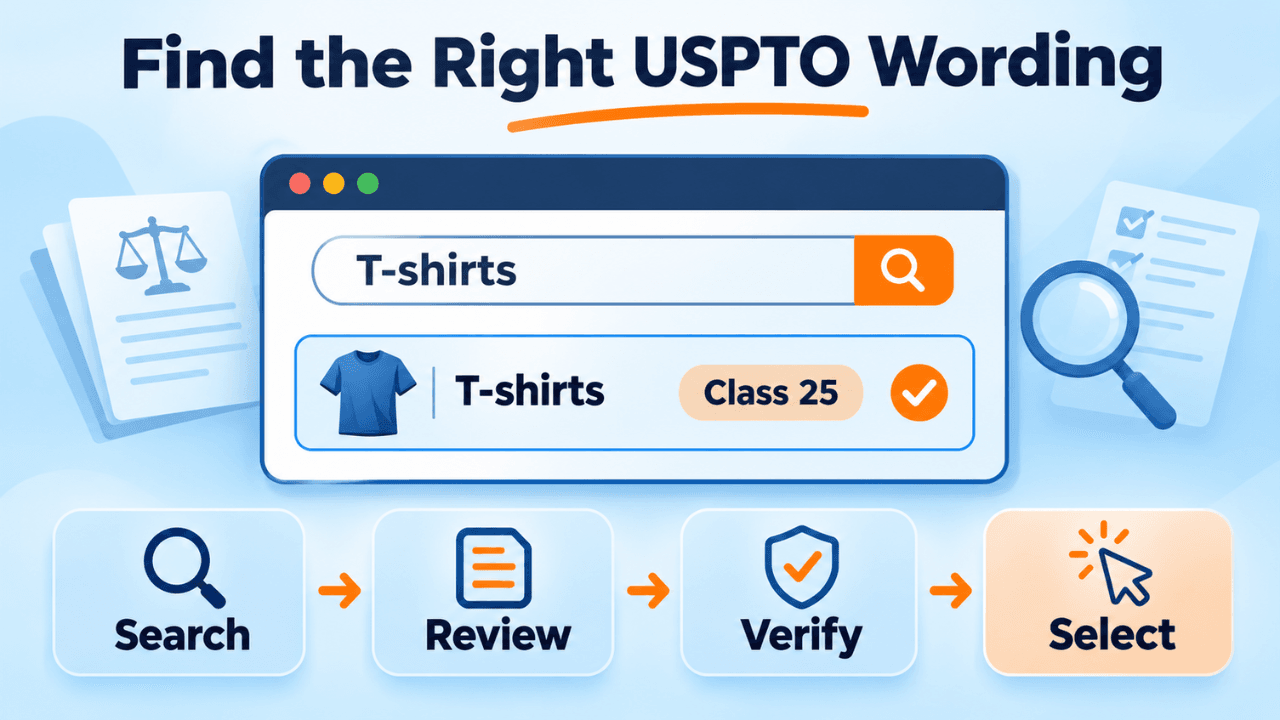
Follow the ID Manual Search Process
- Visit the official USPTO Trademark ID Manual.
- Enter a product or service term, such as "T-shirts" or "business consulting."
- Review the matching descriptions and class numbers.
- Check the entry status, effective date, and relevant notes.
- Select suitable wording directly within Trademark Center.
The manual identifies active entries using the status codes A, M, and X. Entries marked D have been deleted and are generally unacceptable under current policy.
The USPTO's search instructions explain advanced searches, filters, and entry details.
What if the Available Wording Does Not Match Your Product?
Do not select an inaccurate entry simply because it appears in the manual.
For example, downloadable software and software provided through SaaS may require different identifications.
If no suitable entry appears, try alternative terms, review related descriptions, or check whether a fill-in field allows the required details.
Custom wording may be appropriate in some cases, but it must satisfy USPTO requirements and can trigger additional filing fees.
The USPTO also provides a process for suggesting new ID Manual entries.
How to Choose the Correct Trademark Class
Trademark classes organize products and services under the international Nice Classification system.
There are 45 classes: 34 for goods and 11 for services.
Your class depends on what the trademark identifies, not simply your business industry.
Common Trademark Class Descriptions
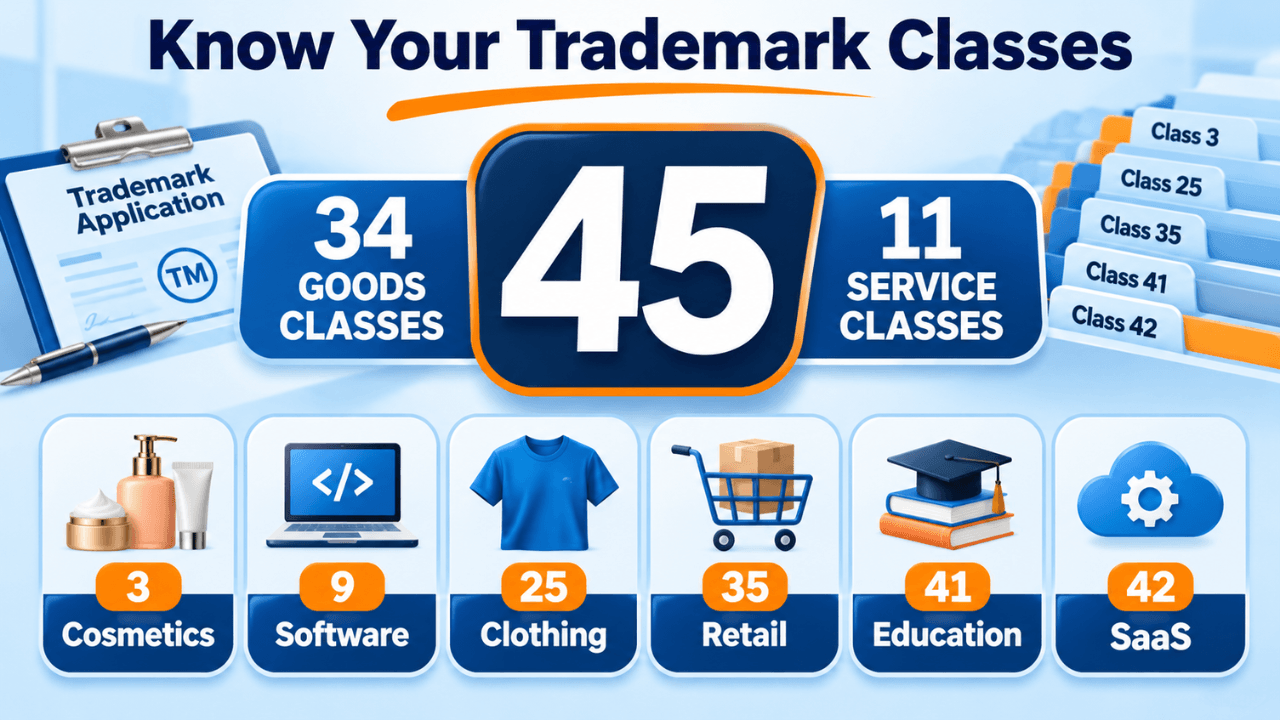
| Class | Category | Example |
|---|---|---|
| 3 | Cosmetics | Non-medicated skin lotions |
| 9 | Downloadable software | Mobile applications |
| 25 | Clothing | T-shirts and sweatshirts |
| 35 | Business and retail services | Online retail store services |
| 41 | Education | Online educational courses |
| 42 | Technology services | Software as a service |
These examples illustrate typical classifications. Confirm the final wording against the current USPTO requirements.
For additional guidance, read Trademark Engine's trademark classes guide.
Does an Ecommerce Business Automatically Need Class 35?
No. Selling products through a website does not automatically mean your business needs Class 35.
For example, a company selling its own branded T-shirts may use Class 25 for its clothing goods.
Qualifying online retail store services may fall within Class 35.
Similarly, downloadable software generally belongs in Class 9, while SaaS offerings commonly fall within Class 42.
Some businesses may require multiple classes if the mark identifies different qualifying goods or services.
Trademark Goods and Services Examples
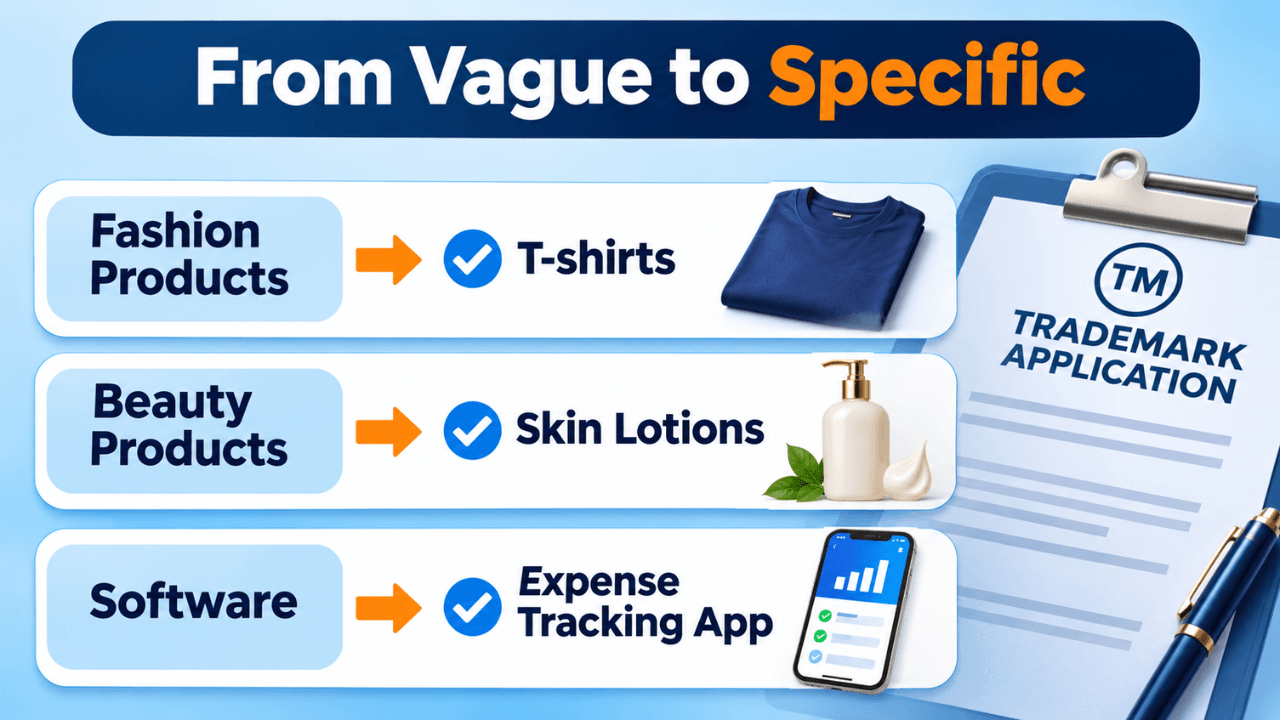
An acceptable identification of goods and services should describe recognizable offerings rather than broad marketing categories.
The following table illustrates the difference.
| Vague description | More specific example | Potential class |
|---|---|---|
| Fashion products | T-shirts | 25 |
| Beauty products | Non-medicated skin lotions | 3 |
| Software | Downloadable mobile applications for tracking expenses | 9 |
| Technology services | SaaS services featuring software for inventory management | 42 |
| Educational services | Conducting online courses in business management | 41 |
These examples illustrate specificity. Verify the exact wording and classification in the current ID Manual before filing.
Example: An Online Skincare Brand
Suppose a fictional brand called BloomLeaf sells facial cleansers, non-medicated moisturizers, and lip balms.
Its website describes the business as a "natural beauty and wellness brand."
That phrase may work for marketing, but it does not clearly identify the individual products.
A more specific identification might include:
- Non-medicated facial cleansers
- Non-medicated skin moisturizers
- Non-medicated lip balms
These products generally fall within Class 3.
If the company introduces medicated skincare products, different classifications may apply.
The example demonstrates why product characteristics matter more than general business descriptions.
USPTO Trademark Free-Form Text Box Fees
The cost of a trademark application depends partly on the number of classes and how you enter your goods and services.
Under the USPTO's fee structure, the base electronic application fee for qualifying Section 1 and Section 44 applications is $350 per class.
Additional Identification Charges
According to the USPTO's fee guidance:
- Using the free-form identification box generally adds $200 per affected class.
- Copying ID Manual wording into that box also triggers the fee.
- Each additional group of 1,000 characters beyond the first 1,000 costs $200 in an affected class.
- Improper use of certain ID Manual fill-in fields may result in additional charges.
Example Filing Costs
| Filing scenario | USPTO fee |
|---|---|
| One class with selected ID Manual entries | $350 |
| One class using free-form text | $550 |
| Two classes with selected ID Manual entries | $700 |
| Two classes using free-form text | $1,100 |
| One class with 1,001 characters in the free-form identification | $750 |
Examples assume no other additional charges. Government fees are separate from service fees.
When calculating excess characters, the USPTO counts spaces and punctuation. If a class combines direct ID Manual selections with free-form wording, all identification text in that class counts toward the character total.
Practical tip: Select accurate entries directly through Trademark Center when possible rather than copying them into the free-form box.
Review the official USPTO trademark fee schedule before filing.
Common Mistakes to Avoid When Preparing Your Application
The following errors can create unnecessary complications during trademark examination.
Using Promotional Language
Phrases such as "premium lifestyle products" or "innovative technology solutions" do not clearly identify specific offerings.
Use product names and service descriptions instead of advertising claims.
Including Unsupported Products
Do not list goods or services that you cannot properly claim under your filing basis.
For use-based applications, the mark must meet the applicable commercial-use requirements.
For intent-to-use applications, you must have a genuine intention to use the mark for the listed offerings.
Confusing Business Formation With Trademark Registration
An LLC, DBA, or business license serves a different purpose from federal trademark registration.
Business formation documents may describe activities broadly, while trademark applications require specific identifications.
Understanding this distinction is part of reviewing startup legal requirements and broader business legal requirements.
Assuming Different Classes Prevent Trademark Conflicts
Trademarks can potentially conflict even when their goods or services fall within different classes.
The USPTO considers factors such as the similarity of the marks and whether their offerings are related.
A comprehensive trademark search can help identify potentially conflicting marks before filing.
Expecting to Add New Products Later
The USPTO generally allows applicants to delete, clarify, or narrow goods and services when permitted.
However, applicants cannot expand the original identification beyond its scope.
Adding new offerings may require another application.
See the USPTO's application correction guidance.
Final Checklist Before Submitting Your Application
Before paying the filing fee, confirm the following:
- Accuracy: Every listed offering matches your business activities or genuine plans.
- Terminology: Descriptions use clear, recognizable terms.
- Classification: Each product or service belongs in the appropriate class.
- Filing basis: Your claimed offerings meet the relevant requirements.
- Costs: You understand applicable government and identification fees.
- Trademark availability: You have reviewed potentially conflicting marks.
For more preparation guidance, read Trademark Engine's pre-filing application checklist.
Conclusion
Accurate goods and services descriptions help establish the scope of your trademark application and reduce avoidable filing complications. By selecting clear wording, using the USPTO ID Manual, and choosing appropriate classes, you can prepare an identification that reflects your business.
Before submitting, review your descriptions, filing basis, and applicable fees. Careful preparation supports a clearer application and helps you take an informed step toward protecting your brand.
Ready to Protect Your Brand?
Preparing accurate goods and services descriptions is one part of pursuing federal trademark protection.
Trademark Engine offers trademark search and registration services to help U.S. business owners explore their options and begin the application process.
Explore Trademark Engine's Trademark Search and Registration Services
Applicable USPTO government fees are separate from Trademark Engine service charges. The USPTO makes the final registration decision, and approval is not guaranteed.
Trademark Engine Editorial Team
Frequently Asked Questions
Yes. One trademark application can identify multiple qualifying product lines. However, each listed item must meet the relevant filing-basis requirements. Products falling into different classes generally require separate per-class government fees.
No. The trademark itself is entered separately in the application. The identification describes the goods or services associated with the mark rather than repeating the brand name, logo, or slogan.
Yes, potentially. A business may use its trademark on goods manufactured by a third party. The mark must identify the appropriate commercial source, and the application must satisfy the relevant trademark requirements.
Usually not. Different sizes or colors of the same product type can often fall within one suitable description. The identification must still accurately cover the goods included in the application.
No. An examining attorney may issue an office action requesting clarification or amendment. The applicant must respond within the applicable deadline. Some identification problems cannot be corrected without filing a new application.
Yes. A goods and services description identifies the offerings associated with a mark. A specimen provides evidence of how the trademark is actually used in qualifying commerce, such as on product packaging or an appropriate online sales page.
Get Trademark Tips and Compliance Guidance
Subscribe for updates, insights, and resources that help you stay compliant and grow your mission.