How to Search for Trademarks That Sound Alike but Are Spelled Differently

Published on November 15, 2026 | Updated on November 20, 2026
Estimated Read Time: 10 minutes

Key Takeaways
- Different spellings can still create trademark conflicts when names sound alike.
- The USPTO supports phonetic searches using field tags and regular expressions.
- Search alternate spellings, silent letters, and distinctive word combinations.
- Compare the marks and their goods or services before assessing possible conflicts.
- Federal searches may miss earlier unregistered uses of a trademark.
- Researching potential conflicts before filing can support informed brand decisions.
Quick Answer: To find trademarks that sound alike but have different spellings, search your proposed name, alternate spellings, and phonetic equivalents in the USPTO Trademark Search system. Use advanced search patterns to find variations, then check whether similar marks cover related goods or services.
Choosing a unique business name requires more than checking whether someone has registered the same spelling.
According to the USPTO's April 2026 report, the agency received 431,734 trademark application classes during the first half of fiscal year 2026, up 7% from the same period in FY2025.
With substantial filing activity, checking similar names is an important part of brand research.
Two trademarks may look different but sound identical when spoken. Learning how to search for similar trademarks can help you identify potential conflicts before investing in packaging, marketing, or federal registration.
Why Can Different Spellings Create Trademark Conflicts?
Different spellings can create potential trademark conflicts when the names sound alike and identify related goods or services. The USPTO considers similarities in sound, appearance, meaning, and overall commercial impression.
Understanding Phonetic Similarity

Phonetic similarity means two words have similar pronunciations, even though their written forms differ.
The USPTO provides an example involving T. MARKEY and TEE MARQEE. Although the words are spelled differently, they can sound the same when spoken.
These are known as phonetic equivalents.
The USPTO's likelihood-of-confusion guidance explains that a trademark conflict may arise when consumers mistakenly believe that goods or services sold under similar marks come from the same source.
However, similar pronunciation alone does not automatically prevent registration. The relationship between the goods or services also matters.
For ecommerce businesses, this distinction is important because customers may discover a brand through spoken recommendations, video advertisements, or conversations rather than written names.
How to Search for Similar Trademarks in the USPTO Database
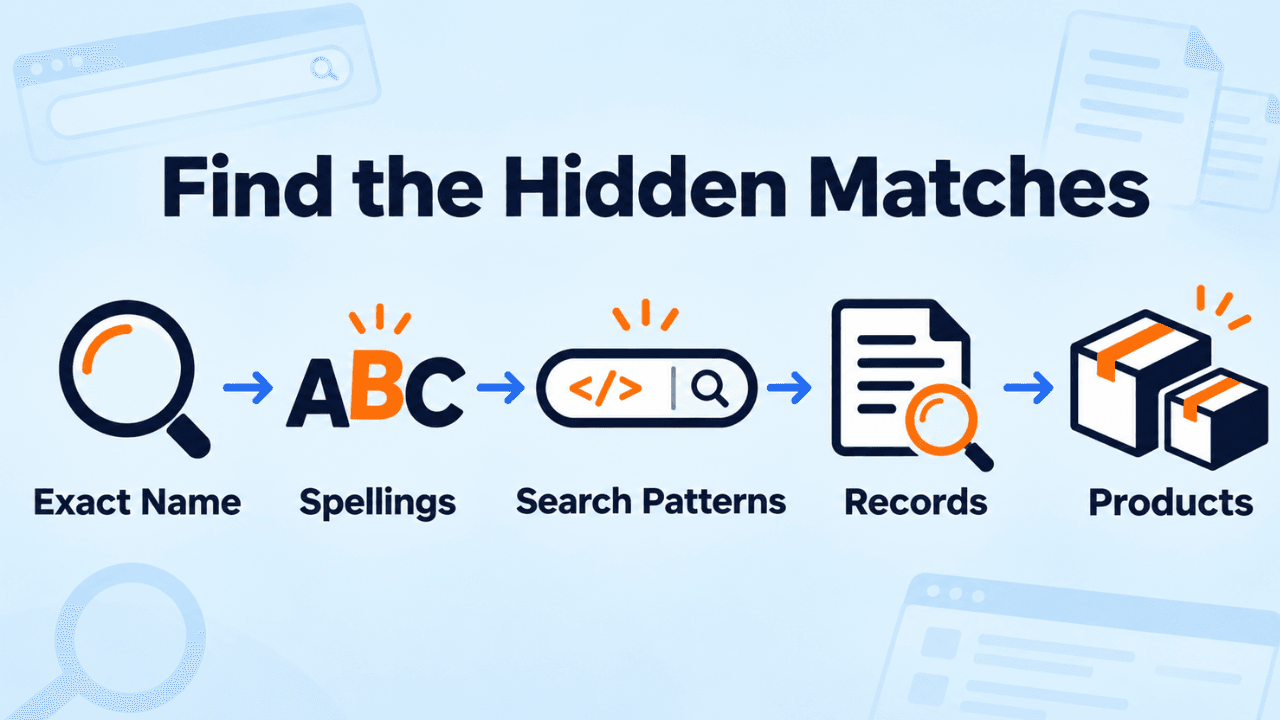
You can conduct an initial trademark phonetic search using the USPTO's public Trademark Search system. Start with the exact name, expand to spelling variations, and review potentially relevant records.
The process involves five steps.
Step 1: Search Your Exact Brand Name
Visit the official USPTO Trademark Search system.
Enter your proposed business name using the Wordmark search option.
For example, suppose you want to register:
NITEGLOW
The initial search helps identify identical wording in federal trademark records.
You can also use the combined mark field tag for a targeted query:
The prefix CM: tells the USPTO search system to look in its combined mark field. You can also begin with the standard Wordmark search option if you're unfamiliar with advanced search commands.
The CM field includes trademark wording and related searchable mark information.
If your proposed trademark contains several words, enter the complete phrase in straight quotation marks.
This first search provides a starting point, not confirmation that your name is available.
Step 2: Search Alternate Spellings and Pronunciations
Next, consider how customers might spell your proposed name after hearing it.
For NITEGLOW, possible variations include:
- NIGHTGLOW
- NYTEGLOW
- NITE GLOW
- NIGHT GLOW
Search each variation individually.
For multiword trademarks, investigate distinctive words separately. A potentially relevant mark may contain additional wording that an exact-phrase search overlooks.
Consider common substitutions involving consonants, vowels, silent letters, and repeated characters.
The goal is to identify reasonable phonetic equivalents rather than every imaginable spelling combination.
Step 3: Use Regular Expressions to Expand Results
The USPTO Trademark Search system supports regular expressions, also called regex, to find multiple spelling patterns in one search.
For example, you can search for variations of the word "CAT" using:
CM:/[ckq]a{1,2}t/
This pattern searches for variations beginning with C, K, or Q, followed by one or two A's and the letter T.
You do not need to understand every symbol to begin searching. Start with your exact brand name, check common spelling variations, and use advanced patterns when broader results may be helpful.
Remember that regex identifies written character patterns rather than spoken sounds. It may miss unusual phonetic equivalents.
For more examples, see the USPTO's Official Regex Search Guide.
Important: Regex identifies character patterns, not spoken sounds directly. It may miss names with unexpected spellings or return irrelevant matches. Use it as one part of your search strategy.
Step 4: Examine Relevant Trademark Records
When your search reveals a potentially similar mark, open the individual record.
The Trademark Status and Document Retrieval system provides application details and available documents.
Review:
- Trademark wording: How closely does the mark resemble yours?
- Application status: Is the record live, abandoned, or canceled?
- Goods or services: What offerings does the mark identify?
- Owner: Who filed or owns the application or registration?
- Filing details: What dates and documents may affect further investigation?
Do not dismiss pending applications simply because registration has not yet been granted.
An earlier-filed pending application may affect examination of a later application.
Step 5: Compare Related Goods and Services
The final step is to assess whether the identified marks cover related products or services.
For example, a proposed skincare brand may require closer investigation when a similar-sounding mark already identifies facial moisturizers.
The products do not have to be identical to create a possible conflict.
Trademark classes are useful for organizing goods and services, but different class numbers do not automatically eliminate the possibility of confusion.
For additional context, read when a basic trademark search is not enough.
Practical Example: Searching a Skincare Brand Name
Suppose you plan to launch an ecommerce skincare brand called NITEGLOW.
You search the exact name in the USPTO database and find no identical result.
You then search NIGHTGLOW and other reasonable variations.
Imagine discovering a similar name associated with facial cleansers. Rather than focusing only on spelling, you review the record, its status, and the listed products.
Next, you investigate whether the name appears on commercial websites or online marketplaces.
This hypothetical example illustrates how an initial search can develop into broader research. It does not establish whether either name is registered, available, or legally conflicting.
What Phonetic Variations Should You Check?
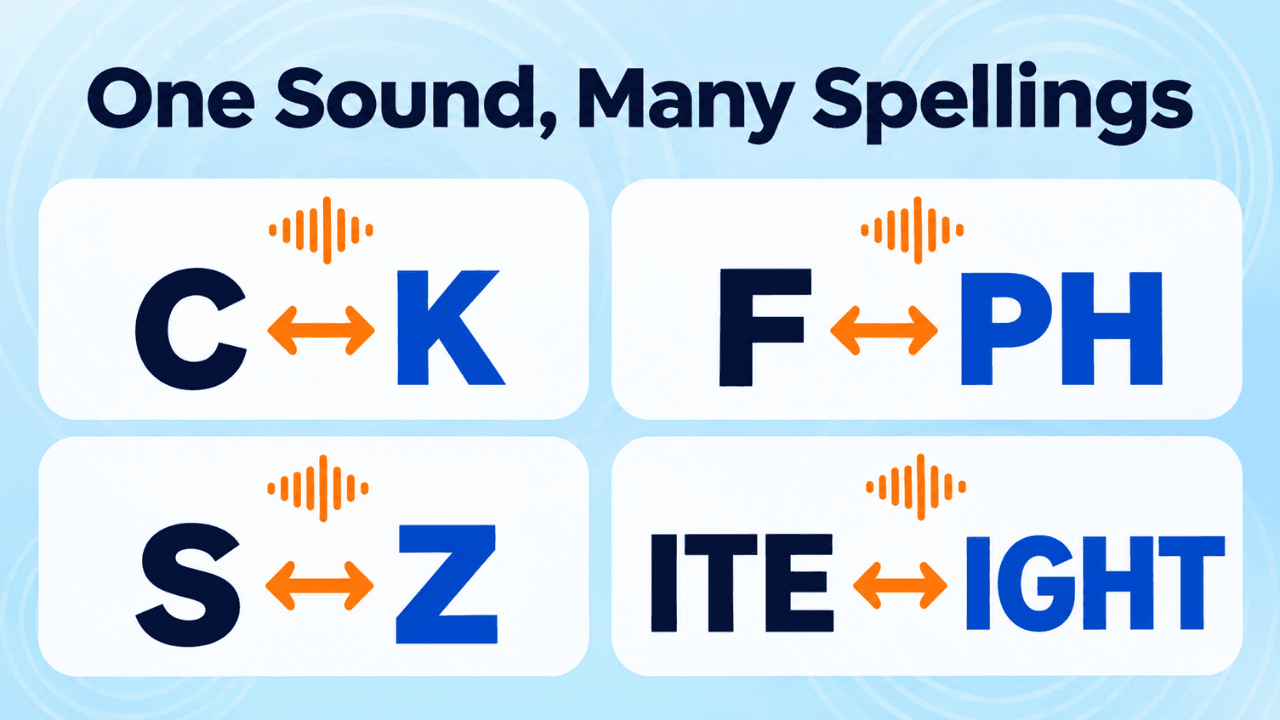
An effective phonetic equivalents trademark search considers the spelling patterns people commonly associate with particular sounds.
The following table provides practical examples.
| Variation | Illustrative name pairs |
|---|---|
| C and K | KLEAR / CLEAR |
| F and PH | FONIC / PHONIC |
| S and Z | ZENTRY / SENTRY |
| ITE and IGHT | NITE / NIGHT |
| Single and double letters | KORA / KORRA |
| Silent letters | NO / KNOW |
| Joined and separated words | SUNRAY / SUN RAY |
These examples illustrate spelling patterns, not verified trademark disputes.
Not every letter substitution produces the same pronunciation. Sound depends on the word and its context.
A useful technique is to say your proposed name aloud and consider how someone unfamiliar with it might write it.
This can reveal alternate spellings that deserve investigation.
How Does the USPTO Evaluate Confusingly Similar Trademarks?
The USPTO evaluates potentially conflicting trademarks by considering the marks themselves and the relationship between their goods or services.
Two factors are particularly important.
Similarity of the Marks
The USPTO considers whether trademarks resemble each other in sound, appearance, meaning, or commercial impression.
A small spelling change may not create a meaningful distinction when the overall names remain very similar.
For example, replacing one letter with another does not necessarily change how consumers recognize a brand.
However, marks sharing a few letters are not automatically confusingly similar. Each mark must be evaluated as a whole.
Relationship Between the Offerings
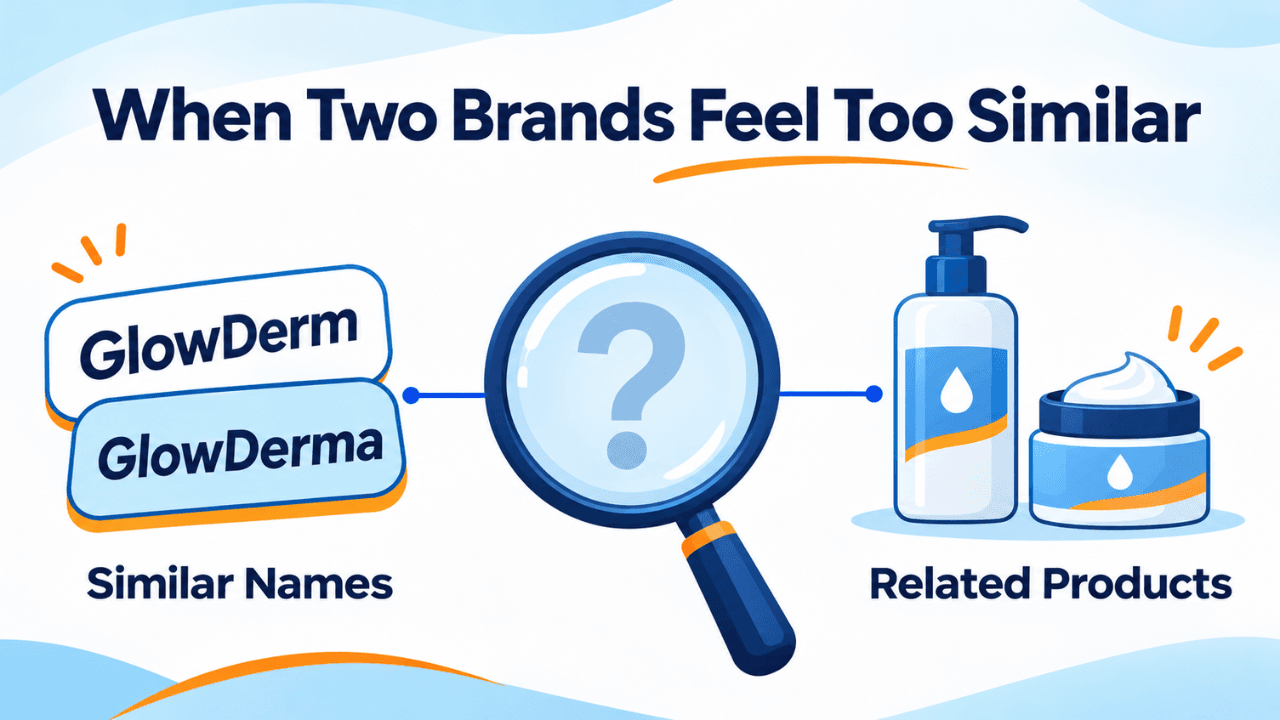
The USPTO also examines whether consumers might expect the goods or services to come from the same source.
Consider:
- Whether the products serve similar purposes.
- Whether customers typically buy them together.
- Whether businesses commonly sell or advertise them together.
- Whether the offerings reach overlapping customers.
The USPTO's federal trademark searching guidance explains why related goods or services matter when assessing search results.
These considerations help identify possible concerns, but they do not form a simple numerical test.
Where Else Can You Find Similar-Sounding Trademarks Online?
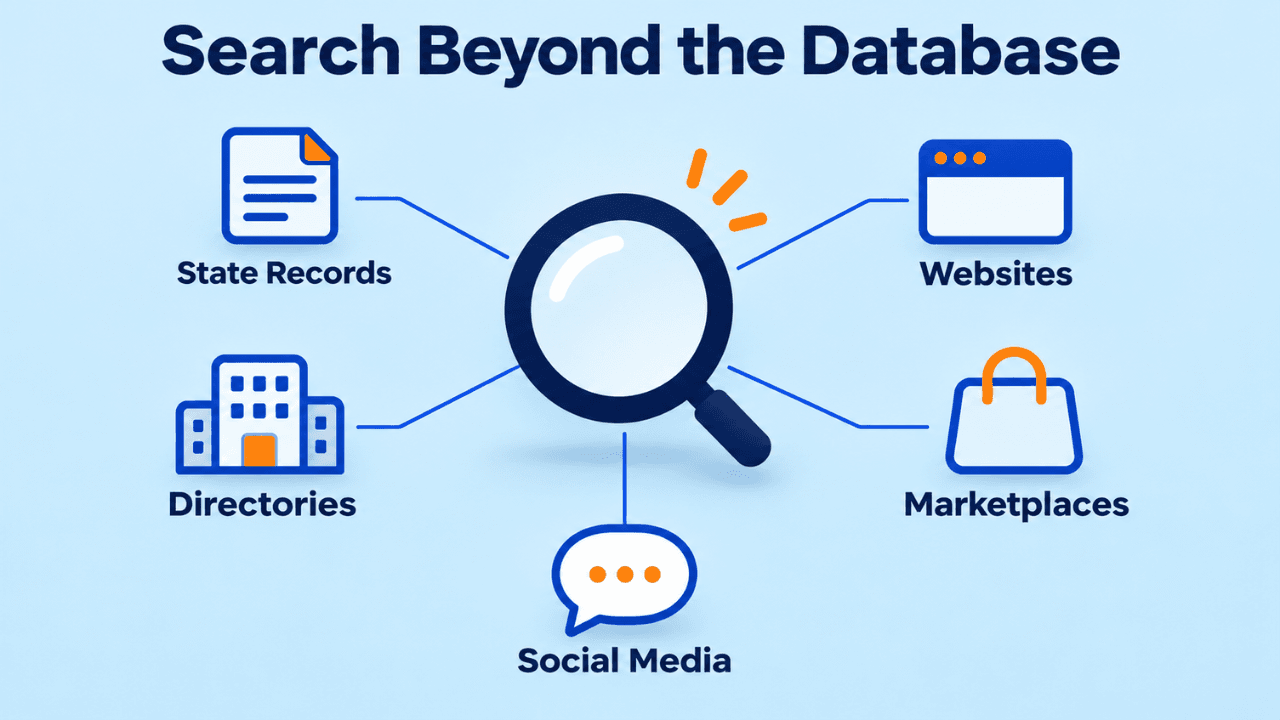
A federal trademark search does not identify every existing trademark use. Some businesses establish rights through qualifying commercial use without obtaining federal registration.
The USPTO recommends considering additional sources when conducting a comprehensive clearance search.
Relevant sources include:
- State trademark databases: Search state registrations that may not appear in federal results.
- Business websites: Look for companies using similar names with related offerings.
- Ecommerce marketplaces: Investigate brands selling comparable products.
- Business directories: Identify businesses operating under alternate spellings.
- Domain names and social media: Look for evidence of commercial activity associated with similar names.
A domain registration or social media username alone does not prove trademark ownership.
Look for actual use of the name to identify goods or services.
For businesses preparing to launch, Trademark Engine's comprehensive trademark search offers an option for broader research beyond an initial federal lookup.
What Should You Do If You Find a Potentially Conflicting Mark?
Finding a similar trademark should prompt further investigation rather than an immediate decision to abandon your proposed name.
Consider the following actions:
- Investigate the existing business: Review available information about its products and commercial use.
- Check the record's history: An inactive federal record may still point to a business with relevant unregistered rights.
- Explore alternative names: A more distinctive name may help reduce uncertainty.
- Consult a trademark attorney: A U.S.-licensed attorney can assess close matches and explain potential legal implications.
Keep a record of your search dates, queries, and relevant results.
This documentation can be useful when reviewing your naming decision or discussing the findings with an attorney.
How Can a Search Help Before Trademark Registration?

A trademark clearance search helps identify possible concerns before you invest in a proposed brand or submit a federal application.
It cannot guarantee registration.
The USPTO may identify conflicting federal marks or other legal issues during examination.
Before filing, review your proposed mark, legal owner, goods or services, and filing basis.
For additional guidance, see what to double-check before submitting a trademark application.
Taking these steps can help you approach trademark registration with a clearer understanding of your proposed name.
Conclusion
Searching for trademarks that sound alike requires more than checking identical names. Reviewing alternate spellings, phonetic equivalents, related goods or services, and commercial use can help identify potential conflicts.
The USPTO provides useful search tools, but interpreting results requires judgment. By researching your proposed name before filing, you can make more informed decisions about registration and long-term brand protection.
Ready to Search Your Trademark Name?
Before applying for federal registration, explore whether existing trademarks could affect your proposed brand.
Trademark Engine's trademark search tools can help you begin researching existing marks and considering your next steps.
Start Your Trademark Search Now
Trademark Engine Editorial Team
Frequently Asked Questions
Possibly. Similar pronunciation does not automatically prevent registration. The USPTO considers the overall similarity of the marks and whether their goods or services are related. A close match involving related offerings may create a likelihood-of-confusion concern.
USPTO examining attorneys search for potentially conflicting federal marks during examination. However, business owners should not assume that entering one name automatically finds every possible phonetic equivalent. A preliminary search should include reasonable spelling and pronunciation variations.
Not necessarily. A different font, color, or graphic may not eliminate a conflict involving similar wording. The USPTO considers the overall marks and related goods or services. A logo change alone does not establish that the underlying brand name is available.
Yes, depending on the circumstances. An abandoned application generally does not itself create a live federal registration barrier, but the earlier business may still use the mark commercially. Existing common-law rights may remain relevant even without an active federal registration.
No. Approval of a business or LLC name by a state does not establish that the name is available under trademark law. Business registration and trademark rights involve different legal considerations, so a separate trademark search is advisable.
The USPTO's federal Trademark Search system is free to use. Broader clearance research or professional assistance may involve additional service fees. These costs are separate from government trademark application filing fees.
Get Trademark Tips and Compliance Guidance
Subscribe for updates, insights, and resources that help you stay compliant and grow your mission.