How to Amend a Trademark Application (And 5 Mistakes You Can't Fix After Filing)

Published on November 18, 2026 | Updated on November 20, 2026
Estimated Read Time: 11 minutes

Key Takeaways
- The USPTO allows eligible amendments after an application is submitted.
- Your application's status determines which correction procedure to use.
- Filing under the wrong legal owner can invalidate your application.
- You cannot expand the original description of goods or services.
- Significant changes to a trademark's wording or design are generally prohibited.
- A careful pre-filing review can help prevent avoidable errors and expenses.
You can amend a trademark application after filing, but the USPTO permits only certain changes. Minor errors, contact details, and narrower goods or services descriptions may be corrected. However, naming the wrong legal owner, expanding product coverage, or materially changing your mark may require a new application.
According to an October 2026 USPTO report, the average time to first examination action was 4.1 months in fiscal year 2026. During this period, applicants may discover mistakes in their submitted information.
Perhaps you entered your personal name instead of your LLC, selected the wrong products, or uploaded an outdated logo.
Some errors can be corrected through a USPTO amendment, while others may require a new filing.
Understanding how to amend a trademark application can help you choose the appropriate correction procedure, protect your filing rights, and avoid unnecessary expenses.
Can You Change a Trademark Application After Filing?
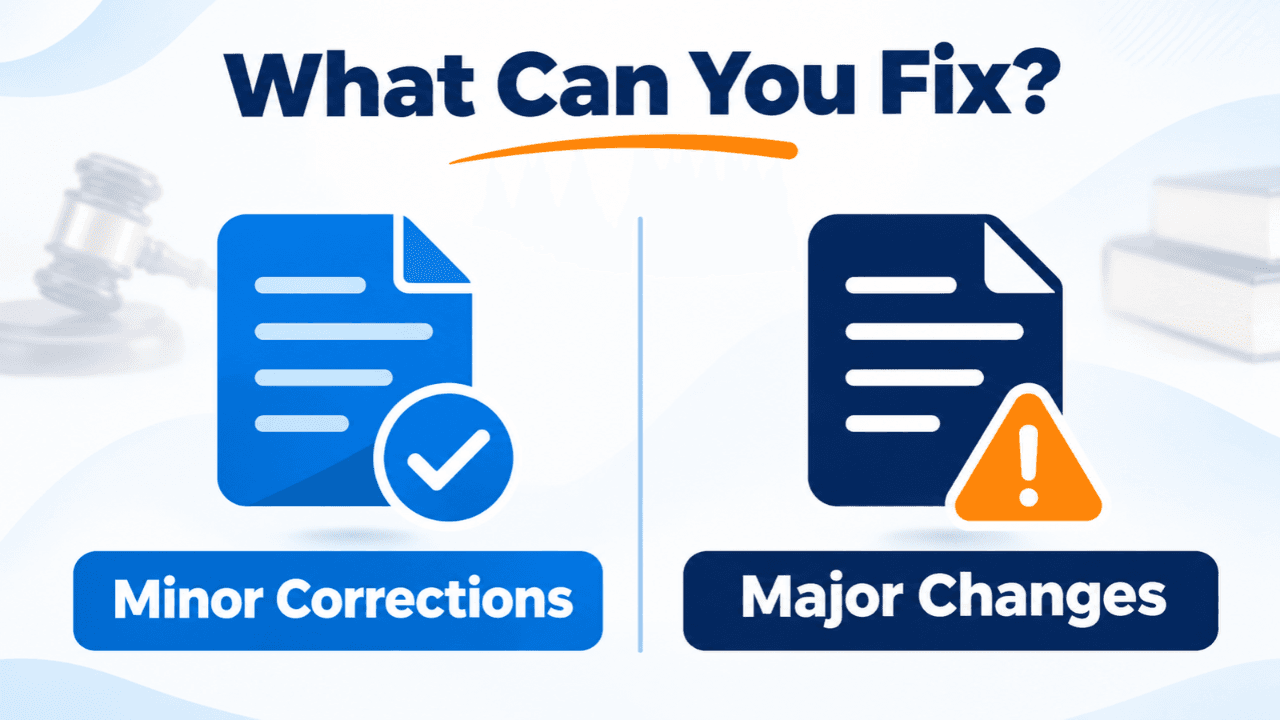
Yes. The USPTO allows certain corrections to pending trademark applications, provided they do not improperly change the original filing.
A minor clerical error is different from a change that affects the application's legal owner, trademark identity, or goods and services coverage.
The following table explains common situations.
| Filing Error | Amendment Allowed? |
|---|---|
| Incorrect contact information | Yes |
| Minor typo in the owner's legal name | Usually |
| Wrong original legal owner | Generally no |
| Narrowing the goods or services | Usually |
| Adding unrelated products | No |
| Minor trademark drawing adjustment | Sometimes |
| Substantially changing the trademark | Generally no |
| Changing the filing basis | Sometimes |
The USPTO's official correction guidance explains the restrictions that apply to each type of change.
5 Trademark Application Mistakes You Can Fix After Filing
The USPTO allows certain corrections after filing, provided they do not substantially change the original application. According to the USPTO's correction guidelines, common fixable mistakes include:
- Incorrect Contact Details: You can update your mailing address, email address, or phone number using the appropriate USPTO form.
- Minor Errors in the Owner's Name: Small mistakes, such as an omitted “Inc.” or a misspelled legal name, may be corrected if the actual owner remains unchanged.
- Overly Broad Goods or Services Descriptions: You may narrow or clarify your original description, but you cannot expand it to cover unrelated products.
- Minor Trademark Drawing Errors: Certain small adjustments may be permitted if they do not materially change the trademark's overall commercial impression.
- Incorrect Filing Basis: Before publication, you can generally change the filing basis if you meet the legal requirements for the new basis.
The appropriate correction depends on your application's status and the type of mistake. The USPTO reviews proposed amendments to determine whether they qualify.
How to Amend a Trademark Application With the USPTO
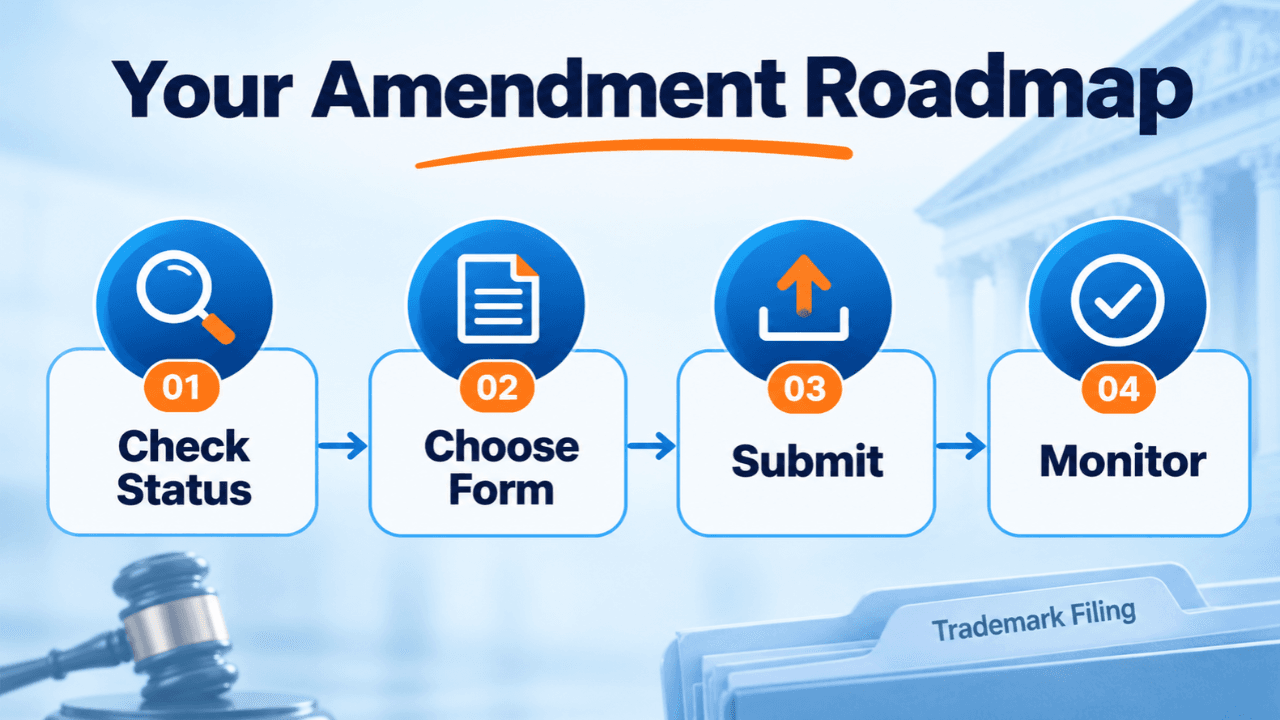
To amend your application, check its current status, choose the appropriate USPTO form, and submit the corrected information.
The procedure depends on whether your application is awaiting examination, responding to an office action, or has reached publication.
Step 1: Check Your Application Status
Visit the Trademark Status and Document Retrieval (TSDR) system.
Enter your trademark application serial number to review its status, filing history, and correspondence.
Check whether your application is:
- Awaiting examination
- Under examination
- Subject to an office action
- Approved for publication
- Published for opposition
An office action is an official USPTO notice identifying an issue that requires attention.
Your current filing stage helps determine the appropriate correction procedure.
Step 2: Select the Correct Amendment Form
The USPTO uses different procedures depending on when the amendment is requested.
| Application Stage | USPTO Procedure |
|---|---|
| Before assignment to an examining attorney | Voluntary Amendment |
| After receiving an office action | Response to Examining Attorney Office Action |
| After publication | Post-Approval/Publication Amendment |
| After registration | Section 7 Request for Amendment or Correction |
For a USPTO voluntary amendment, the agency recommends waiting 7–10 days after the initial filing before submitting the request.
If an office action has already been issued, submit the correction through the appropriate response form.
Certain changes after publication may require additional examination or a Petition to the Director.
Step 3: Submit the Correct Information
Once you identify the appropriate form:
- Enter your application serial number.
- Identify the information requiring correction.
- Provide accurate replacement information.
- Attach supporting documents when required.
- Review and submit your request.
Explain the correction clearly. For example, a misspelled legal name and a transfer of ownership involve different procedures.
Step 4: Monitor the USPTO's Response
After submitting your request, review your TSDR record for updates.
The USPTO may accept the amendment, request additional information, or refuse the proposed change.
For more information about tracking your application, reviewing USPTO correspondence, and handling deadlines, read our guide on what to do after submitting a trademark application.
5 Trademark Application Mistakes You Can't Fix After Filing
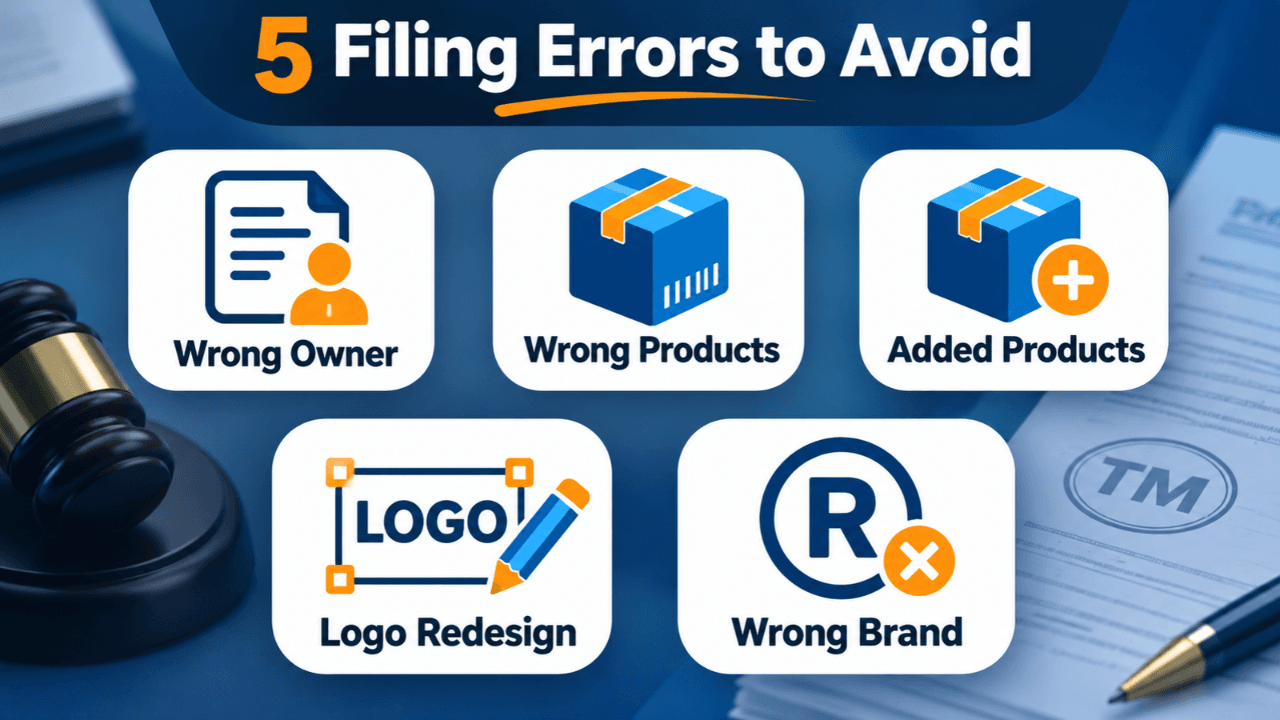
Some trademark application mistakes cannot be corrected because they affect the original applicant, the scope of protection, or the identity of the mark.
The following five business scenarios explain when those restrictions become important.
1. Filing Under the Wrong Legal Owner
A trademark application must identify the proper applicant on the filing date.
For a use-based application, this is generally the party that owns the trademark. An intent-to-use applicant must have the required bona fide intention to use the mark.
Example: Your existing LLC owns a skincare brand, but you submit the application under your personal name.
If the LLC was the correct legal applicant when you filed, simply substituting its name may not correct the error.
Under TMEP Section 1201.02, an application filed by the wrong party generally cannot be repaired through amendment or assignment.
What to do: Verify ownership on the original filing date. Seek legal advice if the wrong party submitted the application.
A valid ownership transfer after filing is different from naming the wrong owner initially.
2. Identifying Completely Unrelated Goods or Services
Your trademark application must describe the products or services associated with the mark.
Example: You operate an online clothing store but accidentally identify business consulting services in your application.
You generally cannot replace an unrelated service description with clothing because doing so would exceed the original filing's scope.
The USPTO may allow clarification of an existing description, but not a fundamental change to unrelated products.
What to do: Review the original identification. If it does not cover your intended goods or services, a separate filing may be necessary.
3. Expanding Product Coverage Beyond the Original Description
Launching additional products does not automatically expand an existing trademark application's coverage.
Example: You file for facial cleansers and later introduce branded T-shirts.
You generally cannot add clothing to the original application because it falls outside the scope of facial cleansers.
According to TMEP Section 1402.06, applicants may clarify or limit goods and services but cannot broaden the original identification.
This restriction also applies when the new products belong to another trademark class.
What to do: Consider a separate application for products outside your original description.
4. Making a Material Alteration to Your Trademark Design
A material alteration changes the overall commercial impression of the trademark.
Example: You apply to register a logo featuring the word "NORTHVALE" and a small mountain symbol.
Later, you replace the mountain with a large animal illustration and substantially redesign the layout.
The USPTO may determine that the revised design creates a different commercial impression.
Minor changes, such as removing an unnecessary trademark symbol, may be acceptable when they do not materially alter the mark.
The USPTO's trademark drawing guidance explains how proposed changes are evaluated.
What to do: Compare the original and revised designs. A substantially different logo may require another application.
5. Submitting a Different Brand Name Than Intended
Submitting the wrong word mark can create a filing problem that ordinary spelling corrections cannot resolve.
Example: Your jewelry business operates under the name "ELORA," but you accidentally submit an application for "VELORA."
Replacing one distinctive word with another may materially change the trademark's commercial impression.
This differs from correcting a minor typographical detail that does not significantly affect the mark.
What to do: Determine whether the proposed correction qualifies as a non-material change. If it creates a different mark, you may need to file again.
This situation and a substantial logo redesign are both governed by material-alteration rules, but involve different practical errors.
What Happens If Your Amendment Is Rejected?
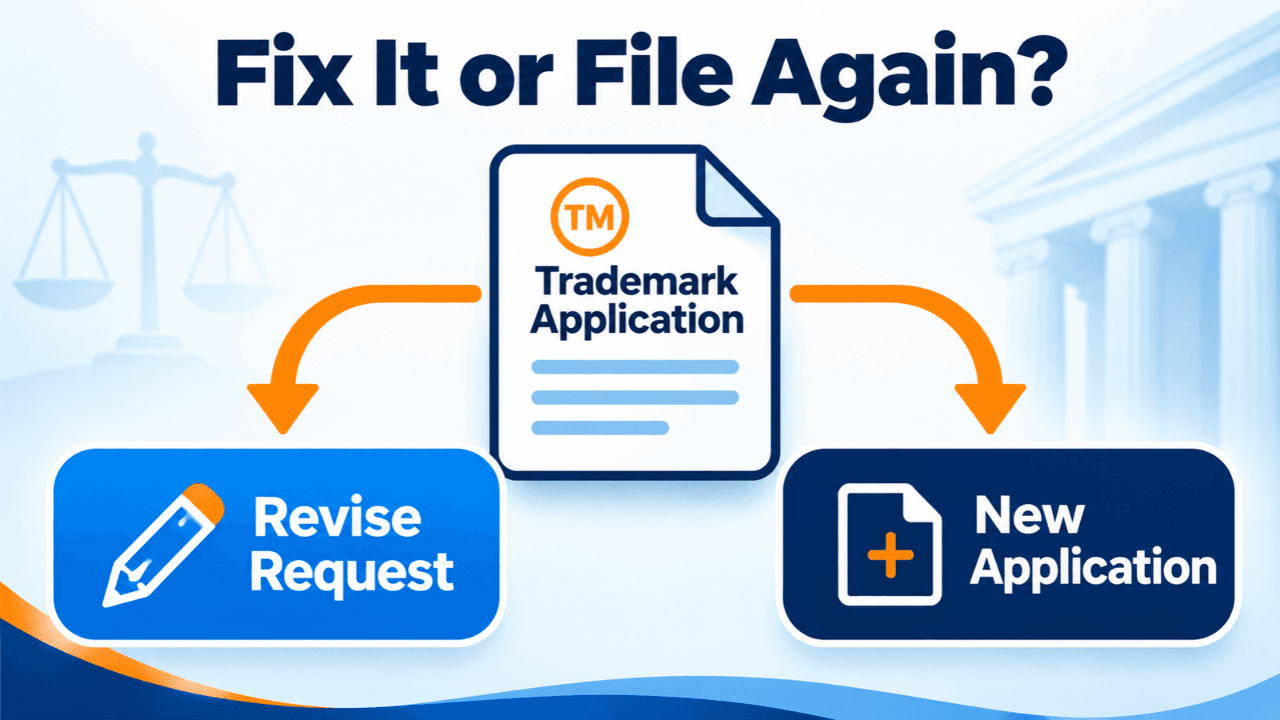
A rejected amendment does not automatically abandon the entire trademark application. The next step depends on the USPTO's explanation and the application's current status.
Some corrections may be revised. Others cannot be accepted under the original filing.
Choose the Appropriate Next Step
| Situation\ | \Recommended Action\ | \
|---|---|
| USPTO requests clarification\ | \Respond with the required information\ | \
| Proposed amendment is too broad\ | \Check whether a narrower correction is permitted\ | \
| Application contains a serious ownership defect\ | \Review validity with a trademark attorney\ | \
| You want to protect a different mark\ | \Consider a new application\ | \
| Existing application still provides useful coverage\ | \Evaluate whether to continue it\ | \
If you receive an office action, respond within the applicable deadline.
Trademark Engine's office action response service may help you explore available support.
Understand the Cost of Filing Again
A new trademark application generally receives a new filing date and requires applicable government fees.
As listed in the USPTO's trademark fee information, the base application fee for Section 1 or Section 44 filings is $350 per class, with additional surcharges possible.
A new filing does not automatically inherit the original application's filing date.
Before abandoning an application, review whether any valid protection remains worth pursuing.
How to Prevent Trademark Application Errors Before Filing
A careful review of ownership, trademark details, and product descriptions can help you avoid mistakes that are difficult to correct later.
Trademark planning is an important part of startup legal requirements and ongoing brand protection.
Review These Six Details
- Legal owner: Identify the person or entity that should apply.
- Trademark wording: Check the exact brand name and spelling.
- Trademark drawing: Confirm the correct logo or design is attached.
- Goods and services: Describe the products or services accurately.
- Filing basis: Verify that you meet the applicable use or intent-to-use requirements.
- Supporting evidence: Ensure any required specimen shows appropriate trademark use.
Before submitting, use the USPTO's Trademark Search system to research potentially conflicting marks.
You can also explore Trademark Engine's comprehensive trademark search to investigate possible conflicts before filing.
A trademark search helps identify potential conflicts, but an exact-name check may overlook similar-sounding marks, related products, or unregistered uses. Learn when a basic trademark search is not enough before choosing your brand name.
A Practical Review for Ecommerce Founders
Imagine you operate an online candle business.
Before paying the filing fee, compare three records:
- Business records: Does your application identify the correct legal owner?
- Product listings: Does the description match the products you sell or genuinely intend to sell?
- Brand materials: Does the trademark drawing match your intended name or logo?
Then check that your filing basis matches your business's actual circumstances.
This short exercise can reveal inconsistencies before they become filing problems.
Conclusion
Trademark application mistakes do not always require starting over. The right solution depends on the original filing details, the type of error, and the application's current status.
Minor corrections may be possible, while significant changes to ownership, product coverage, or trademarks can pose greater challenges.
Review your application carefully, follow USPTO deadlines, and seek legal guidance when necessary. Accurate information supports stronger brand protection and helps prevent avoidable registration expenses.
Start Your Trademark Registration With Confidence
Explore Trademark Engine's trademark registration services to help prepare your application. Careful preparation can reduce avoidable filing errors, while the USPTO determines whether your trademark qualifies for registration.
Trademark Engine Editorial Team
Frequently Asked Questions
A routine voluntary amendment generally has no separate government filing fee. However, certain petitions or related requests may require payment. Check the current USPTO fee schedule before submitting.
There is no fixed processing period for every amendment. Timing depends on the application stage, the requested correction, and whether additional examination is required.
Sometimes. The USPTO may accept a substitute specimen if it satisfies the relevant requirements, including applicable use-date rules. An unsuitable specimen may require another permitted response.
U.S.-domiciled applicants can generally represent themselves before the USPTO. Foreign-domiciled applicants must use a U.S.-licensed attorney. Legal assistance may be helpful when ownership or filing validity is uncertain.
Missing a required USPTO response deadline can cause your trademark application to become abandoned. In certain circumstances, you may request revival by filing a petition and paying the applicable government fee.
You may be able to request withdrawal or provide additional information, depending on the amendment's status. Contact the USPTO promptly because withdrawal may not be available or effective in every situation.
Get Trademark Tips and Compliance Guidance
Subscribe for updates, insights, and resources that help you stay compliant and grow your mission.