What Should You Do After Submitting a Trademark Application?

Published on October 27, 2026 | Updated on October 28, 2026
Estimated Read Time: 11 minutes

Key Takeaways
- Filing an application does not automatically grant federal trademark registration.
- The USPTO examines your mark for legal requirements and potential conflicts.
- Check your application status every three to four months through TSDR.
- Most domestic applicants have three months to respond to an Office Action.
- Approved marks generally enter a 30-day opposition period.
- Intent-to-use applicants must prove qualifying use before registration.
Quick Answer: After submitting a trademark application, save your USPTO serial number, check your application status, and monitor official correspondence. Respond to any requests before the deadline and follow the required steps toward federal registration.
Submitting a trademark application is an important step toward protecting your business name, logo, or slogan. However, your responsibilities continue after the USPTO receives your filing.
The examining attorney may identify a conflict, request corrections, or ask for evidence of trademark use. Some applications proceed without major issues, while others require additional steps.
Understanding what happens after filing a trademark application can help you manage these requirements without unnecessary delays.
This guide explains how to check your status, respond to USPTO notices, track important deadlines, and prepare for the next stage of trademark registration.
What Happens After Filing a Trademark Application?
After filing, the USPTO begins reviewing whether your mark meets federal registration requirements. The application may proceed to publication, require corrections, or face a legal refusal.
The trademark application process after filing generally includes these stages:
| Stage | What Happens |
|---|---|
| Application Received | The USPTO records your filing and assigns a serial number. |
| Examination | An examining attorney reviews your mark and application. |
| Office Action, If Required | The USPTO identifies legal issues or requests corrections. |
| Publication | The approved mark enters the opposition period. |
| Registration or Notice of Allowance | The next step depends on your filing basis. |
What Does the USPTO Examine?
An examining attorney reviews several requirements, including:
- Trademark conflicts: Whether your mark could be confused with an existing registered or earlier-filed mark.
- Distinctiveness: Whether your mark can identify the source of your goods or services.
- Goods and services: Whether your descriptions meet USPTO requirements.
- Evidence of use: Whether required specimens show acceptable trademark use.
For example, a business applying to register a skincare brand might receive a refusal if an existing mark is confusingly similar and covers related products.
A trademark search before filing may help identify potential conflicts, but it does not replace official examination.
The USPTO trademark process guide explains how applications move through these stages.
How Long Does Trademark Examination Take?
There is no guaranteed examination or registration date.
Processing times depend on USPTO workload, application complexity, and whether additional review is needed.
The USPTO publishes its current estimates on the Trademark Application Timeline.
An application taking longer than expected does not necessarily indicate a problem. Rely on your official application record rather than assuming a delay means refusal.
What Should You Do Immediately After Filing?
Your first priority is to confirm that your application details are accurate and establish a reliable way to track its progress.
Save Your Application Records
Keep your filing receipt, serial number, payment confirmation, and submitted application.
The serial number identifies your filing when you access USPTO records or contact the agency.
Also preserve the description of your goods or services and any specimens submitted with your application.
Check Your Trademark Application Status
The USPTO's free Trademark Status and Document Retrieval (TSDR) system lets you view application progress and official correspondence.
Follow these steps:
- Visit USPTO TSDR.
- Enter your application serial number.
- Open the Status tab to review the current record.
- Select Documents to check official notices.
- Save a copy of the status information.
The USPTO recommends checking pending applications at least every three to four months.
Understanding the status terminology can help you interpret updates correctly.
| Status | Meaning |
|---|---|
| Live | The application remains active. |
| Approved for Publication | The mark has passed examination for publication but is not registered. |
| Suspended | Examination is temporarily paused. |
| Abandoned | The application is no longer active. |
| Registered | Federal registration has been issued. |
A Live status does not mean your trademark has been approved.
Verify Your Contact Information
The USPTO uses your correspondence details to send notices about examination and required actions.
Keep your email address current and review your spam folder regularly. If your details change, use the appropriate USPTO form to update them.
Preserve Evidence of Trademark Use
If you already sell products or provide services under your mark, retain dated records showing its actual use.
For ecommerce businesses, these may include product labels, packaging, or product pages displaying the mark with purchasing information.
This evidence can be useful when the USPTO requires proof of qualifying use in commerce.
What Happens if the USPTO Sends an Office Action?
An Office Action is an official notice explaining a legal issue or requesting additional information. Receiving one does not automatically mean your application has been permanently rejected.
Why Does the USPTO Issue Office Actions?
Common reasons include:
- Likelihood of Confusion: Your mark may be too similar to another mark used for related goods or services.
- Descriptiveness: Your mark may directly describe a characteristic or feature of your products.
- Incorrect Goods or Services Description: The identification may be unclear or require acceptable wording.
- Specimen Problems: Your submitted evidence may not adequately show the mark being used as a trademark in commerce.
For example, an ecommerce clothing brand might submit a standalone digital logo instead of a photograph of a label attached to its clothing.
The examiner may request acceptable evidence or explain whether other options are available.
How Should You Respond to an Office Action?
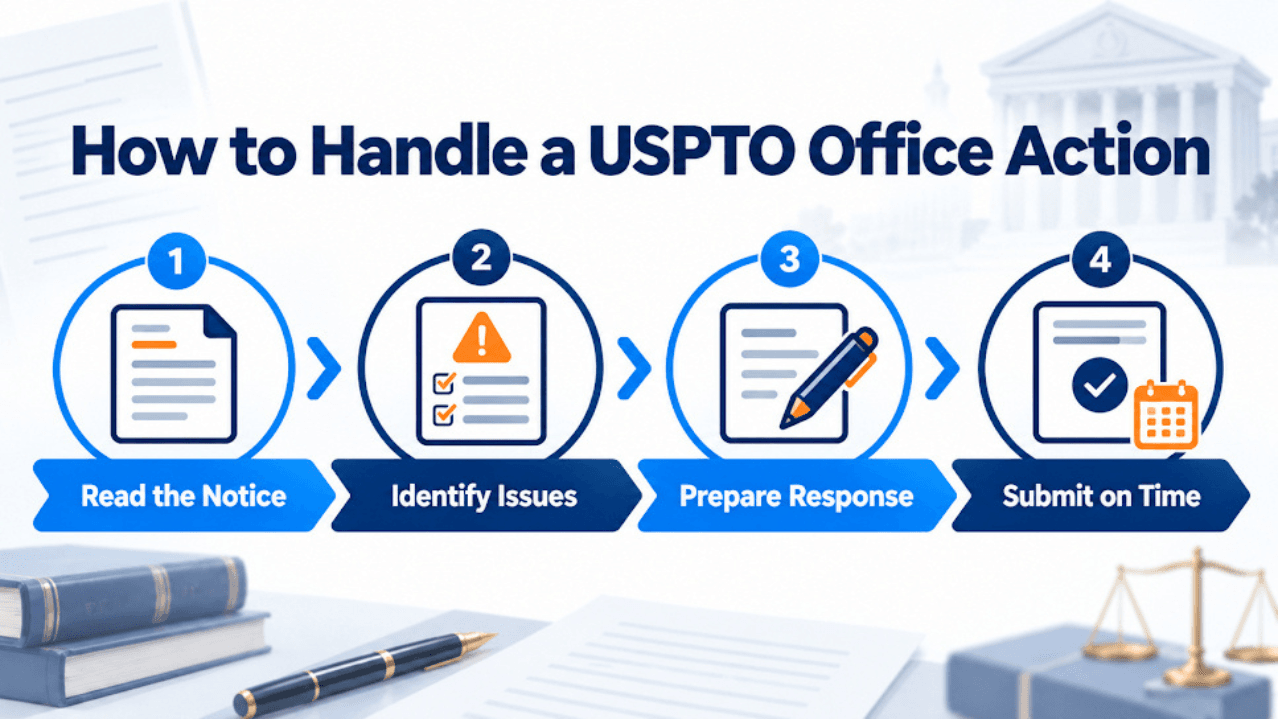
Read the entire notice in your TSDR Documents tab before preparing a response.
Then:
- Identify each refusal or requirement.
- Confirm the response deadline.
- Gather the necessary information or evidence.
- Submit the appropriate response through the USPTO's online forms.
- Verify that your submission appears in TSDR.
For most domestic applications under Sections 1 and 44, the response deadline is three months from the Office Action issue date.
Eligible applicants can request one additional three-month extension by paying the required fee before the original deadline.
Madrid Protocol applicants generally receive six months without this extension option.
The USPTO's Office Action response guidance explains these rules.
If your notice raises a complex legal refusal, a U.S.-licensed trademark attorney can help you assess the available options.
What Happens if You Miss the Response Deadline?
The USPTO may declare your application abandoned if you fail to respond on time.
In certain circumstances, you may qualify to revive an unintentionally abandoned application by filing a petition and paying the applicable fee.
Petitions generally have strict filing deadlines. If revival is unavailable, you may need to file a new application.
What Happens After Your Trademark Is Approved for Publication?
Once an examining attorney approves your mark for publication, the USPTO generally publishes it in the Trademark Official Gazette.
Publication allows third parties to challenge registration if they believe it would harm their trademark rights.
What Is the 30-Day Opposition Period?
The standard opposition period lasts 30 days.
During this period, an eligible party may file an opposition or request an extension of time to oppose.
An opposition is handled through proceedings before the Trademark Trial and Appeal Board.
If no opposition prevents the application from moving forward, the next step depends on the filing basis.
The USPTO explains the process in its approval for publication guidance.
Two common U.S. filing bases follow different paths.
| Filing Basis | Next Step |
|---|---|
| Section 1(a): Use in Commerce | Registration may issue after the opposition period if all requirements are met. |
| Section 1(b): Intent to Use | The USPTO generally issues a Notice of Allowance, followed by a requirement to prove qualifying use. |
If you filed based on intent to use, you generally have six months from the Notice of Allowance date to submit a Statement of Use or request an eligible extension.
A Statement of Use must include acceptable evidence that the mark is genuinely used in commerce.
Example: Suppose you applied for a skincare brand before launching your online store. After receiving a Notice of Allowance, you begin selling products with your brand name displayed on the packaging.
You can then submit appropriate evidence through a Statement of Use, provided the use meets USPTO requirements.
A product mockup or proposed future sale does not establish actual trademark use.
See the USPTO's intent-to-use timeline for the applicable process and deadlines.
What Deadlines and Additional Fees Should You Know?
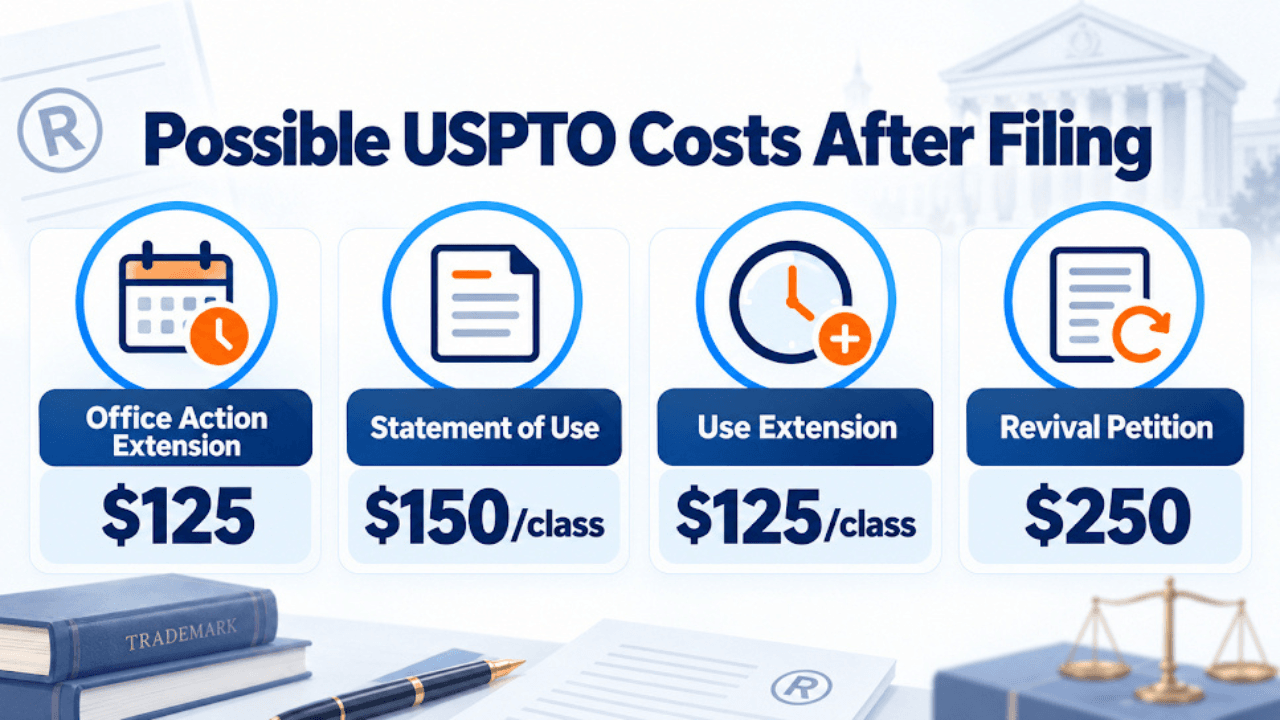
Certain post-filing actions require additional government fees. These costs depend on your circumstances and are separate from the original application filing fee.
The following amounts reflect selected USPTO electronic filing fees in 2026.
| Filing or Request | USPTO Fee |
|---|---|
| Eligible Office Action Response Extension | $125 |
| Statement of Use | $150 per class |
| Six-Month Statement of Use Extension | $125 per class |
| Petition to Revive an Application | $250 |
An ordinary, timely Office Action response does not automatically require a separate government response fee.
Use the official USPTO fee schedule to confirm the amount before submitting payment.
Practical Tip: Record each deadline from your official correspondence and set an earlier calendar reminder. USPTO filing deadlines generally use Eastern Time, so applicants in other time zones should take particular care.
How Can You Protect Your Brand While Your Application Is Pending?
A pending application does not guarantee federal registration, but you can still take appropriate steps to protect and document your brand.
Use Trademark Symbols Correctly
You may generally use the ™ symbol to show that you claim trademark rights, even before registration.
The ® symbol is reserved for federally registered marks and should only be used for the goods or services covered by that registration.
Using a trademark while an application is pending does not automatically establish that your use is lawful. Existing rights held by others may still apply.
Monitor Potentially Conflicting Marks
The USPTO reviews applications for registration, but it does not enforce your trademark rights on your behalf.
Periodically reviewing similar business names, product listings, and trademark filings may help you identify possible conflicts.
Trademark Engine's trademark search and trademark monitoring services can support different stages of your brand protection efforts.
Watch for Misleading Trademark Notices
Because trademark applications are public records, applicants sometimes receive unofficial invoices or messages that appear to come from government agencies.
Before paying an unfamiliar fee:
- Check whether the notice appears in TSDR.
- Verify the sender through official USPTO contact information.
- Be cautious of payment requests for private trademark directories.
The USPTO provides additional information about recognizing trademark scams.
Once your trademark is registered, you must also complete required maintenance filings to keep the registration active.
Conclusion
After submitting a trademark application, staying organized is just as important as completing the initial filing. Check your USPTO status, review official notices, respond before deadlines, and keep evidence of your trademark use. Understanding examination, publication, and registration requirements can help you avoid preventable setbacks. These practical steps will help you manage the process with greater confidence while preparing your business for the responsibilities that follow registration.
Take the Next Step With Trademark Engine
Whether you are launching a new brand or expanding an existing business, understanding trademark requirements can help you make informed protection decisions.
Explore Trademark Engine's trademark registration services to learn about filing options and available assistance. Service fees and applicable USPTO government fees are separate, and the USPTO determines whether registration is granted.
Trademark Engine Editorial Team
Frequently Asked Questions
The timeline varies based on application volume and examination requirements. Check the USPTO's current processing estimates and your TSDR record for updated information about your application.
The USPTO generally issues an Office Action identifying required corrections or legal concerns. You can read the notice in TSDR and should follow its specific response instructions.
Yes. Certain details, including correspondence information, can be updated through USPTO forms. However, material changes to the mark and expansions of goods or services are generally restricted.
Suspension means examination has temporarily stopped, often while the USPTO waits for another application or legal matter to be resolved. Follow any instructions in the suspension notice and monitor the status.
Generally, yes, provided the use does not violate another party's rights. You can use ™ to indicate claimed trademark rights, but you cannot use ® until federal registration is issued for the relevant goods or services.
No. Approval for publication is followed by an opposition period. Depending on the filing basis, the USPTO may then issue a registration or require additional steps, such as proof of qualifying use.
Get Trademark Tips and Compliance Guidance
Subscribe for updates, insights, and resources that help you stay compliant and grow your mission.