What Happens to Your Trademark When Your Business Changes Names?

Published on November 15, 2026 | Updated on November 19, 2026
Estimated Read Time: 9 minutes

Key Takeaways
- A legal business name change does not automatically invalidate an existing trademark.
- Trademark ownership remains unchanged when the same legal entity adopts a new name.
- A transfer to another company generally requires an assignment.
- USPTO Assignment Center handles ownership-related record changes.
- A substantially different brand name may require a new trademark application.
- Existing registrations must meet continued-use and maintenance requirements.
Quick Answer: Changing your business name does not automatically cancel your trademark registration. If the same legal entity continues to own the mark, updating its name with the USPTO may be sufficient. Transferring ownership or adopting a different brand may require additional action.
The U.S. trademark system continues to see growing demand. According to an April 2026 USPTO report, the agency received 431,734 trademark application classes during the first half of fiscal year 2026, a 7% increase over the same period in FY 2025.
For business owners, protecting an established brand becomes especially important when changing company names. Whether you're renaming an LLC, restructuring ownership, or launching a new identity, your existing trademark may still hold value. However, different changes require different legal steps. Understanding what happens to your trademark when your business changes names can help you preserve existing rights and avoid unnecessary applications.
Does Changing Your Business Name Affect Your Trademark?

No, changing your company's legal name generally does not affect an existing trademark registration if the same legal entity continues to own the mark.
A business name identifies the company operating the business. A trademark identifies the source of particular goods or services.
For example, suppose Evergreen Beauty LLC sells skincare products under the registered trademark BLOOMORA.
The company later changes its legal name to Evergreen Wellness LLC but continues selling products under BLOOMORA.
Because the legal entity and trademark remain unchanged, the company ordinarily needs to record its new owner name rather than apply for another registration.
The situation differs when a new legal entity takes ownership or the actual trademark changes.
According to the USPTO's ownership-change guidance, these circumstances require different procedures.
What Happens to Trademark Ownership After a Business Name Change?
Trademark ownership generally stays with the same company after a legal name change. However, transferring the trademark to a separate legal entity involves different requirements.
The distinction depends on who legally owns the mark before and after the transaction.
When the Same Company Changes Its Legal Name
Suppose Bright Path LLC legally becomes Bright Path Ventures LLC through an approved state filing.
If the company remains the same entity, its trademark ownership generally continues without an assignment.
Supporting records may include approved articles of amendment or a state-issued name-change certificate.
When the Trademark Moves to Another Owner
A trademark assignment transfers ownership from one legal party to another.
Assignments commonly arise when an individual transfers a mark to an LLC, a company sells a brand, or a merger changes ownership.
Under 15 U.S.C. §1060, trademark assignments generally must include the associated goodwill.
Goodwill refers to the business reputation and customer recognition connected with the mark.
A transfer that separates a trademark from its goodwill may create legal problems.
Which Type of Change Applies to Your Business?
Business Situation | Ownership Impact | Likely Action |
LLC legally changes its name | Same legal entity | Record name change |
Business adopts a DBA | Legal owner generally unchanged | Review owner information |
Individual transfers a mark to an LLC | Different legal owner | Record assignment |
Company sells its brand | Ownership transfers | Document assignment |
Business introduces a new product brand | Different trademark | Evaluate new application |
Certain pending intent-to-use applications also face assignment restrictions before an allegation of use is filed. An exception may apply to transfers involving a qualifying successor to the associated business.
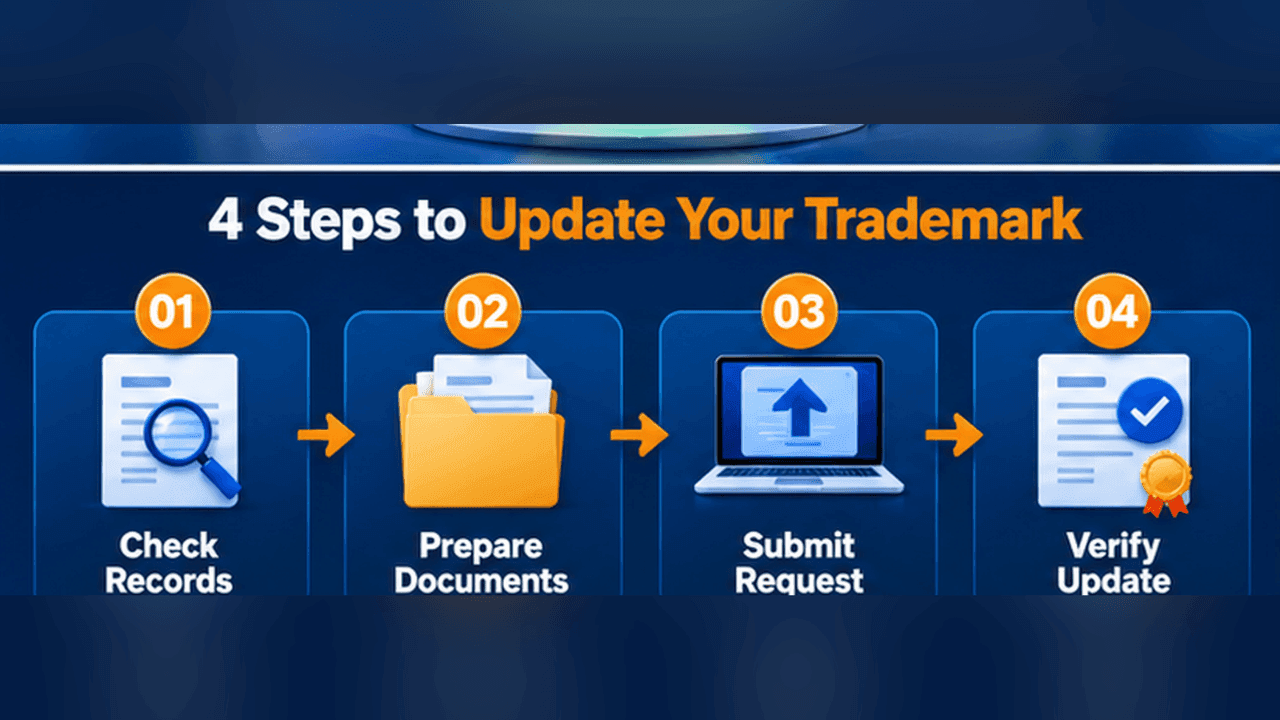
How to Update Your Business Name on a USPTO Trademark
To update your business name on a trademark, identify the correct type of change, record the necessary documents through USPTO Assignment Center, and verify the updated information in TSDR.
Step 1: Check Your Existing Registration
Visit the Trademark Status and Document Retrieval system and enter your serial or registration number.
Review the owner's legal name, entity information, and application or registration status.
This helps determine whether you need to record a name change, transfer ownership, or correct an existing error.
Step 2: Prepare Supporting Documents
Depending on your circumstances, you may need:
- A state-approved name-change certificate.
- Articles of amendment.
- A signed trademark assignment agreement.
Documents establishing a merger or ownership transfer.
The documents should accurately identify the parties and relevant trademarks.
Step 3: Submit the Recordation Request
Use USPTO Assignment Center to submit the appropriate ownership-related document.
Complete the required cover sheet, provide supporting information, and pay the applicable government fee.
Check that the legal names and trademark numbers match the supporting documents.
Step 4: Verify the Updated Owner Information
The USPTO generally processes electronic recordation requests in less than a week.
After receiving the Notice of Recordation, allow approximately another week before checking TSDR.
If the ownership information has not updated automatically, the next filing depends on the application's status.
For a registered trademark, a Section 7 Request may be necessary. A separate fee may apply.
Important: Recordation does not mean the USPTO has independently determined that the underlying transfer is legally valid.
How Much Does a Business Name Change Trademark Update Cost?
The USPTO charges $40 to record the first trademark in an ownership-related document and $25 for each additional trademark included in that document.
These amounts apply to recording assignments, agreements, and other ownership documents.
USPTO Recordation Service | Government Fee |
First trademark per document | $40 |
Each additional trademark in the same document | $25 |
The figures come from the USPTO fee schedule, last revised August 14, 2026.
These fees do not necessarily represent the total cost of the process.
Additional expenses may include legal assistance, document preparation, or separate USPTO requests.
For example, if a registered trademark requires a Section 7 amendment, an additional government fee may apply.
Business owners with multiple registrations should review their documents carefully before submitting separate recordation requests.
Do You Need a New Trademark Registration When Rebranding?
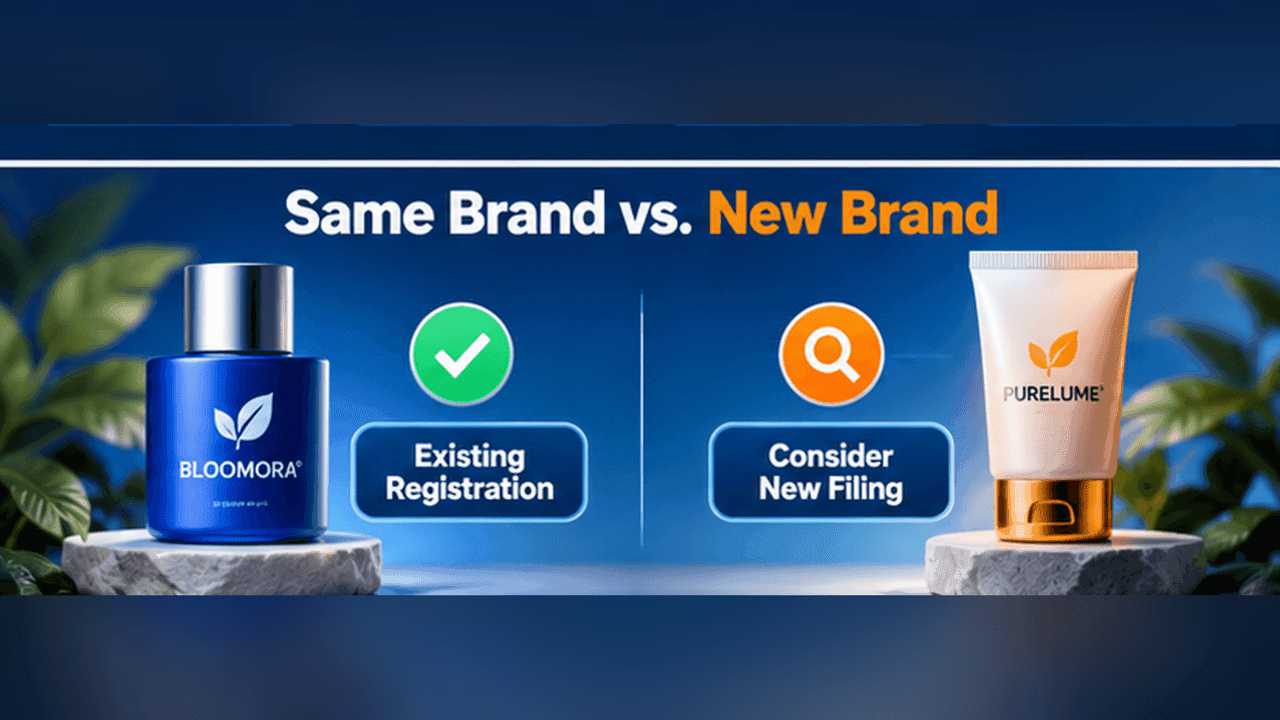
You generally do not need a new application if only your company's legal name changes. However, introducing a substantially different brand name may require separate registration.
Your existing trademark registration protects the particular mark identified in that registration for the specified goods or services.
Consider an ecommerce company selling candles under the registered trademark GLOWMINT.
The company later replaces GLOWMINT with a different product brand, PURELUME.
The existing GLOWMINT registration does not automatically protect PURELUME.
Although the USPTO permits certain non-material amendments to registered marks, changes that materially alter a mark generally require a new application.
Before moving forward, review how to trademark a business name to understand the federal filing process.
Research Your Proposed Brand Before Launching
An available LLC name, domain, or social media handle does not establish trademark availability.
Another business may already hold rights in a similar name used for related goods or services.
When examining possible conflicts, consider:
- Similar names, spellings, and pronunciations.
- Related goods or services.
- Similar logos or overall commercial impressions.
- Earlier unregistered marketplace uses.
Begin with a USPTO trademark search, then review relevant marketplace activity.
A broader search may be useful because exact-name results can miss potential conflicts. Learn when a basic trademark search is not enough before committing to new packaging or advertising.
A search cannot guarantee approval, but it can reveal issues worth investigating before you file.
Can You Keep Using Your Old Trademark After Rebranding?
Yes, you may continue using your previous trademark if you retain the necessary rights and continue using the mark appropriately in commerce.
Some businesses maintain established product brands while launching separate collections under new names.
However, federal registrations require ongoing maintenance.
According to the USPTO's registration maintenance requirements, owners generally must submit continued-use documents during specific periods.
These include:
- Between the fifth and sixth years after registration.
- Between the ninth and tenth years after registration.
- Every ten years thereafter.
Different rules apply to certain international registrations.
If you permanently discontinue a trademark without intending to resume use, abandonment may become an issue.
A business rebrand alone does not automatically establish abandonment. Actual use and intent remain important considerations.
If you operate multiple brands, understanding trademark monitoring versus trademark searching can help distinguish ongoing brand monitoring from pre-launch clearance research.
Common Mistakes to Avoid During a Company Name Change
Most avoidable problems involve inaccurate ownership records, unnecessary applications, or confusion between a business's legal identity and its trademarks.
Watch for these five mistakes.
1. Filing an Assignment for a Simple Name Change
An assignment is intended for ownership transfers. Confirm whether the legal owner actually changed before selecting the procedure.
2. Assuming State Registration Updates Federal Records
Changing your LLC name with your state does not necessarily update the USPTO's owner information.
3. Treating a New Brand as Automatically Protected
An existing registration does not automatically extend to a completely different name or materially altered logo.
4. Missing Registration Maintenance Deadlines
A company rename does not remove the obligation to submit required maintenance filings and fees.
5. Leaving Important Business Documents Inconsistent
Review contracts, invoices, marketplace accounts, and other records to ensure they identify the appropriate legal entity.
For complex mergers, assignments, or disputed ownership, guidance from an experienced U.S.-licensed trademark attorney may be appropriate.
What Should You Do Before Finalizing Your New Business Identity?
Before completing a name change or rebrand, organize the legal records and customer-facing materials affected by the transition.
Use this checklist:
- Confirm ownership: Identify the legal owner of each registered mark.
- Review your portfolio: Check registration status and covered goods or services.
- Document the changes: Retain relevant state filings and agreements.
- Update USPTO records: Complete the appropriate owner-name or transfer process.
- Assess new brand names: Investigate potentially conflicting marks.
- Coordinate the transition: Update websites, contracts, packaging, and business accounts.
- Track existing registrations: Review continued use and upcoming filing deadlines.
Completing these checks can help you maintain consistent records while introducing your company's new identity.
Conclusion
Changing your business name does not automatically invalidate your trademark. Whether you need an ownership update, assignment, or new application depends on the changes made to your company and brand.
Before completing a rebrand, verify your existing rights, identify the appropriate USPTO procedure, and research any new trademark you plan to use. These steps can help preserve your established brand recognition while supporting your company's next stage of growth.
Protect Your New Brand With Trademark Engine
Planning to introduce a new business or product name? Explore Trademark Engine's trademark search and registration tools to research potential conflicts and understand your federal filing options before investing in your new identity.
Trademark Engine Editorial Team
Frequently Asked Questions
Generally, no. If the same legal entity changes its name, the existing trademark registration number ordinarily remains unchanged. Updating the owner information does not create a separate registration.
Usually, yes. A DBA does not automatically create a new legal entity or change trademark ownership. If the registered owner's legal information remains accurate, adopting a DBA alone may not require an ownership update.
Yes. An individual can generally assign a trademark to an LLC, provided the transfer meets applicable legal requirements, including the transfer of associated goodwill. Certain pending intent-to-use applications have additional restrictions.
You can generally record a legal owner-name change while an application is pending. Depending on its stage, an additional request may be necessary if the examination record does not update automatically.
Not necessarily. A name change alone generally does not require a new Employer Identification Number when the same legal entity continues operating. Certain ownership or structural changes may affect EIN requirements.
Yes. A single legal entity can own multiple trademarks covering different goods, services, or product lines. Each registration has its own scope and maintenance requirements, so accurate records are important.
Get Trademark Tips and Compliance Guidance
Subscribe for updates, insights, and resources that help you stay compliant and grow your mission.