USPTO Post-Registration Audits: How to Prepare Your Proof of Use

Published on November 11, 2026 | Updated on November 18, 2026
Estimated Read Time: 9 minutes

Key Takeaways
- The USPTO conducts random and directed audits to verify trademark use in commerce.
- Qualifying Section 8 or Section 71 maintenance filings may be selected for review.
- Acceptable evidence must connect the registered mark to specific goods or services.
- Ecommerce sellers should preserve genuine product listings with URLs and dates.
- Missing proof can lead to additional evidence requests, deletion fees, or cancellation.
- Reviewing your registration before maintenance deadlines can help identify problems early.
Quick Answer: A USPTO post-registration audit verifies whether a registered trademark is genuinely used with the goods or services listed in its registration. Trademark owners must provide acceptable proof of use for selected items, such as product labels, packaging, or qualifying website screenshots. Preparing accurate records and responding on time can help maintain your registration.
Trademark filings continue to grow across the United States. According to an April 2026 USPTO report, the agency received 431,734 trademark application classes during the first half of fiscal year 2026, a 7% increase over the same period in FY 2025.
As more businesses seek federal trademark protection, keeping the trademark register accurate remains important.
For ecommerce founders and small business owners, maintaining a registration means providing reliable evidence of commercial use when required. Products change, services evolve, and older registrations may no longer reflect current operations.
This guide explains USPTO audit requirements, acceptable documentation, response procedures, and practical ways to prepare.
What Is a USPTO Post-Registration Audit?
A USPTO post-registration audit examines whether a trademark owner continues to use a registered mark for the goods or services identified in the registration.
The USPTO established its post-registration audit program in November 2017 to improve the accuracy of the federal trademark register.
Trademark owners must file maintenance documents at designated intervals, including Declarations of Use under Section 8 or Section 71.
These filings generally require one specimen per class. An audit asks the owner to provide additional evidence for selected goods or services.
According to the USPTO's official audit guidance, more than 50% of audited registrations have resulted in goods or services being removed or registrations being canceled since the program began.
Which Registrations Can Be Audited?
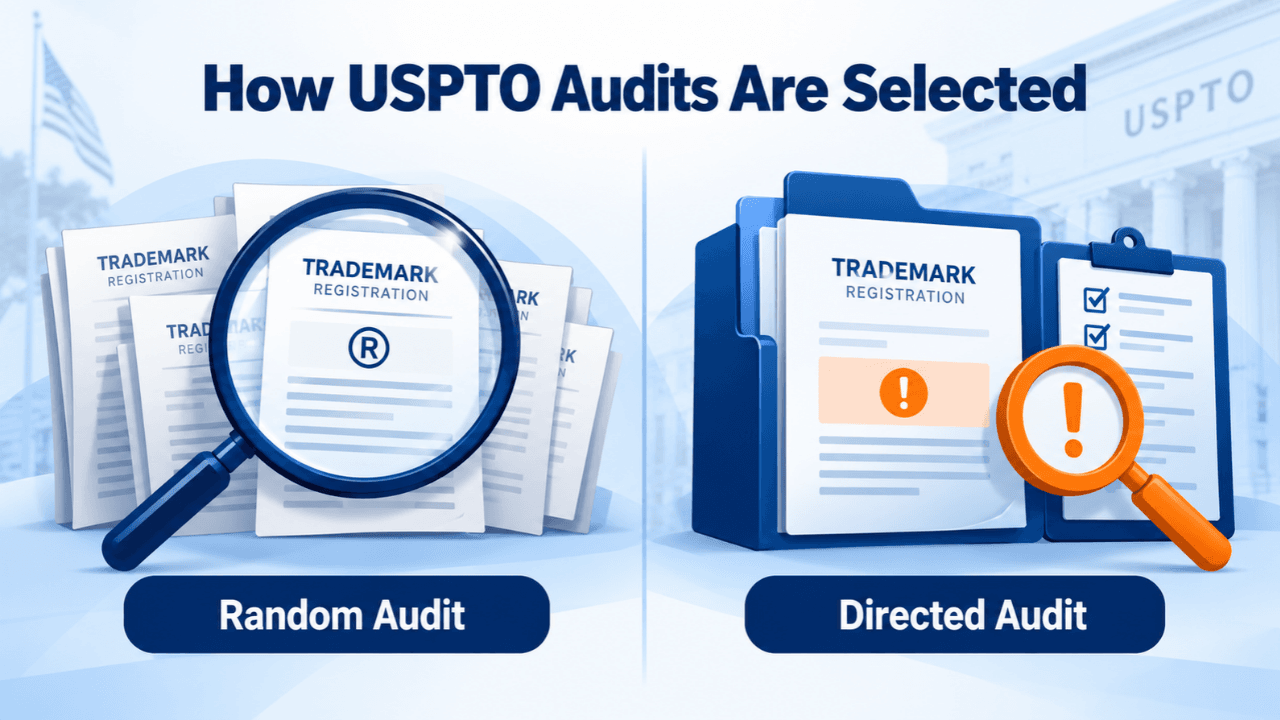
The USPTO uses two audit approaches.
Random audits: Registrations may qualify when owners timely file Section 8 or Section 71 declarations and list:
- At least four goods or services in one class; or
- At least two classes with two or more goods or services in each.
Directed audits: The USPTO may review registrations when submitted records or specimens raise concerns about whether the trademark is genuinely used.
During a random audit, the agency initially requests proof for two additional goods or services in each audited class. A directed audit may cover some or all registered items.
An audit notice does not automatically mean your trademark registration is invalid.
What Counts as Acceptable Trademark Proof of Use?
Trademark proof of use must demonstrate that your registered mark identifies the source of the goods or services claimed in your registration.
Acceptable documents depend on whether your business sells physical products or provides services.
Evidence for Physical Goods
For product-based businesses, the USPTO may accept:
- Photographs of actual merchandise displaying the trademark.
- Labels or hangtags attached to the goods.
- Product packaging that identifies the goods and displays the mark.
- Qualifying ecommerce product pages offering the goods for purchase.
For example, a skincare brand may submit a photograph showing its registered trademark on an actual moisturizer container.
A standalone brand logo or digitally created packaging concept generally does not prove commercial use.
Evidence for Service Businesses
Businesses providing services may use advertisements, brochures, website pages, or signage that directly associate the trademark with the identified services.
For example, a consulting company's service webpage may qualify if it displays the registered mark and clearly describes the consulting services offered.
Ecommerce Website Specimen Requirements
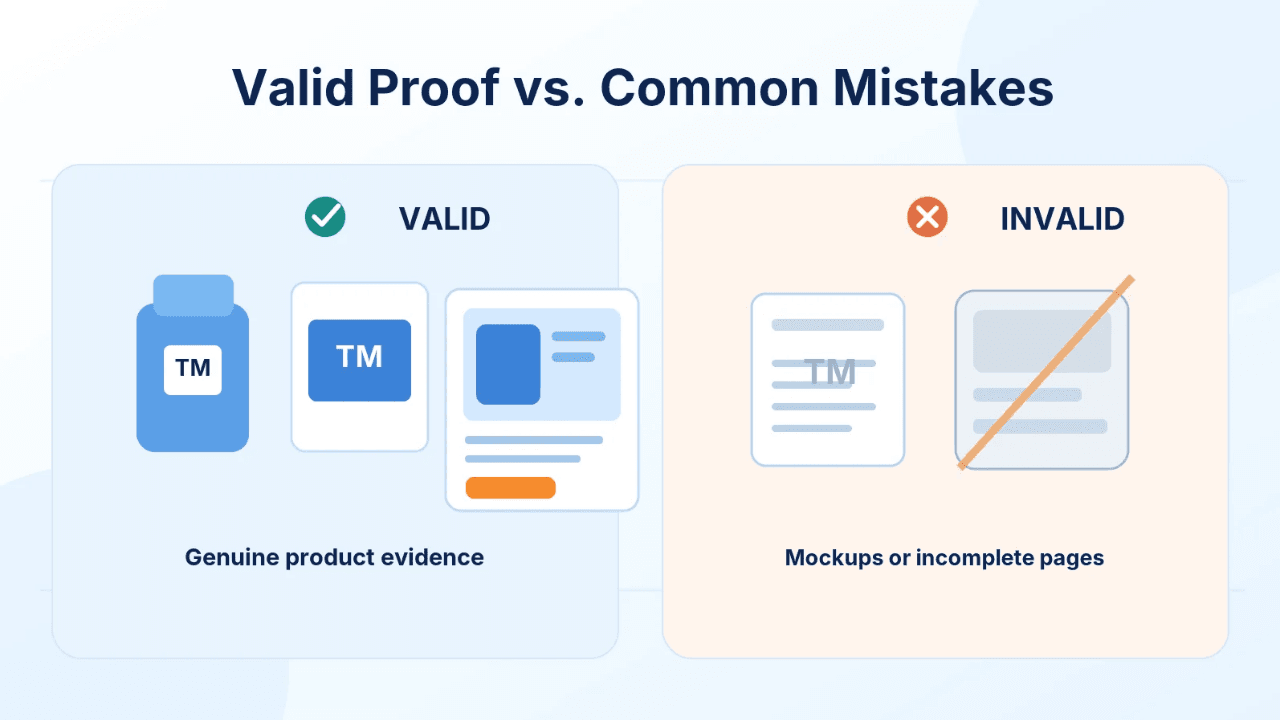
An ecommerce product page can qualify as proof of use when it shows the trademark associated with the identified goods and provides a way to purchase them.
The webpage evidence must also include the URL and the access or print date, either in the screenshot or via an accepted filing method.
| Evidence Type | Acceptable Example | Potential Problem |
|---|---|---|
| Product photograph | Trademark on actual merchandise | Digitally added logo |
| Packaging | Branded container identifying the goods | Product cannot be identified |
| Hangtag | Mark on a tag attached to the product | Unconnected promotional tag |
| Ecommerce webpage | Product, mark, purchasing option, URL, and date | No point-of-sale details |
| Service advertisement | Trademark associated with advertised services | No clear service connection |
The USPTO's specimen guidance explains these requirements.
Important: The USPTO evaluates whether submitted materials establish qualifying use during the relevant period. Artificial mockups or altered images cannot replace genuine commercial activity.
How to Prepare for a USPTO Post-Registration Audit
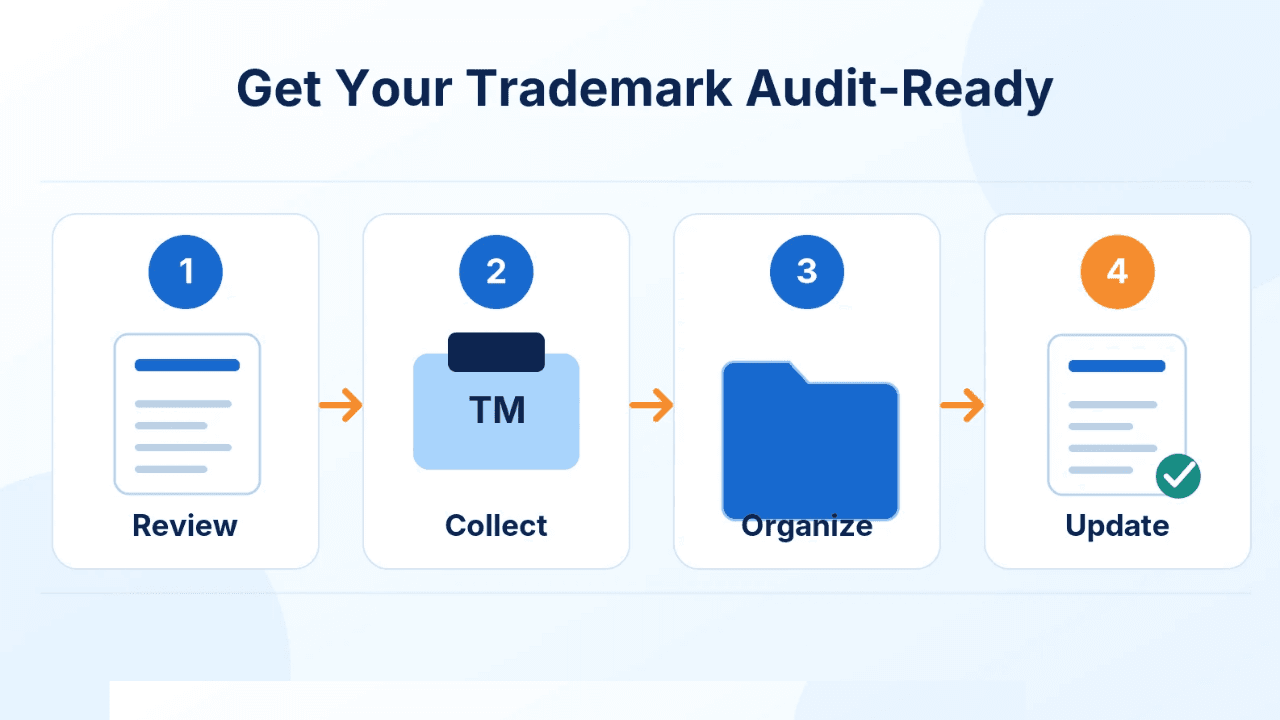
Preparing for an audit involves reviewing your existing registration, identifying suitable evidence, and correcting unsupported claims before submitting maintenance documents.
The following steps can help small businesses organize that process.
Step 1: Review Your Registered Goods and Services
Start by accessing your registration through the Trademark Status and Document Retrieval system.
Examine the listed goods and services and compare them with your current business activities.
Identify products that have been discontinued, services no longer offered, or items that never entered commercial use.
Your records should accurately reflect the goods and services for which you can establish qualifying use.
Step 2: Create an Organized Evidence Library
Store documentation for each registered product or service in a clearly labeled folder.
For example, an apparel company registered for shirts, hats, jackets, and handbags could maintain separate records for each product category.
Use descriptive filenames that identify:
- The registered product or service.
- The trademark shown.
- The type of evidence.
- The relevant documentation date.
Keeping evidence organized by trademark class can make it easier to locate materials when the USPTO requests additional proof.
Step 3: Preserve Online Sales Records
Ecommerce websites frequently change as businesses update products, pricing, and inventory.
When preserving relevant webpages:
- Capture the complete product listing.
- Confirm that the trademark is clearly associated with the goods.
- Record the webpage URL and access date.
- Include the relevant purchasing information.
- Retain the original, unaltered file.
Where appropriate, preserve supporting sales or shipping records that help document commercial activity.
However, invoices alone may not satisfy the specific proof-of-use requirements.
Step 4: Remove Unsupported Goods or Services
If your business permanently discontinues a registered product or service, consider whether it should remain in the registration.
The USPTO allows owners to request deletion of unused goods or services between maintenance filing periods, generally without the deletion fee that applies during a pending Section 8 or Section 71 declaration.
The agency's registration maintenance guidance explains the available procedures.
Limited circumstances may support a claim of excusable nonuse. Because these situations involve specific legal requirements, consider seeking guidance from a qualified trademark attorney before relying on an exception.
How to Respond to a USPTO Audit Notice
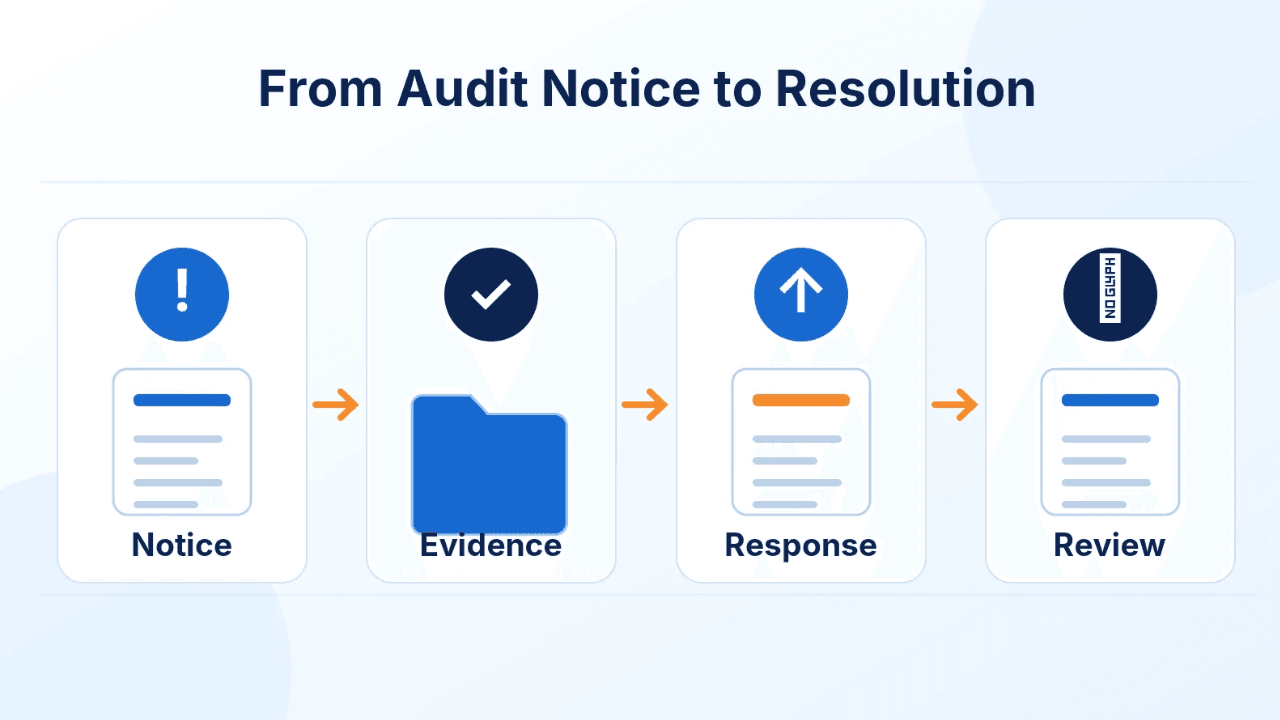
When the USPTO selects your registration, it issues an office action identifying the goods or services requiring additional documentation.
Your response must address the examiner's requests and any other outstanding maintenance issues.
Review the Requested Evidence
Read the office action carefully and identify the specific items selected for review.
Confirm the required evidence, response deadline, and any additional filing deficiencies.
Do not assume that a specimen previously submitted for one product automatically satisfies a request involving another product.
File Your Response Through the USPTO
Use the official Response to Office Action for Post-Registration Matters form.
Submit acceptable evidence for the selected goods or services and include any required verified statements.
An authorized person must sign the declaration.
If the response satisfies the audit and all remaining maintenance requirements, the USPTO may issue a notice of acceptance.
Understand Audit Deadlines and Fees

For the first or second audit office action, the response deadline is generally the later of:
- Six months after the office action's issue date; or
- The end of the applicable statutory maintenance filing period, excluding the grace period.
Always check the deadline specified in your notice.
The USPTO lists a $250 deletion fee per class when goods or services are removed during a pending Section 8 or Section 71 declaration.
A separate $100 deficiency surcharge may apply when a deficiency is corrected during a different filing period.
Deleting additional goods from the same class in separate responses may trigger another deletion fee.
The USPTO's audit program provides detailed explanations of these fees and their application.
What Happens if the Evidence Is Insufficient?
If you cannot establish use for selected goods or services, you generally must delete unsupported items from your registration.
The USPTO may then issue a second office action requiring proof for remaining goods or services in the audited class.
In some cases, a third and final action may follow if outstanding issues remain.
Failure to respond, resolve deficiencies, or pay applicable fees can result in cancellation of the entire registration.
If you need assistance addressing an office action, review the available Trademark Engine office action response services.
Trademark Audit Checklist for Small Businesses
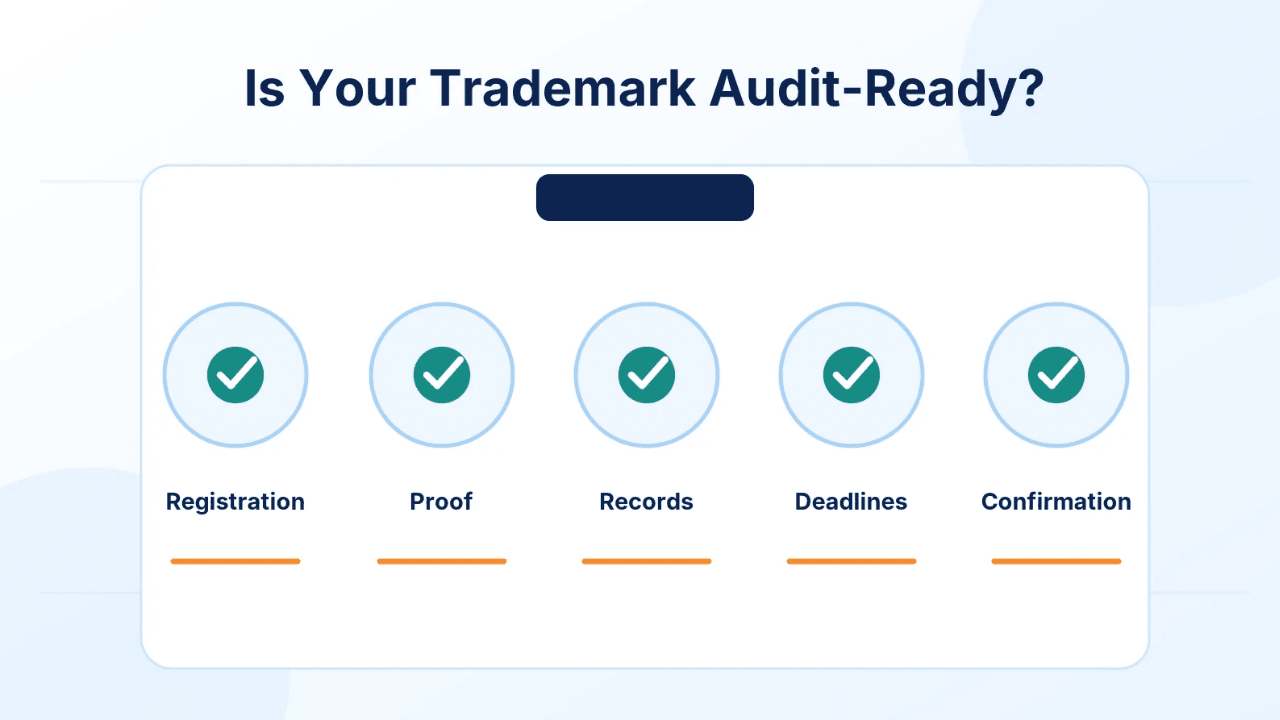
Use this trademark audit checklist before submitting maintenance documents or responding to a USPTO request.
- Verify the registered owner's information.
- Check all registered goods and services against current operations.
- Confirm qualifying commercial use for each item you intend to retain.
- Organize authentic supporting evidence by class.
- Preserve webpage URLs and access dates where required.
- Identify goods or services that should be deleted.
- Review relevant maintenance and response deadlines.
- Confirm any required filing fees.
- Save submission receipts and monitor your registration status.
A periodic review helps identify potential filing issues before the USPTO requests additional information.
Conclusion: Keep Your Trademark Records Accurate
A USPTO post-registration audit is easier to manage when your registration reflects genuine commercial activity. Keeping reliable evidence, removing unsupported goods or services, and responding within USPTO deadlines can help maintain your registration.
For small businesses, accurate trademark records support long-term brand protection and reduce avoidable maintenance complications. Regularly reviewing your registration as your business changes helps you stay prepared for future filing requirements.
Ready to Protect Your Brand?
Explore Trademark Engine's trademark search or trademark registration services to begin protecting a new business name or brand.
Trademark Engine Editorial Team
Frequently Asked Questions
Yes. U.S.-domiciled trademark owners can generally respond without an attorney. However, owners domiciled outside the United States must be represented by a U.S.-licensed attorney in USPTO trademark matters.
It can. Marketplace sales may support trademark use when the evidence connects the mark to the identified goods and meets applicable specimen requirements.
No. A post-registration audit examines the owner's claims of commercial use. It does not determine whether another business is infringing the trademark.
Generally, no. Maintenance filings cannot broaden the goods or services identified in an existing registration. Products outside the registered identification may require a separate application.
In some circumstances, yes, if time remains within the statutory filing period. However, additional filing fees apply, and submitting another declaration generally does not eliminate the audit requirement.
In certain circumstances, you may petition the USPTO Director after a third office action. The petition must satisfy the applicable filing requirements and deadlines.
Get Trademark Tips and Compliance Guidance
Subscribe for updates, insights, and resources that help you stay compliant and grow your mission.