Trademark Specimen Examples for Online Stores: What the USPTO Accepts and Rejects

Published on November 17, 2026 | Updated on November 20, 2026
Estimated Read Time: 12 minutes

Key Takeaways
- A trademark specimen shows how a brand is genuinely used in commerce.
- Product pages may qualify when they connect the mark to goods and provide purchasing information.
- Actual packaging, labels, and hangtags can serve as evidence.
- Webpage submissions must include the required URL and access or print date.
- Digital mockups and ornamental designs may trigger refusals.
- An applicant may be able to correct a refusal using evidence that satisfies the applicable requirements.
Quick Answer: The USPTO may accept a live e-commerce product page showing your trademark, goods, and purchasing information. Actual product labels and packaging may also qualify. Mockups, decorative designs, and screenshots that fail to demonstrate genuine commercial use may be rejected.
The U.S. Patent and Trademark Office (USPTO) received 431,734 trademark application classes in the first half of fiscal year 2026, a 7% increase from the same period in 2025, according to its official filing update.
For online store owners, filing a trademark application involves more than submitting a brand name or logo. The USPTO may require evidence showing how customers encounter your trademark when purchasing products.
A product page, label, or package may qualify, but not every screenshot meets the rules.
This guide explains acceptable trademark specimens, common refusal reasons, and how to prepare evidence for your ecommerce business.
What Is a Trademark Specimen for an Online Store?
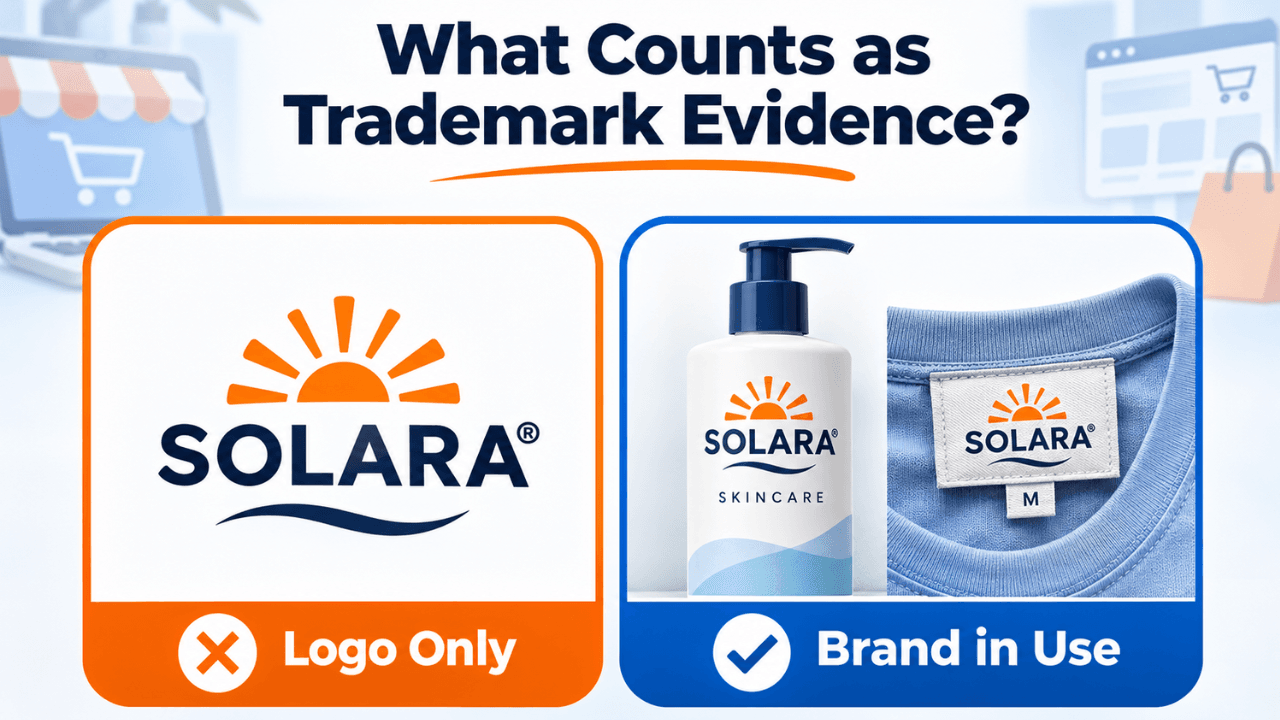
A trademark specimen is a real example showing how your brand appears in connection with the goods or services you provide. It helps the USPTO assess whether customers recognize your mark as identifying the source of those products or services.
For example, suppose you sell skincare products under the fictional brand name Blue Harbor.
A photograph of a genuine lotion bottle displaying Blue Harbor may qualify. However, a separate graphic showing only the brand name does not establish how customers encounter the trademark when purchasing the lotion.
According to the USPTO's drawing and specimen guidance, a trademark drawing identifies the mark being registered, while a specimen demonstrates its actual commercial use.
| Trademark Drawing | Trademark Specimen |
|---|---|
| Shows the applied-for mark | Shows genuine commercial use |
| May contain words or a logo | May show packaging, labels, or webpages |
| Defines the mark in the application | Connects the mark to identified goods or services |
Goods vs. Online Retail Services
The USPTO applies different standards depending on what your application covers.
For physical goods, such as candles or cosmetics, the evidence generally must connect the trademark to those products.
For online retail store services, a website displaying the store's service mark alongside its retail offerings may qualify.
Retail services may fall under Class 35, while physical products belong to their appropriate goods classes. Selling products online does not automatically mean every e-commerce business needs Class 35 registration.
Trademark Specimen Examples the USPTO May Accept
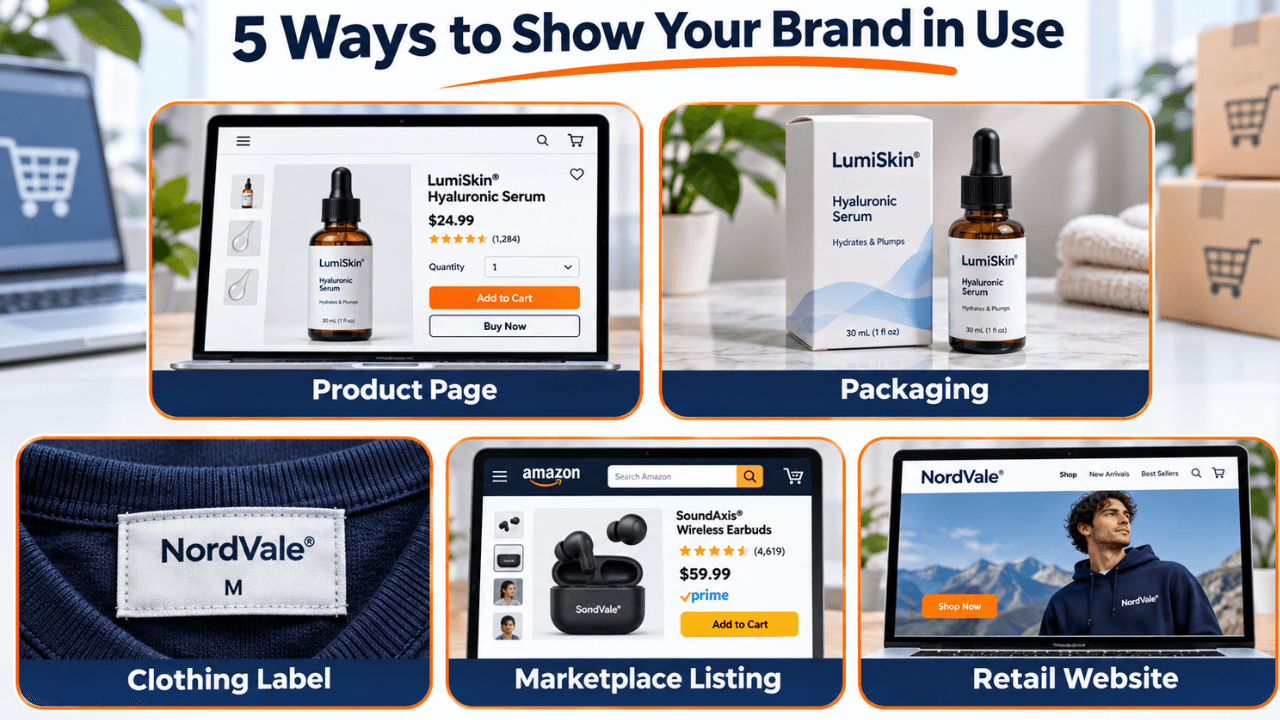
The USPTO may accept genuine product labels, packaging, and qualifying point-of-sale displays. For ecommerce businesses, the most suitable evidence depends on how customers encounter the trademark.
1. Live Ecommerce Product Pages
A product page may qualify when it displays the trademark directly associated with the goods and provides suitable ordering information.
Imagine a Blue Harbor hand cream listing featuring:
- The brand name beside the product image.
- A clear product description.
- A $24 selling price.
- An Add to Cart button.
These details connect the trademark with the product at the point of sale.
However, if the same page displayed only the logo and a “Coming Soon” message, it would generally not establish qualifying current use for those goods.
The USPTO's specimen examples include an online necklace listing with purchasing information.
An Add to Cart button is not always necessary. Other genuine ordering mechanisms may also satisfy the requirements.
2. Genuine Product Packaging
Actual packaging bearing the trademark can demonstrate commercial use.
For example, a skincare brand may submit a photograph of its labeled lotion bottle, while a candle business may provide an image of branded product packaging.
The photograph must reflect genuine trademark use rather than a proposed packaging design.
3. Clothing Labels and Hangtags
For apparel brands, a sewn-in neck label or hangtag attached to an actual garment may serve as acceptable evidence.
These placements often help customers recognize the mark as identifying the clothing's source.
The USPTO may also accept certain unattached labels when the surrounding evidence establishes actual use.
4. Third-Party Marketplace Listings
A marketplace listing can potentially qualify as a specimen if it connects your trademark with the relevant products and provides suitable purchasing information.
For example, a genuine listing for branded headphones may show the trademark, product photograph, price, and ordering option.
However, the listing must demonstrate the applicant's trademark use, not merely display someone else's brand.
5. Online Retail Service Websites
A website can provide evidence of a service mark when it clearly associates the mark with the retail services offered.
For example, an online store's homepage displaying its brand, shopping categories, and retail services may support an application covering those services.
Unlike goods, services may be supported by qualifying advertising materials.
Accepted Specimens at a Glance
| Ecommerce Business | Potential Specimen | Main Requirement |
|---|---|---|
| Skincare seller | Branded lotion bottle | Actual product in commerce |
| Clothing brand | Sewn-in label or hangtag | Source-identifying use |
| Home décor store | Live product page | Suitable ordering information |
| Marketplace seller | Genuine product listing | Mark associated with relevant goods |
| Online retail service | Retail website screenshot | Direct connection to retail services |
These examples illustrate possible acceptable specimens. Final acceptance depends on the individual application.
Why Does the USPTO Reject Certain Trademark Specimens?
A trademark specimen refusal occurs when the submitted evidence fails to meet the applicable requirements. Common problems include fabricated images, decorative designs, insufficient purchasing information, and mismatches between the specimen and application.
1. Mockups and Digitally Altered Images
A mockup trademark specimen demonstrates how a brand might appear rather than proving genuine use.
For example, placing a logo onto a stock photograph of a perfume bottle does not establish that customers encounter the branded product in commerce.
The USPTO generally rejects simulated specimens, including digitally created packaging and product renderings that do not reflect actual trademark use.
2. Ornamental Designs on Apparel
An ornamental refusal trademark issue may arise when customers view a design mainly as decoration.
A large phrase across the front of a T-shirt may be perceived as a decorative message rather than a clothing brand.
In contrast, a mark appearing on a genuine neck label or hangtag may provide clearer source-identifying use.
However, placement alone does not guarantee acceptance. The USPTO considers how customers perceive the mark.
See the USPTO's ornamental refusal guidance.
3. Promotional Pages Without Suitable Ordering Details
A webpage advertising goods may be rejected if it lacks sufficient point-of-sale information.
Examples include a coming-soon product announcement or a promotional landing page that does not allow customers to determine how to purchase the identified goods.
Advertising standards differ for service-mark applications, so the appropriate evidence depends on the goods or services claimed.
4. Incorrect Trademark or Product Association
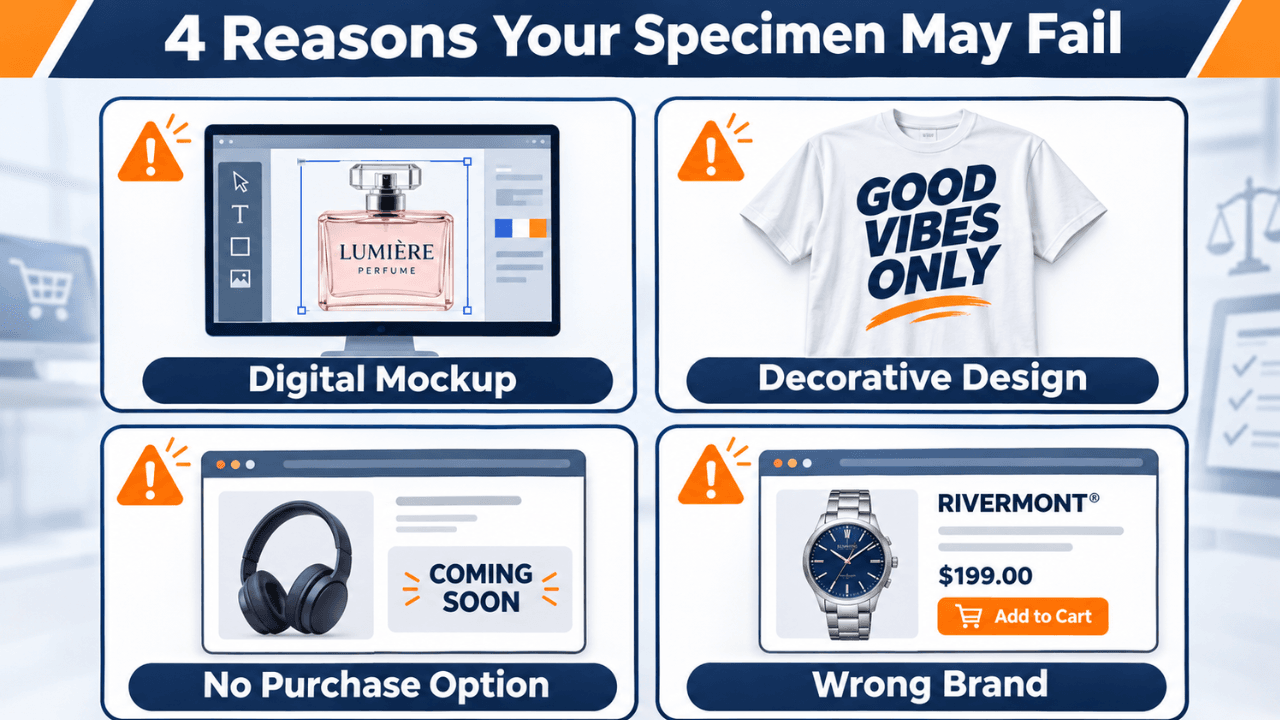
Your specimen must support the mark and goods or services identified in the application.
For example, evidence showing custom gift-wrapping services would not establish use of a trademark for candles merely because the same business offers both.
A substantially different logo may also fail to match the applied-for mark.
What Are the USPTO Requirements for Website Specimens?
A trademark specimen for a website must show appropriate commercial use and include the required webpage documentation.
For goods, the webpage generally needs a direct connection between the mark and products, along with suitable ordering or purchasing details.
Webpage URL and Access-Date Requirements
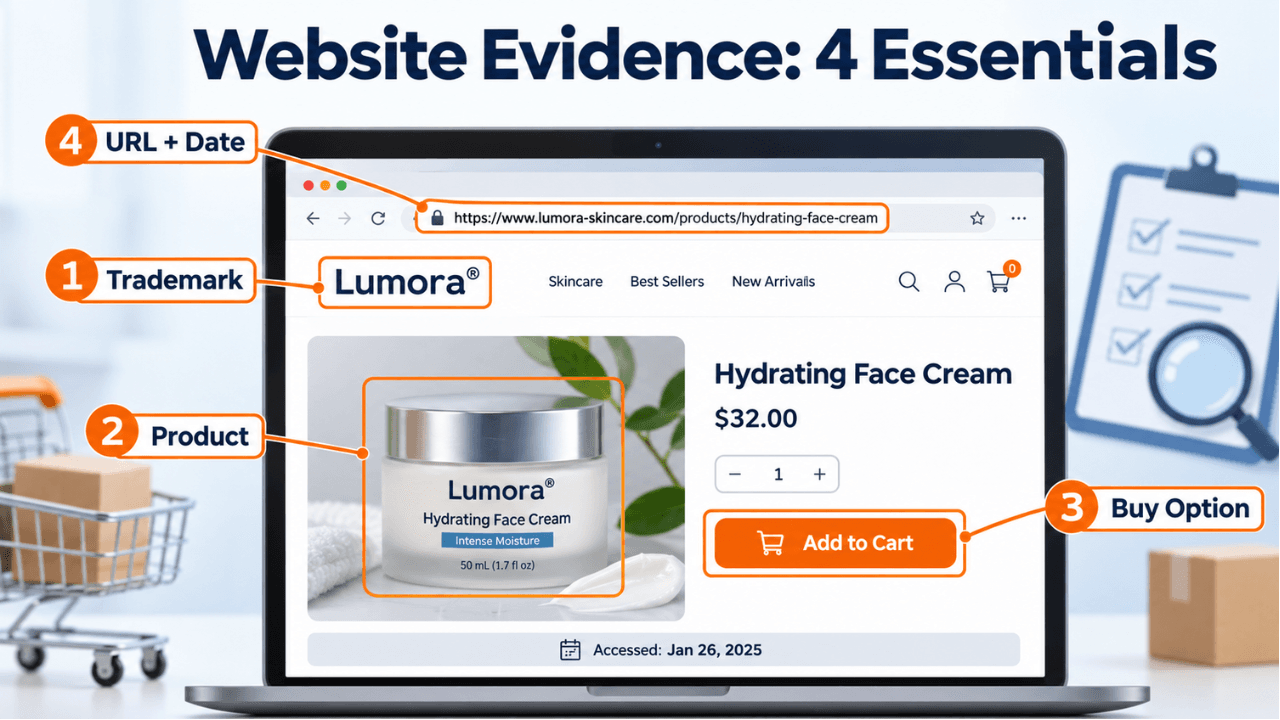
The webpage specimen trademark URL and date rule requires applicants to provide the webpage address and the date it was accessed or printed.
The USPTO generally permits this information to appear:
- On the submitted screenshot or webpage printout.
- In the designated fields of the applicable submission form.
If the USPTO later requests missing information through an office action, the applicant may need to provide a properly verified statement.
The USPTO's specimen refusal instructions explain these requirements.
How Many Specimens Must You Submit?
Generally, one specimen is required per class when specimen evidence is due.
A single specimen may support multiple classes if it adequately demonstrates use for each applicable class.
An examining attorney may request additional information or specimens during examination.
When Should Ecommerce Businesses Submit Specimen Evidence?
The timing depends on the filing basis selected in the trademark application.
Section 1(a): Use in Commerce
If you apply based on existing use in commerce, you generally submit a specimen with the application.
Your trademark must satisfy the applicable use requirements by the filing date.
For goods, qualifying use generally involves placing the mark on the goods, packaging, labels, or associated displays and selling or transporting the goods in commerce under the statutory requirements.
Section 1(b): Intent to Use
If your business has a genuine intention to use the mark but has not yet begun qualifying commercial use, an intent-to-use application may be appropriate.
You generally submit the required specimen later through an amendment to allege use or statement of use.
See the USPTO's application filing basis guidance.
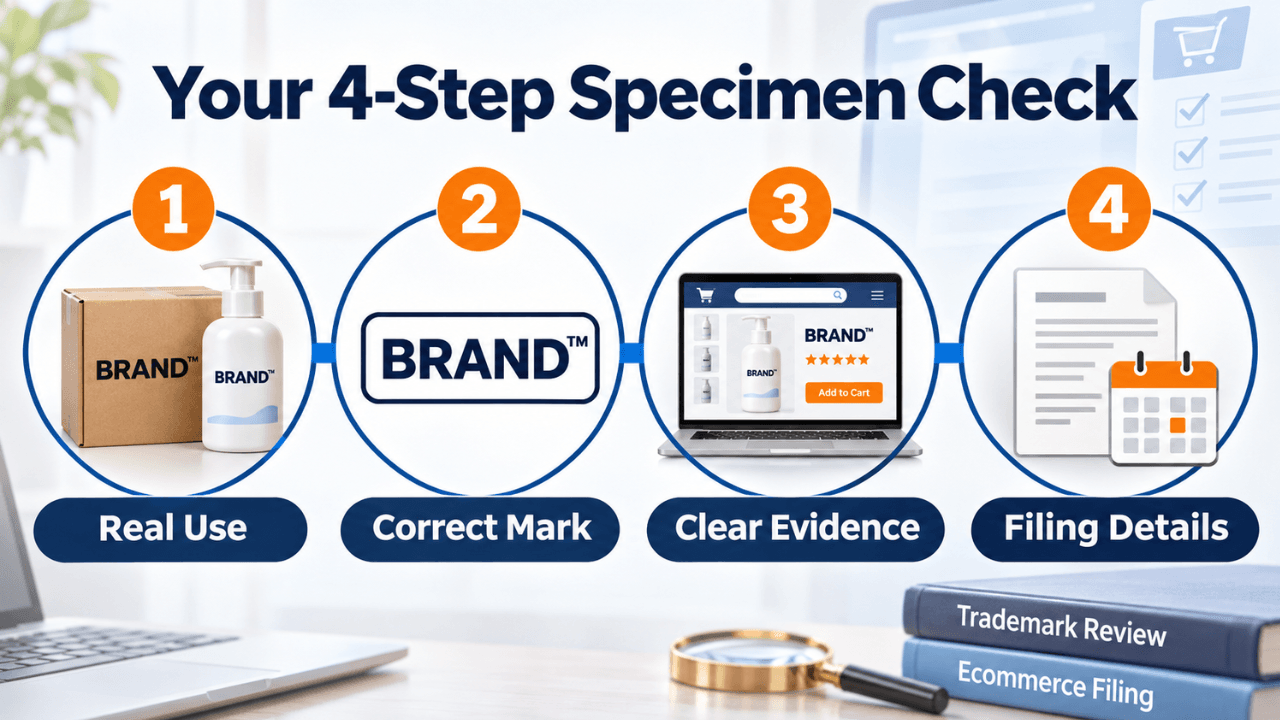
How to Prepare Evidence Before Filing Your Application
Preparing a suitable specimen involves checking authenticity, trademark placement, filing details, and the customer purchasing experience.
Step 1: Select Genuine Commercial Evidence
Choose an actual product page, packaging photograph, label, or other qualifying example.
Avoid stock images with digitally inserted logos and screenshots of products that have not entered qualifying commerce.
Step 2: Review the Customer's View
Check how an ordinary shopper encounters the trademark.
For product webpages, confirm that customers can identify the brand associated with the goods and find suitable ordering information.
Step 3: Capture the Original Material
Take a clear screenshot or photograph without manipulating the content to manufacture trademark use.
Keep the original files and supporting business records.
Step 4: Confirm Filing Details
Check that your evidence matches the applied-for mark and identified goods or services.
Record the actual webpage URL and access date, and confirm that your filing basis and use dates are accurate.
Before filing, a comprehensive trademark search can also help identify potential conflicts with existing marks. Trademark clearance and specimen review serve different purposes.
How Can You Resolve a Trademark Specimen Refusal?
The USPTO may allow applicants to correct specimen problems through an office action response. The available remedy depends on the reason for refusal and the relevant filing requirements.
Submit a Verified Substitute Specimen
A substitute specimen may resolve a refusal if it demonstrates acceptable trademark use and satisfies the applicable timing requirements.
For a Section 1(a) application, the substitute generally must have been in use in commerce at least as early as the original application filing date.
For an allegation of use, the relevant timing requirements differ.
For example, a webpage created after a use-based application's filing date generally cannot establish qualifying use on that earlier date.
Supply Missing Webpage Information
If the refusal concerns a missing URL or access date, the applicant may be able to provide the required information through a properly verified response.
This differs from correcting a specimen that fails to establish genuine commercial use.
Consider Other Permitted Responses
Depending on the application, amending an eligible filing basis or another response may be possible.
Review the specific office action and follow the USPTO's response instructions.
Applicants seeking assistance can explore Trademark Engine's office action response service.
Final Pre-Submission Checklist
Before submitting your trademark specimen e-commerce evidence, verify that:
- The trademark is genuinely used in commerce when required.
- The specimen displays the applied-for mark.
- The evidence relates to the identified goods or services.
- A webpage for goods includes suitable purchasing information.
- The required URL and access or print date are provided.
- The images are authentic rather than fabricated.
- The evidence satisfies the relevant use-date requirements.
- Each class has appropriate specimen support.
This review can help identify avoidable filing errors before USPTO examination.
Conclusion
An acceptable trademark specimen demonstrates how customers encounter your brand in genuine commerce. For online stores, product pages, labels, and packaging may provide suitable evidence when they meet USPTO requirements. Before filing, confirm that your specimen matches the applied-for mark, reflects actual use, and includes any required webpage details. Careful preparation can help prevent avoidable refusals and support a more accurate trademark application.
Protect Your Online Store's Brand With Trademark Engine
Choosing suitable evidence is one part of preparing a trademark application. Checking for existing marks is another important step.
Explore Trademark Engine's trademark search and trademark registration services to understand your options for federal brand protection.
Editorial note: This article is general educational information and not individualized legal advice.
Trademark Engine Editorial Team
Frequently Asked Questions
Yes, potentially. Dropshipping businesses must demonstrate genuine trademark use associated with their goods or services. Using a third-party fulfillment provider does not automatically prevent an acceptable specimen.
Possibly. Genuine customer photographs showing the trademark on actual goods or packaging may qualify when they support the applicant's use. The USPTO evaluates the evidence and surrounding circumstances.
Generally, yes. Each distinct trademark needs evidence supporting use of that particular mark. A specimen showing one brand does not automatically establish use of another.
Yes, potentially. A screenshot from a shopping app may qualify if it demonstrates the required association between the trademark and goods or services. For goods, suitable purchasing information is generally needed.
Potentially. Genuine packaging bearing the trademark may qualify if it clearly connects the mark with the identified goods. Additional evidence may be requested if the relationship is unclear.
No. A specimen supports claims about trademark use, but ownership, priority, and registrability involve additional legal considerations. Submitting a specimen does not automatically establish exclusive rights.
Get Trademark Tips and Compliance Guidance
Subscribe for updates, insights, and resources that help you stay compliant and grow your mission.