Trademark Class for AI Software: Class 9 vs. 42 Explained

Published on November 13, 2026 | Updated on November 18, 2026
Estimated Read Time: 11 minutes
Key Takeaways
- Class 9 generally covers downloadable AI applications and installed software.
- Class 42 covers hosted AI tools, SaaS platforms, and online non-downloadable software.
- AI product classification depends on what customers receive, not simply the technology used.
- Some businesses need more than one trademark class for distinct goods and services.
- USPTO base application fees are $350 per class for qualifying applications.
- Accurate descriptions and trademark searches help founders avoid preventable filing problems.
Quick Answer: The trademark class for AI software is generally Class 9 for downloadable applications and Class 42 for SaaS or online non-downloadable software. Some AI businesses may need both classes if they offer separate downloadable products and hosted services.
The right trademark class for AI software matters as more businesses seek federal brand protection. According to the U.S. Patent and Trademark Office's April 2026 report, the agency received 431,734 trademark applications during the first half of fiscal year 2026, a 7% increase from the same period in 2025.
For AI startups, choosing between Class 9 and Class 42 can be confusing because downloadable apps, chatbots, and cloud platforms work differently.
This guide explains how to classify your software, prepare accurate descriptions, understand filing costs, and avoid mistakes before submitting a trademark application.
What Trademark Class Covers AI Software?
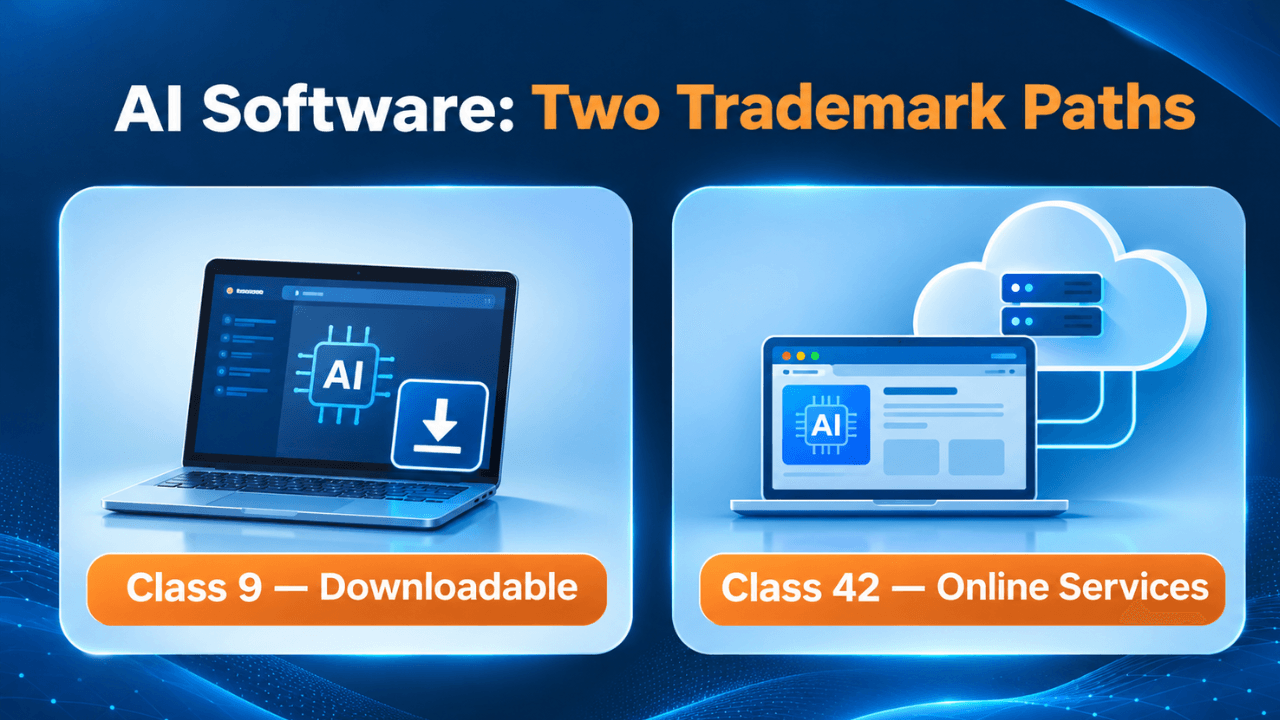
AI software generally belongs in Class 9 or Class 42, depending on the goods or services offered under the trademark.
The USPTO uses the international Nice Classification system, which organizes products and services into 45 classes: 34 for goods and 11 for services.
For most AI software businesses, the distinction involves two categories:
- Class 9: Downloadable or recorded computer software.
- Class 42: Technology services, including providing temporary use of online non-downloadable software.
A downloadable AI photo-editing program would generally belong in Class 9. A browser-based AI image generator would typically fall under Class 42.
The software's purpose can also affect its identification. A business offering AI-powered training, consulting, or other independent services may need to consider additional classes.
Importantly, a trademark protects a qualifying brand identifier, such as a product name or logo. Registering a trademark does not give the owner exclusive rights to an AI algorithm, software function, or technology itself.
For more background, see the USPTO's guidance on goods and services.
Trademark Class 9 vs. 42: Key Differences
The main difference between these two classes is whether a business distributes software as goods or provides access to hosted software as a service.
Class 9 for Downloadable AI Software
Class 9 generally applies when customers download or install software on a device.
Examples include:
- Downloadable AI writing applications
- Installed machine-learning programs
- Desktop AI video-editing software
- Downloadable language translation tools
- Mobile applications for AI-powered image enhancement
For example, a company selling an AI video editor that customers install on their computers would generally consider Class 9.
The software description must explain its function. Broad wording such as "AI software" may not be specific enough for the USPTO.
Class 42 for Online AI Services
Class 42 generally covers software functionality delivered through an online, non-downloadable platform.
Examples include:
- Cloud-based AI customer support platforms
- Browser-based content generation tools
- Hosted predictive analytics services
- SaaS workflow automation platforms
- Online AI development environments
Suppose an ecommerce startup offers a website where sellers generate product descriptions using hosted AI tools.
Because customers access software functionality online, the business would generally consider Class 42.
However, a monthly subscription does not automatically make software a Class 42 service. Downloadable subscription software may still fall under Class 9.
Software Classification Comparison
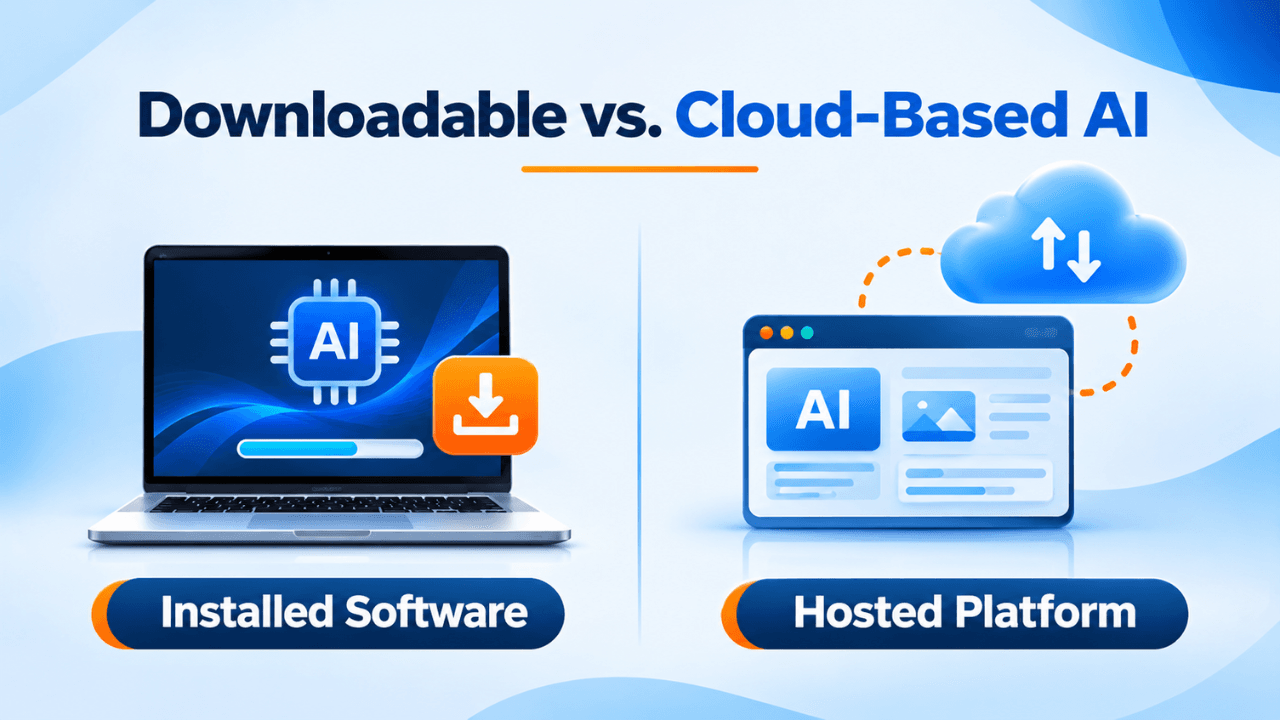
| Feature | Class 9 | Class 42 |
|---|---|---|
| Category | Software goods | Technology services |
| Delivery | Downloadable or recorded | Online non-downloadable |
| Customer access | Installed or downloaded | Hosted software |
| Typical example | AI desktop editor | SaaS editing platform |
| Primary consideration | Software product | Software service |
The USPTO Trademark Manual of Examining Procedure provides further guidance on identifying downloadable and non-downloadable software.
Which Class Applies to AI Chatbots, Apps, and AIaaS?
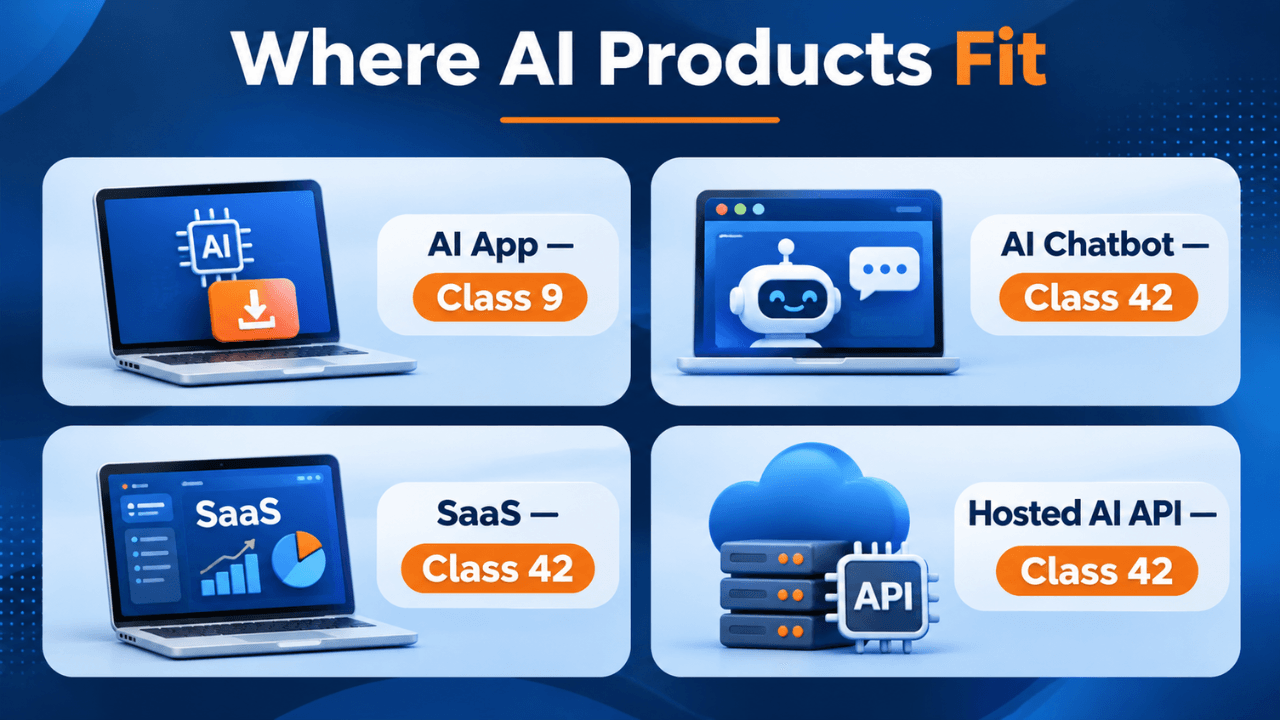
Different AI business models require different classifications because customers may receive installed software, hosted functionality, or a combination of both.
The table below shows common examples.
| AI Offering | Likely Class | Reason |
|---|---|---|
| Downloadable AI writing app | 9 | Software distributed for download |
| Installed AI analytics program | 9 | Recorded or downloadable software |
| Online customer support chatbot | 42 | Hosted software functionality |
| Browser-based AI design platform | 42 | Non-downloadable service |
| Cloud-hosted AI API | 42 | Online software access |
| Downloadable app with separate SaaS service | Potentially 9 and 42 | Distinct goods and services |
These are illustrative classifications, not automatic USPTO determinations.
AI Chatbots and Virtual Assistants
The AI chatbot trademark class depends on its delivery model.
A downloadable virtual assistant application generally belongs in Class 9. A chatbot accessed through a hosted website generally belongs in Class 42.
However, an AI assistant with cloud-connected features does not automatically need both classes. The business must actually offer qualifying goods and services under the trademark.
AI-Powered Mobile Applications
An AI app trademark class is usually Class 9 when the product is distributed as downloadable software.
For example, an AI fitness application may use cloud servers to generate workout suggestions while customers interact through an installed mobile app.
The downloadable product generally belongs in Class 9.
If the company separately provides an online, non-downloadable fitness platform, Class 42 may also be relevant.
Artificial Intelligence as a Service
Artificial Intelligence as a Service (AIaaS) allows customers to access AI capabilities through hosted platforms, cloud infrastructure, or APIs.
An AIaaS trademark commonly involves Class 42 when customers use online non-downloadable software.
For example, a company providing access to a hosted AI document-analysis API would generally consider Class 42.
The relevant identification should describe what the service enables customers to accomplish rather than relying only on the label "AIaaS."
How to Choose the Correct USPTO Software Trademark Class
Choosing the appropriate USPTO software trademark class starts with identifying your business activities and accurately describing the goods or services associated with your brand.
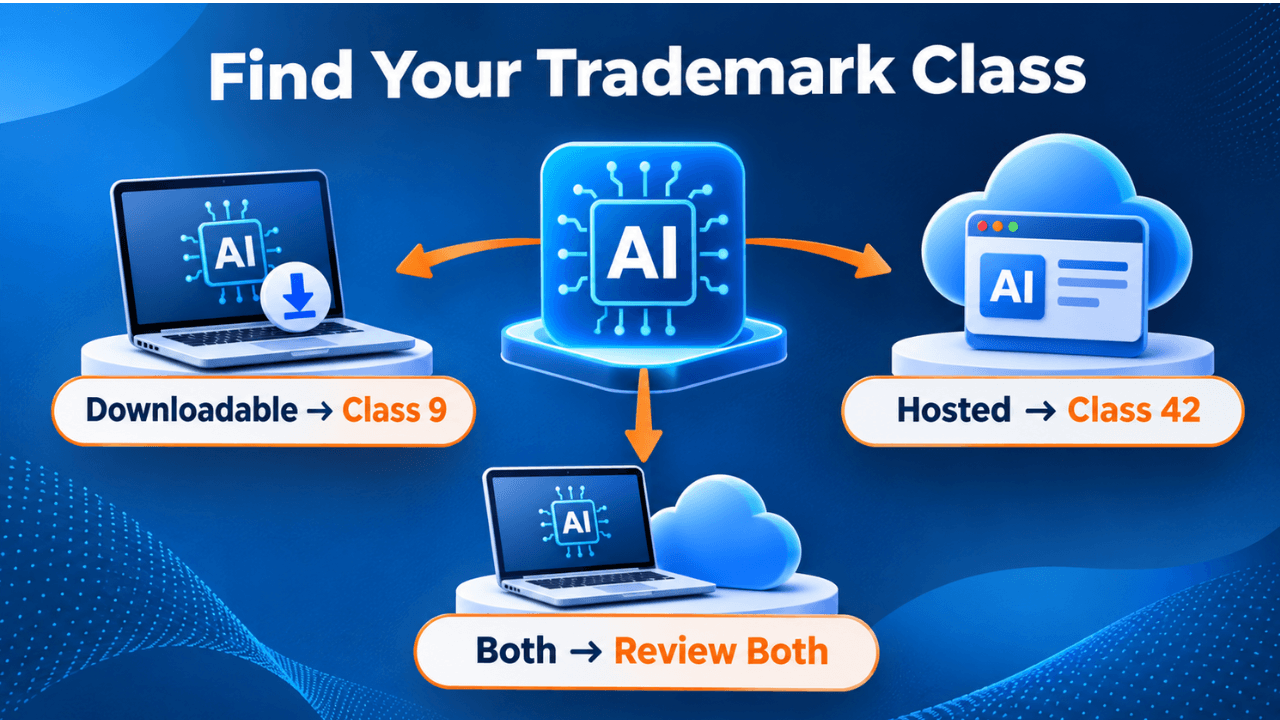
Step 1: Identify Your Delivery Model
Review how customers access your software.
Ask yourself:
- Do customers download or install the product?
- Do they access its functionality through a hosted website?
- Does your business offer a separate online software service?
- Are there additional services beyond the software itself?
These questions help you document the offerings that belong in your application.
Step 2: Prepare an Accurate Product Description
The USPTO requires applicants to clearly identify the function of software and its field of use when relevant.
Consider these illustrative examples.
Class 9 example:
"Downloadable computer software using artificial intelligence for generating and editing marketing copy."
Class 42 example:
"Software as a service (SaaS) services featuring software using artificial intelligence for generating and editing marketing copy."
These examples demonstrate the difference between goods and services. They are not verified preapproved descriptions from the USPTO.
Avoid vague phrases such as "AI technology solutions" that do not explain what the software actually does.
Step 3: Review the Trademark ID Manual
The USPTO Trademark ID Manual contains acceptable descriptions for many goods and services.
Search for wording that matches your product's function and delivery format.
Selecting an appropriate preapproved identification can also help avoid additional fees associated with certain custom descriptions.
Step 4: Check for Potentially Conflicting Marks
A trademark search helps identify names that may conflict with your proposed software brand.
The USPTO's federal trademark searching guidance recommends considering similar marks and related goods or services, rather than relying only on exact-name searches.
Look for:
- Similar spellings and pronunciations
- Pending applications and registered marks
- Related AI applications and technology services
- Relevant business names and marketplace uses
Different trademark classes do not automatically prevent conflicts. Related goods or services may still create a likelihood-of-confusion concern.
For broader research, Trademark Engine offers a comprehensive trademark search.
When Should an AI Startup Consider Multiple Classes?

An AI startup may consider both Class 9 and Class 42 when it offers qualifying downloadable software and distinct hosted software services under the same brand.
For example, a business might provide a downloadable AI design application alongside an independently offered browser-based design platform.
Both offerings may require coverage if they meet the relevant classification and filing requirements.
However, selecting extra classes is not necessary simply because a company plans to introduce new software features.
An applicant must have an appropriate filing basis, such as current use in commerce or a genuine intent to use the mark for the identified goods or services.
If a company launches new offerings outside its original application scope, a separate filing may be necessary.
AI founders should assess their current business model, planned commercial activities, and applicable startup trademark requirements before selecting classes.
How Much Does an AI Software Trademark Application Cost?
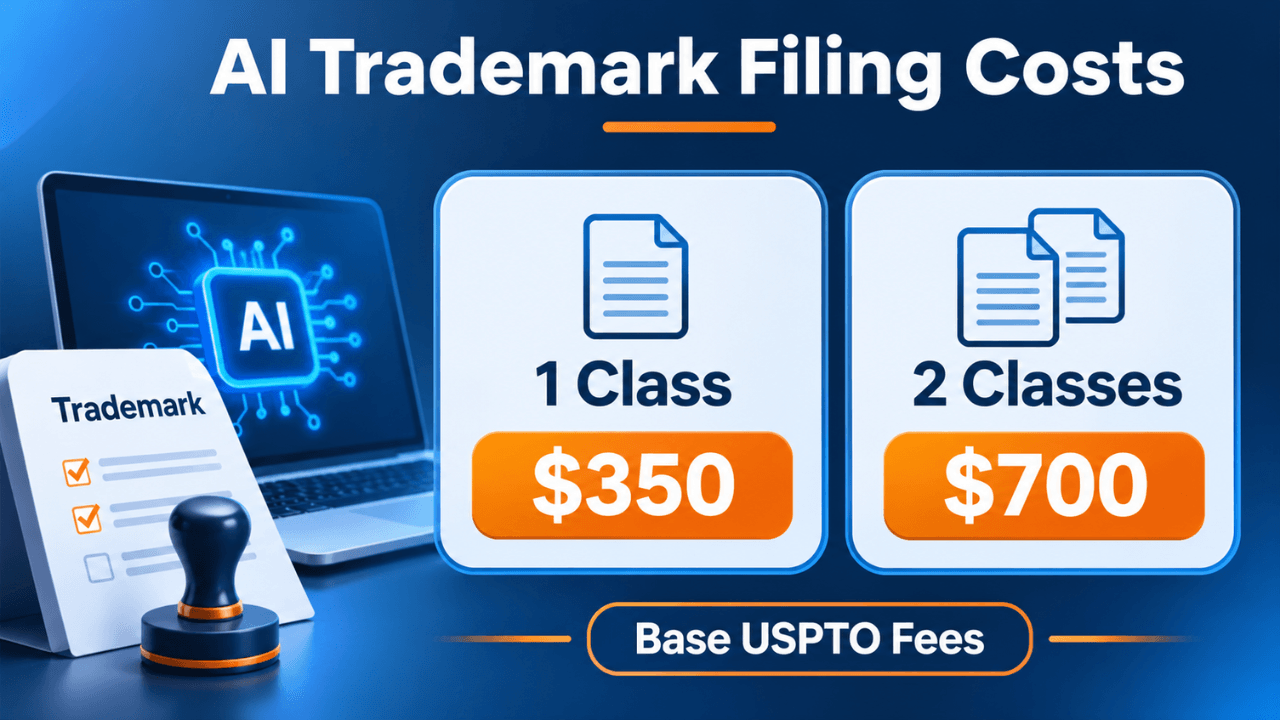
The USPTO's base filing fee is $350 per class for qualifying applications under Section 1 or Section 44, as of November 2026.
| Filing Scenario | Base USPTO Fee |
|---|---|
| Class 9 only | $350 |
| Class 42 only | $350 |
| Classes 9 and 42 | $700 |
These amounts exclude additional government fees and optional service charges.
Certain applications may incur extra fees:
- $100 per class for insufficient required information.
- $200 per class for using the free-form identification field instead of selecting appropriate ID Manual wording.
- $150 per class for filing a statement of use or amendment to allege use in an intent-to-use application.
An intent-to-use application may also involve extension fees if the applicant needs more time to submit proof of use.
For instance, a qualifying two-class application would have a $700 base government fee, before any additional charges.
Always review the USPTO trademark fee schedule before submitting an application.
Common Filing Mistakes AI Founders Should Avoid
AI founders can reduce avoidable application issues by checking the following details before filing.
Using Overly Broad Software Descriptions
Terms such as "artificial intelligence solutions" may not adequately identify goods or services.
Use specific wording that explains the software's purpose and relevant field of use.
Selecting Classes Without a Valid Filing Basis
Founders should not include unrelated product categories merely because the business might expand later.
Intent-to-use applications require a genuine intention to use the mark for the identified goods or services.
Assuming a Trademark Class Guarantees Name Availability
Class numbers help organize applications, but they do not independently determine whether a brand name is available.
The USPTO may refuse registration when a proposed mark is confusingly similar to an existing mark for related goods or services.
Expanding the Original Description After Submission
Applicants generally cannot broaden an application's original identification of goods or services.
Certain corrections or additional classes may be permitted when the goods or services were already included in the original identification.
New offerings outside that scope may require a separate application.
The USPTO's rules on amendments provide further guidance.
Conclusion
Choosing the right trademark class for AI software depends on how your business delivers its products and services. Class 9 generally covers downloadable applications, while Class 42 applies to hosted software services. Some businesses may need both.
Before filing, identify your software's purpose, select an accurate description, and research potentially conflicting trademarks. These steps can help avoid unnecessary application problems and support long-term brand protection as your AI business grows.
Protect Your AI Software Brand With Trademark Engine
Your AI software name helps customers identify your products and services. Protecting that identity begins with understanding your trademark options and checking whether similar marks already exist.
Trademark Engine offers online search and registration tools to help business owners take the next step.
Start Your Trademark Search or explore Trademark Registration Services.
Trademark Engine Editorial Team
Frequently Asked Questions
Yes. A business with a genuine intention to use a trademark in U.S. commerce may file an intent-to-use application before launching. Under this filing basis, registration generally requires acceptable proof of actual use before it can issue.
Acceptable specimens depend on whether the trademark identifies software goods or services. Examples may include qualifying software launch screens, download pages, or websites advertising and providing access to SaaS services. Evidence must show the mark used appropriately in commerce.
No. Registering an LLC establishes a business entity under state law but does not automatically provide federal trademark registration. Business formation and trademark protection serve different legal purposes.
Yes. Foreign businesses may apply for U.S. trademark registration if they meet the relevant requirements. Applicants domiciled outside the United States generally must be represented by a U.S.-licensed attorney in USPTO trademark proceedings.
Yes, potentially. A name suggested by an AI tool can qualify for trademark protection if it meets ordinary trademark requirements, including distinctiveness and identifying the source of goods or services. AI-generated names are not automatically available for use or registration.
Federal trademark registration can remain active indefinitely if the owner continues meeting applicable use and maintenance requirements. Required maintenance filings generally occur between the fifth and sixth years after registration, between the ninth and tenth years, and every ten years afterward.
Get Trademark Tips and Compliance Guidance
Subscribe for updates, insights, and resources that help you stay compliant and grow your mission.