How to Trademark a Bakery Name: A Complete Brand Protection Guide

Published on November 20, 2026 | Updated on November 23, 2026
Estimated Read Time: 11 minutes

Key Takeaways
- A distinctive bakery name is generally easier to protect than a generic one.
- A trademark search should include similar names and existing commercial uses.
- Class 30 covers many bakery products; Class 43 covers food-service activities.
- USPTO base filing fees start at $350 per class, with additional fees possible.
- Logos, product names, and distinctive packaging may qualify for separate protection.
- Federal registration requires ongoing use and timely maintenance filings.
Quick Answer: To trademark a bakery name, search for existing marks, choose the correct goods or services, and submit an application to the USPTO. Bakery products generally fall under Class 30, while café services may fall under Class 43. Federal filing fees start at $350 per class.
According to the USPTO's April 2026 report, the agency received 431,734 trademark application classes during the first half of fiscal year 2026, a 7% increase from the same period in 2025. This growing filing activity highlights why bakery owners should check potential name conflicts before investing in branding.
Your bakery name appears on storefronts, packaging, websites, and delivery orders. However, registering a business or purchasing a domain does not automatically secure federal trademark protection.
This guide explains how to trademark a bakery name, choose suitable classes, understand filing costs, and protect your brand as your business grows.
Can You Legally Trademark a Bakery Name?
Yes. You can apply to register a bakery name if it identifies the source of your goods or services and meets USPTO requirements. However, names that merely describe baked goods or bakery services can be difficult to register.
What Makes a Bakery Name Distinctive?
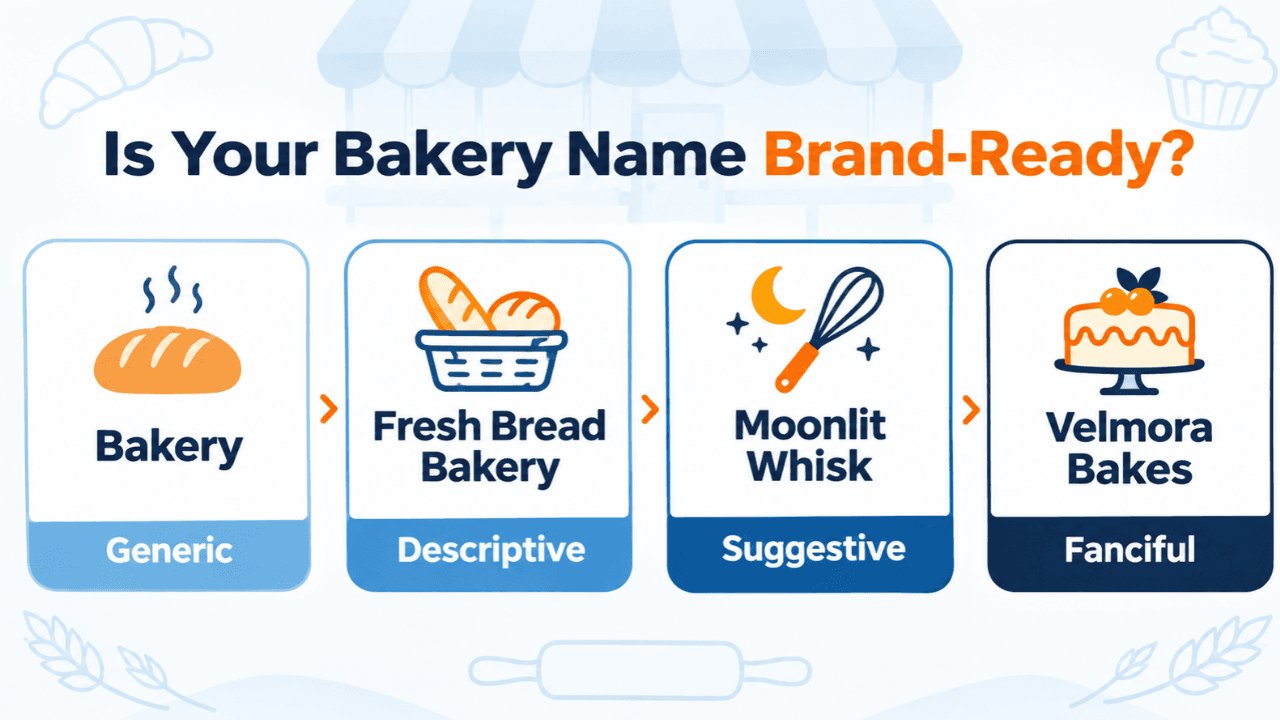
The USPTO generally considers suggestive, arbitrary, and fanciful trademarks stronger than generic or merely descriptive terms.
Consider these fictional examples:
| Bakery Name | Trademark Consideration |
|---|---|
| Bakery | Generic for bakery services |
| Fresh Bread Bakery | Mainly descriptive |
| Moonlit Whisk | Potentially distinctive |
| Velmora Bakes | Potentially fanciful |
These examples illustrate naming principles, not confirmed trademark availability.
Before choosing a name, ask whether customers could recognize your bakery without seeing a description of its products. Also, consider whether the name will remain suitable if you expand into catering, packaged foods, or additional locations.
The USPTO's strong trademarks guide explains how distinctiveness affects registration.
Does an LLC or DBA Protect Your Bakery Brand?
No. Registering an LLC or DBA does not automatically provide federal trademark registration.
An LLC establishes a legal business entity, while a trademark identifies the commercial source of particular goods or services. A DBA generally allows a business to operate under an assumed name.
Bakery owners must also consider startup legal requirements, such as food permits, zoning rules, and health regulations. These business legal requirements vary by location and remain separate from trademark law.
How to Trademark a Bakery Name in Six Steps
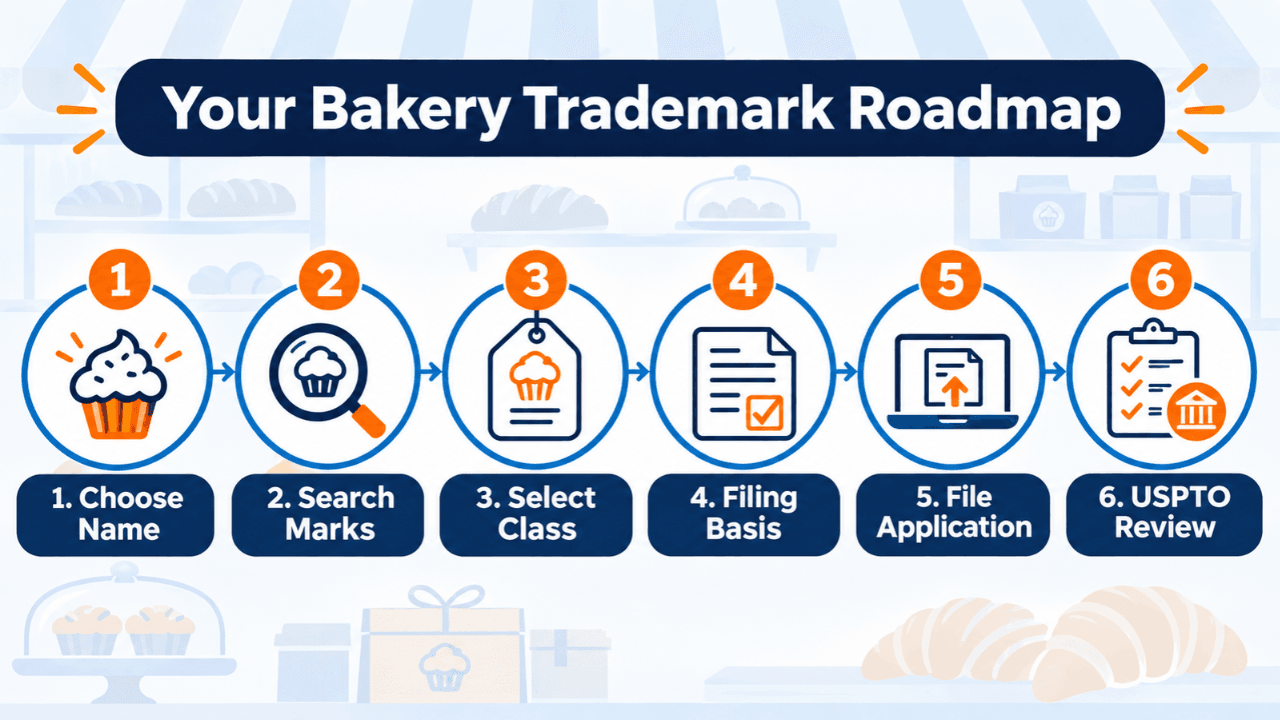
The registration process involves selecting a suitable mark, checking existing rights, preparing an application, and completing USPTO examination.
Step 1: Select a Name That Can Represent Your Business
Choose a distinctive name that customers can recognize across different sales channels.
Consider how it will appear on product labels, storefront signs, online ordering platforms, and delivery packaging.
Avoid spending heavily on permanent branding materials before investigating possible conflicts.
Step 2: Complete a Bakery Name Trademark Search
A bakery name trademark search helps identify existing marks that could conflict with your proposed brand.
Start with the official USPTO Trademark Search system.
Use this checklist:
- Search the exact name you want to register.
- Check alternative spellings and similar pronunciations.
- Review live applications and registrations for related goods or services.
- Search state business registries and local directories.
- Check websites, social media, and online marketplaces for unregistered commercial use.
- Record potentially conflicting names for further review.
For example, someone considering "Moonlit Whisk Bakery" should investigate similar wording, sounds, and overall commercial impressions.
Two marks do not need to be identical to create a likelihood-of-confusion issue. The relationship between their goods or services also matters.
The USPTO recommends a comprehensive clearance search because federal records alone may not reveal every existing right.
Trademark Engine offers a trademark search service. A comprehensive trademark search may help you investigate additional potential conflicts before filing.
Step 3: Identify Your Goods and Services
Your application must specify the products or services associated with your trademark.
For example, a bakery selling branded packaged cookies may need a different classification from one operating a café.
Use the USPTO's Trademark ID Manual to identify acceptable descriptions. The detailed class comparison appears in the next section.
Step 4: Choose an Appropriate Filing Basis
Two common filing bases are available.
Use in Commerce — Section 1(a)
This applies when you already use the mark in qualifying commerce for the listed goods or services.
You generally need dates of use and an acceptable specimen showing actual trademark use.
Intent to Use — Section 1(b)
This applies when you have a genuine intention to use the mark in commerce but have not yet begun qualifying use.
For example, a bakery planning to launch a branded cookie line may consider an intent-to-use application before launch.
Registration generally requires proof of qualifying use later, along with applicable additional fees.
Review the USPTO's application filing-basis guidance before selecting an option.
Step 5: Prepare and File Your Application
Applications are submitted through USPTO Trademark Center.
Before filing, confirm that you have:
- Identified the correct legal trademark owner.
- Selected the appropriate mark format.
- Described your goods or services accurately.
- Chosen a valid filing basis.
- Prepared supporting evidence when required.
- Reviewed applicable filing fees.
Incorrect ownership details or unsupported use claims can create serious problems.
Trademark Engine's trademark registration service can help business owners explore the federal filing process.
Step 6: Track Your Application's Progress
After submission, a USPTO examining attorney reviews your application.
The examiner may issue an office action requesting clarification or identifying a legal concern. Applicants must respond within the applicable deadline.
If the application meets examination requirements, the mark may proceed to publication for opposition.
Registration depends on successful examination, the filing basis, and completion of any remaining requirements.
The USPTO trademark process explains these stages.
Trademark Class for Bakery: Class 30 vs. Class 43
Class 30 generally covers baked goods, while Class 43 covers services involving the provision of food and drink. The appropriate classification depends on what your business offers.
| Bakery Activity | Potential Class | Example |
|---|---|---|
| Selling branded bakery products | Class 30 | Bread, cakes, cookies, pastries |
| Operating a bakery café | Class 43 | Preparing and serving food or drinks |
| Providing distinct retail-store services | Class 35 | Retail services featuring bakery goods |
| Manufacturing products for others | Class 40 | Certain custom manufacturing services |
The USPTO's goods and services guidance explains how classifications work.
When Might You Need More Than One Class?
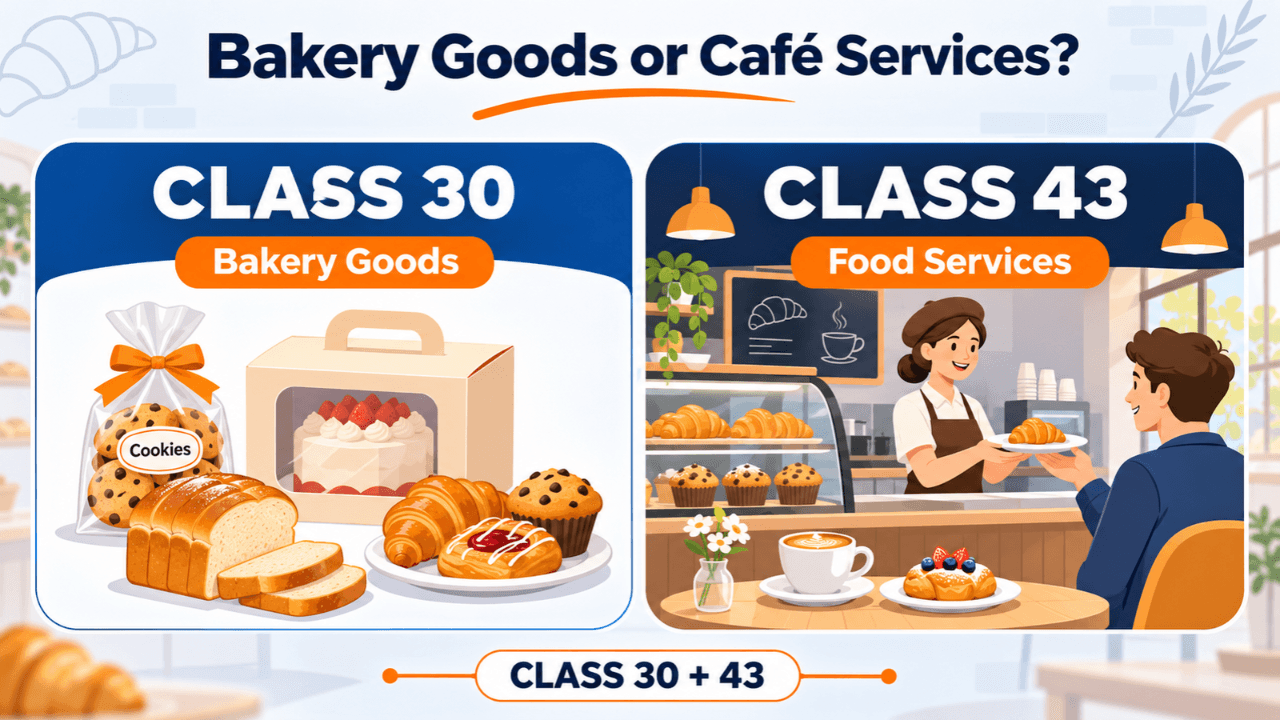
Consider a fictional bakery called "Moonlit Whisk."
It sells cookies in branded boxes and later opens a café serving food and drinks. Its packaged products may fall under Class 30, while its café services may fall under Class 43.
Before selecting classes, consider whether your business:
- Sells goods under its own trademark.
- Provides food or drink services under that mark.
- Has a genuine intention to expand into additional activities.
A physical storefront does not automatically mean both classes are required. Each application should accurately identify the goods or services associated with the mark.
How Much Does It Cost to Trademark a Bakery Name?
As of November 2026, the USPTO's base electronic application fee for qualifying Section 1 and Section 44 applications is $350 per class.
The number of classes affects the initial government filing expense.
| Filing Example | Base USPTO Fee |
|---|---|
| One class | $350 |
| Two classes | $700 |
| Three classes | $1,050 |
These figures exclude applicable additional fees.
Other potential USPTO charges include:
- $100 per class for insufficient required application information.
- $200 per class for using the free-form goods-and-services field instead of eligible Trademark ID Manual entries.
- $150 per class for filing an amendment to allege use or statement of use.
- $125 per class for requesting an extension to submit a statement of use.
For example, a bakery filing an intent-to-use application in one class may pay $350 initially and $150 later for a statement of use. Those two charges total $500, excluding possible additional expenses.
Government application fees are generally nonrefundable, even when registration is refused. Optional professional assistance creates separate costs.
Review the current USPTO trademark fee information before filing.
Can You Trademark a Cake or Pastry Name?
Yes. A distinctive cake or pastry name may qualify for trademark protection when customers recognize it as identifying a commercial source rather than simply describing a food product.
For example, "Chocolate Fudge Cake" describes a type of dessert. A unique name used consistently for a branded product line may have stronger trademark potential.
However, assigning an imaginative name to a menu item does not automatically establish trademark rights.
The name must function as a source identifier. Its use on product packaging, ordering pages, and marketing materials may help establish how customers encounter it.
Trademark law also does not automatically protect the recipe, ingredients, or baking method behind a dessert.
How to Protect a Bakery Logo and Packaging
Bakery logos and distinctive packaging may qualify for trademark protection when they identify the source of products or services.
Registering a Word Mark or Design Mark
A standard-character application generally protects the wording of a trademark without restricting it to a particular font or design.
A design-mark application protects the specific visual representation shown in the filing.
Separate applications may provide flexibility when a bakery wants to protect its name independently from a logo that could change over time.
Original logo artwork may also qualify for copyright protection if it meets applicable requirements.
Using Packaging as Trademark Evidence
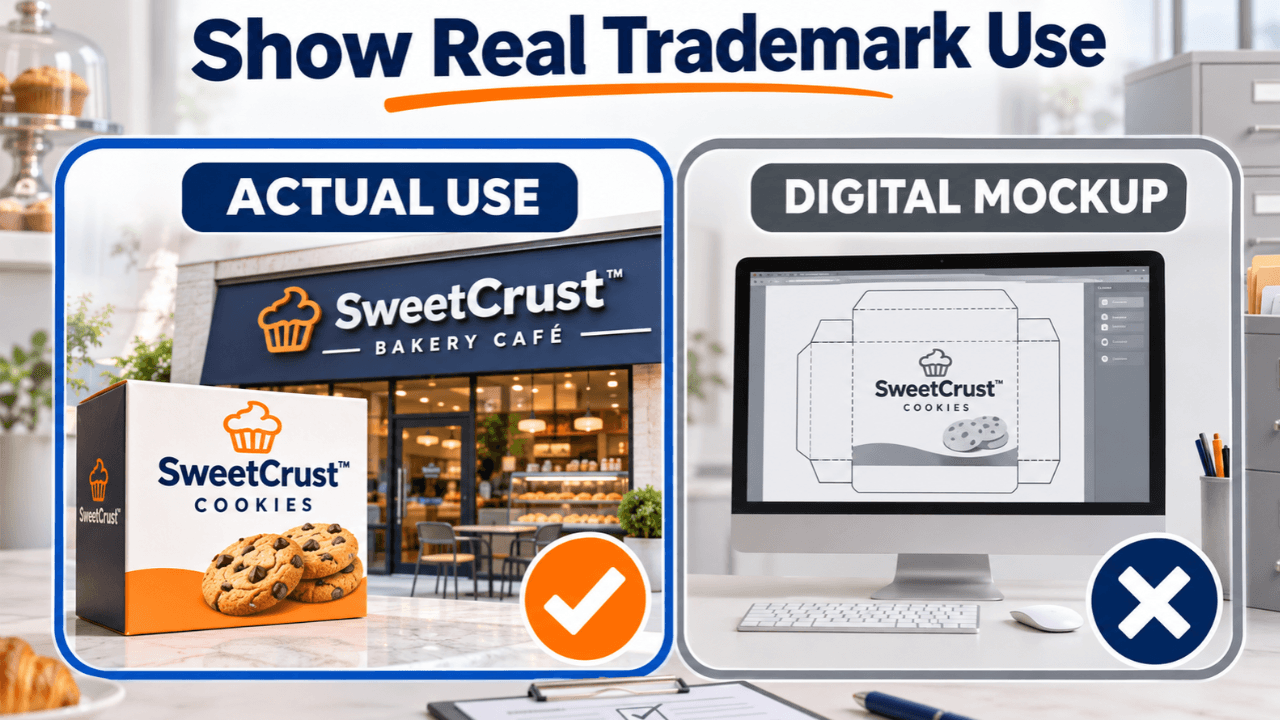
The USPTO calls evidence of actual trademark use a specimen.
Acceptable specimens depend on whether the application covers goods or services.
| Bakery Goods | Bakery Services |
|---|---|
| Actual branded cake boxes | Café storefront signage |
| Labels attached to products | Menus identifying the services |
| Product-ordering pages with purchasing information | Advertising clearly connecting the mark with the services |
For example, a photograph of a real cookie box bearing the mark may support a goods application when the box is used in qualifying commerce.
A bakery café may submit a storefront sign associated with its services.
The specimen must match the relevant application requirements. Digitally created mockups or unused packaging designs do not establish actual use.
Review the USPTO's drawings and specimens guidance.
Distinctive packaging may also qualify as trade dress when it identifies the commercial source and meets legal requirements. Functional packaging features generally cannot receive trademark protection.
Common Bakery Trademark Mistakes to Avoid
Bakery owners can reduce avoidable filing problems by checking ownership, descriptions, and ongoing registration requirements.
Filing Under the Wrong Owner
An application must identify the person or legal entity that owns the mark.
Filing under an incorrect owner can create problems that may not be corrected through a simple amendment.
Claiming Unsupported Goods or Services
Descriptions must reflect actual commercial activities or a genuine intention to use the mark.
Broad or inaccurate claims may lead to examination problems and unnecessary expenses.
Missing Post-Registration Deadlines
Federal trademark registrations require continuing use and maintenance filings.
For most U.S. federal registrations, owners must submit required documents between the fifth and sixth years after registration, between the ninth and tenth years, and every ten years afterward.
Failure to meet applicable requirements can result in cancellation or expiration.
The USPTO's maintenance guidance explains the deadlines.
Ongoing trademark monitoring may also help owners identify potentially conflicting marks.
Conclusion
Trademarking a bakery name can help protect the identity customers associate with your products and services. Start with a distinctive name, investigate potential conflicts, and select classes that reflect your business activities.
Whether you operate a home bakery or plan to expand into cafés and packaged goods, accurate filing details matter. A thoughtful trademark strategy can reduce avoidable problems and support your bakery's long-term brand protection.
Protect Your Bakery Brand With Trademark Engine
Trademark Engine helps business owners explore trademark searches and federal registration services. Learn more about your filing options before taking the next step toward protecting your bakery's identity.
Trademark Engine Editorial Team
Frequently Asked Questions
Yes. A distinctive slogan may qualify if customers recognize it as identifying your bakery's goods or services. Common promotional phrases may face registration difficulties.
Yes, potentially. A distinctive brand used for seasonal goods may qualify, but applicants must satisfy the applicable trademark-use requirements. Seasonal availability alone does not automatically prevent registration.
No. Federal registration generally provides protection within the United States and its territories. Businesses seeking protection abroad may need separate filings through relevant national or international systems.
Yes. Trademark ownership may be transferred through an assignment. The transfer generally must include the associated goodwill of the business, not merely the name by itself.
Possibly. A surname used as a trademark may face a refusal if it is primarily merely a surname. Registration may depend on factors such as acquired distinctiveness.
An eligible party may file an opposition during the publication period. The dispute proceeds before the Trademark Trial and Appeal Board, which decides whether the challenged mark can proceed toward registration.
Get Trademark Tips and Compliance Guidance
Subscribe for updates, insights, and resources that help you stay compliant and grow your mission.