How to Protect Your Trademark When Working With Distributors and Licensing Partners

Published on November 20, 2026
Estimated Read Time: 11 minutes

Key Takeaways
- Trademark licensing allows partners to use your brand without automatically transferring ownership.
- Distributors and licensed manufacturers may have different trademark rights and obligations.
- Written agreements should cover permitted uses, territories, quality standards, and termination.
- Quality control helps preserve the reliability and legal protection of licensed trademarks.
- International partnerships may require additional registrations and country-specific safeguards.
Quick Answer: To protect your trademark when working with distributors and licensing partners, confirm ownership, define permitted uses in a written agreement, and maintain quality control. Monitor partner activities and establish procedures for addressing unauthorized brand use or disputes.
U.S. trademark activity continues to grow. According to the USPTO's April 2026 report, the agency received 431,734 trademark application classes during the first half of fiscal year 2026, up 7% from the same period in 2025.
As businesses expand through distributors and licensing partners, protecting brand ownership becomes increasingly important.
A distributor might use your logo on unauthorized packaging, create misleading advertisements, or claim rights in another market.
Clear agreements and appropriate oversight can reduce these risks.
This guide explains how to protect your trademark when working with distributors while maintaining productive business relationships.
Why Do Trademark Rights Matter in Distribution Partnerships?
Trademark rights help determine who owns a brand and how other businesses may use it. These distinctions become important when distributors sell, advertise, or manufacture products associated with your trademark.
Trademark Ownership vs. Licensing Permission
A trademark identifies the commercial source of goods or services.
A trademark licensing agreement allows another business to use your mark under defined conditions without automatically transferring ownership.
Under 15 U.S.C. §1055, qualifying trademark use by a related company can benefit the owner when appropriate control exists.
An assignment differs from a license because it transfers ownership rights and associated goodwill.
Clearly identifying the owner helps prevent disagreements over product expansion, trademark applications, and future licensing decisions.
Distributor vs. Trademark Licensee
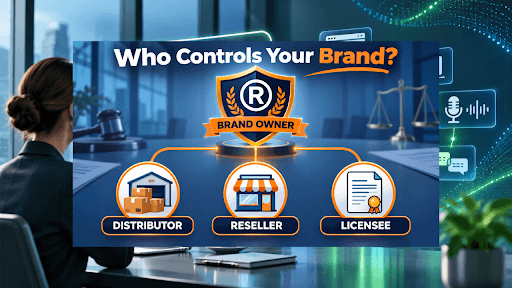
Not every business selling branded products requires the same trademark permissions.
Business Relationship | Typical Trademark Rights |
Distributor | Purchases and distributes products under commercial terms |
Authorized reseller | May identify and resell genuine branded products within applicable legal limits |
Trademark licensee | Uses specified marks under agreed conditions |
Trademark assignee | Receives transferred ownership rights |
Example: A Skincare Business With Two Partners
Suppose Partner A buys finished skincare products and resells them through an online store.
Partner B manufactures a new product line under your brand and designs its packaging.
Partner B generally needs more extensive licensing permissions and quality controls because it produces goods under your trademark.
Partner A may be able to identify and resell genuine products without an equivalent licensing arrangement, depending on the circumstances.
The legal distinction depends on the partner's activities, not simply its business title.
How to Protect Your Trademark Before Signing an Agreement
Before starting a partnership, confirm your trademark rights and assess whether the distributor can meet your business and brand requirements.
Verify Ownership and Conduct a Trademark Search
Start by identifying the legal owner of your mark.
Review existing registrations, pending applications, and the products or services covered.
If your trademark is unregistered, consider whether federal trademark registration supports your expansion plans.
The USPTO recommends a comprehensive clearance search to identify potentially conflicting marks before filing.
This may involve federal records, state databases, and other evidence of marketplace use.
A USPTO trademark search can identify potential conflicts but does not guarantee that a mark is available.
For additional guidance, see Trademark Engine's article on how to trademark a name.
Evaluate the Prospective Distributor
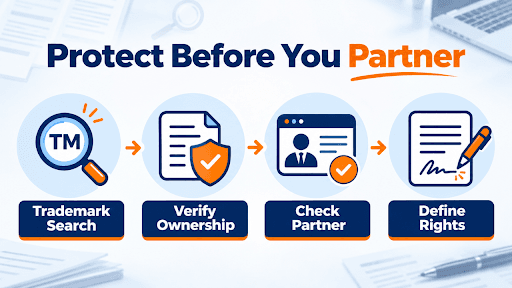
A partner's operations can influence how your brand appears to customers.
Before signing, investigate:
- Business credentials: Confirm the company's legal identity and operating history.
- Sales channels: Identify the retailers, marketplaces, and websites it will use.
- Product handling: Review relevant storage, packaging, and shipping practices.
- Marketing activities: Determine who prepares advertisements and product descriptions.
- Third-party relationships: Check whether subcontractors or sub-distributors will participate.
Also establish who will manage complaints involving product quality or misleading branding.
These checks can help you identify issues that need specific contractual protections.
What Should a Trademark Licensing Agreement Include?
A trademark license agreement should identify the owner, define the partner's permissions, and establish responsibilities for maintaining appropriate brand control.
Clear terms help both parties understand the boundaries of their commercial relationship.
Essential Trademark Distributor Agreement Checklist
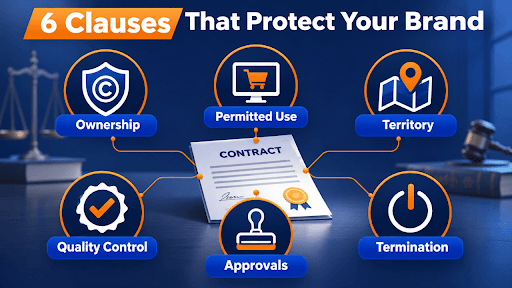
Agreement Provision | What It Should Cover |
Ownership | Legal owner and covered trademarks |
Permitted use | Approved products, services, and promotional activities |
Territory | Authorized geographic markets |
Exclusivity | Exclusive or nonexclusive rights |
Quality control | Product standards and inspection procedures |
Marketing approval | Requirements for packaging and advertising changes |
Sublicensing | Limits on granting rights to third parties |
Registration restrictions | Rules for trademarks, domains, and related filings |
Enforcement | Responsibilities for reporting potential violations |
Termination | Post-termination duties and remaining inventory |
Before signing, check whether the agreement answers three questions:
- What can the partner do? Define the products, locations, and activities covered.
- How will you assess compliance? Establish reasonable reviews and approval procedures.
- What happens if the relationship ends? Address branding, inventory, and continuing obligations.
If these responsibilities remain unclear, resolve them before granting broader permissions.
Trademark Engine's guide to contracts and licensing agreements explains additional contract considerations.
Define Commercial Boundaries
Trademark rights in distribution agreements should match the partner's actual business needs.
For example, permission to sell skincare products in California should not automatically authorize the distributor to manufacture products under your brand in other countries.
The contract should identify relevant product categories, territories, advertising channels, and approval requirements.
It should also address whether the partner may create branded websites, social media accounts, or additional distribution relationships.
These terms help establish expectations without unnecessarily restricting legitimate business activities.
Establish Inspection and Corrective-Action Rights
A license should give the owner appropriate ways to assess the quality of goods or services offered under its trademark.
Depending on the business, these rights might include product inspections, manufacturing reviews, complaint reporting, or access to relevant records.
The agreement should explain how the partner must respond when products fail to meet established standards.
These provisions establish contractual protections. The owner must also consider how to exercise the controls in practice.
Address Termination and Unsold Inventory
The agreement should explain when permission ends and what obligations continue afterward.
For example, a former distributor may need to stop claiming authorized status, remove certain promotional materials, and return confidential assets.
Remaining inventory requires separate consideration.
The first-sale doctrine and related trademark principles may permit resale of genuine goods in some circumstances, even when the original distribution relationship has ended.
Material product differences, misleading affiliation claims, and contractual restrictions can affect the analysis.
An experienced attorney can help draft appropriate termination provisions.
How to Maintain Trademark Control During Active Partnerships
Maintaining trademark control requires ongoing practices that match the nature of the licensing relationship. A signed agreement alone may not establish adequate oversight.
Apply Consistent Brand Standards
Provide licensing partners with written guidelines for using your marks.
These may cover:
- Approved logos and packaging designs.
- Product specifications and labeling requirements.
- Advertising claims and product descriptions.
- Customer service expectations.
- Procedures for requesting approval of significant changes.
For example, a skincare company might review product samples and packaging before its licensed manufacturer begins production.
These checks help maintain consistent product quality while allowing the manufacturer to manage its normal operations.
Understand Naked Licensing Risks
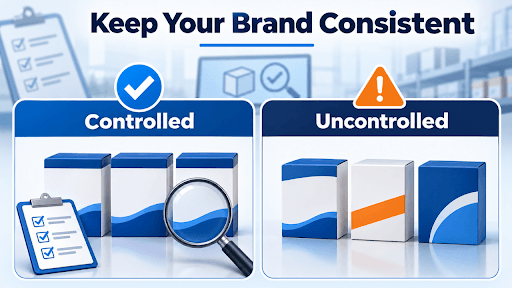
Naked licensing occurs when a trademark owner permits another business to use its mark without adequate control over the nature and quality of the goods or services.
This may jeopardize trademark rights because the mark can lose its ability to indicate a consistent commercial source.
The USPTO Trademark Manual of Examining Procedure, Section 1201.03 discusses qualifying use by related companies and the importance of control.
The appropriate level of oversight depends on the relationship.
A business may document sample reviews, production inspections, customer complaints, or corrective actions. Actual practices matter, not merely the existence of contract language.
Review Ecommerce Listings and Promotional Materials
Digital sales channels create opportunities for misleading or unauthorized brand representation.
Review partner websites, marketplace listings, and advertisements for issues such as:
- Incorrect product photographs or descriptions.
- Unauthorized packaging changes.
- Misleading claims of exclusive or official status.
- Websites that appear to belong to the trademark owner.
- Use of the mark on unrelated products.
Record significant concerns and track corrective actions.
Trademark monitoring can also help identify potentially conflicting filings. Read Trademark Engine's trademark monitoring guide for additional information.
Remember that an unauthorized listing or contract violation does not automatically establish trademark infringement.
What Should You Do if a Distributor Misuses Your Trademark?
If a distributor acts outside its permitted rights, identify the specific conduct, preserve evidence, and assess whether it involves a contractual issue or potential trademark infringement.
Document the Disputed Activity
Suppose a skincare distributor creates a website suggesting that it legally owns your brand.
Preserve screenshots, product listings, advertisements, relevant communications, and transaction records.
Then compare the activity with the permissions granted under the agreement.
This evidence can help determine whether the distributor exceeded its authority or misled customers about the business relationship.
Choose an Appropriate Response
The response should reflect the seriousness of the conduct.
- Identify the issue: Specify the product, advertisement, website, or disputed trademark use.
- Review the agreement: Determine which permissions or restrictions apply.
- Request correction: Communicate the concern and establish a suitable response deadline.
- Document the outcome: Record communications and changes made by the partner.
- Consider legal remedies: Obtain professional advice if the problem remains unresolved.
Correcting an inaccurate product listing may require a different response from addressing an unauthorized trademark application.
The USPTO explains the benefits of federal registration, including legal protections and potential enforcement advantages.
How to Protect Your Brand With International Distributors
International distribution requires additional planning because trademark rights are generally territorial.
A U.S. registration does not automatically provide protection in every country where your products are sold.
Prevent Unauthorized Foreign Registrations

Before entering a new market, consider searching local trademark databases and evaluating registration options.
Your agreement should address whether a distributor may register your mark, related domain names, or translated versions of your brand.
It may also establish procedures for responding to unauthorized foreign filings.
The USPTO's Madrid Protocol guidance explains how eligible applicants can seek trademark protection in multiple jurisdictions through a centralized international application system.
However, each designated jurisdiction decides whether to grant protection under its applicable law.
Local legal advice may be particularly important when granting exclusive rights in unfamiliar markets.
When Should You Seek Legal Advice About a Distribution Partnership?
Some distribution relationships involve legal questions that go beyond routine brand-use permissions.
Consider consulting an experienced attorney when:
- A distributor requests exclusive rights across several countries.
- Another company will manufacture goods under your trademark.
- The parties disagree about ownership of existing or newly developed marks.
- A former partner continues making misleading claims of affiliation.
- The proposed business arrangement may qualify as a franchise.
Franchise classification can depend on trademark use, business control or assistance, required payments, and applicable federal or state rules.
Legal review can help identify these issues before significant commitments are made.
Conclusion
Working with distributors and licensing partners can support business growth, but it requires clear responsibilities and careful brand management.
Written agreements help define expectations, while appropriate oversight supports consistent trademark use.
Whether you are entering your first distribution partnership or expanding internationally, understanding your existing rights can help prevent misunderstandings, support stronger commercial relationships, and protect the brand identity your customers recognize and trust.
Protect Your Brand Before Expanding Your Distribution Network
Before entering a new licensing or distribution relationship, make sure you understand your trademark rights.
Trademark Engine offers trademark registration services to help business owners pursue federal protection.
You can also begin with a trademark search to identify potential conflicts before expanding.
For complex licensing contracts or disputes, seek individualized legal advice.
Trademark Engine Editorial Team
Frequently Asked Questions
Generally, an ordinary trademark license does not need to be recorded with the USPTO merely to be valid. Trademark assignments involve different ownership and recordation considerations. Specific transactions may require additional review.
A distributor may be able to use a trademark in advertising, depending on its authorization, the advertisement's content, and applicable law. Misleading sponsorship or affiliation claims may create legal concerns. Advertising-platform policies can also apply.
Joint ownership can be possible, but it requires careful planning. The parties should address how they will manage trademark use, enforcement, and business decisions. Legal advice is recommended because shared ownership can complicate brand management.
No. Licensing arrangements may involve royalties, fixed fees, or other agreed commercial terms. The payment structure depends on the parties' agreement and applicable law.
Potentially. A distributor may challenge a registration through available legal procedures if it has a valid basis and meets the applicable requirements. Contract provisions and the parties' conduct may influence the dispute.
No. Appointing multiple distributors does not automatically require separate trademark registrations. Registration needs depend on the mark, relevant goods or services, and countries involved rather than the number of distribution partners.
Get Trademark Tips and Compliance Guidance
Subscribe for updates, insights, and resources that help you stay compliant and grow your mission.