How Founders Can Protect a Personal Brand and Product Brand

Published on November 16, 2026 | Updated on November 20, 2026
Estimated Read Time: 12 minutes

Key Takeaways
- Personal and product brands serve different purposes and may need separate trademark protection.
- A founder's name can qualify as a trademark when it identifies goods or services.
- Trademark ownership depends on legal rights, commercial use, and applicable agreements.
- An intent-to-use application may help founders begin the filing process before launch.
- Trademark searches should consider similar marks, not just identical names.
- Clear ownership arrangements can help prevent problems during business expansion or sales.
Quick Answer: Founders can protect personal and product brands by determining which names function as trademarks, identifying the correct legal owners, and checking for existing conflicts. Federal registration may strengthen protection when the marks meet USPTO requirements.
Founder trademark protection is becoming increasingly relevant as more businesses seek to establish recognizable identities. According to the USPTO's May 2026 update, trademark filings increased 7% during the first half of fiscal year 2026 compared with the same period in FY 2025.
For founders, protecting a personal name and a product brand can involve different legal decisions. A skincare entrepreneur, for example, might offer educational services under their own name while selling products through a separate company.
Understanding which names qualify as trademarks, who owns them, and when registration makes sense helps founders build stronger commercial identities.
Personal Brand vs. Product Brand: Key Differences
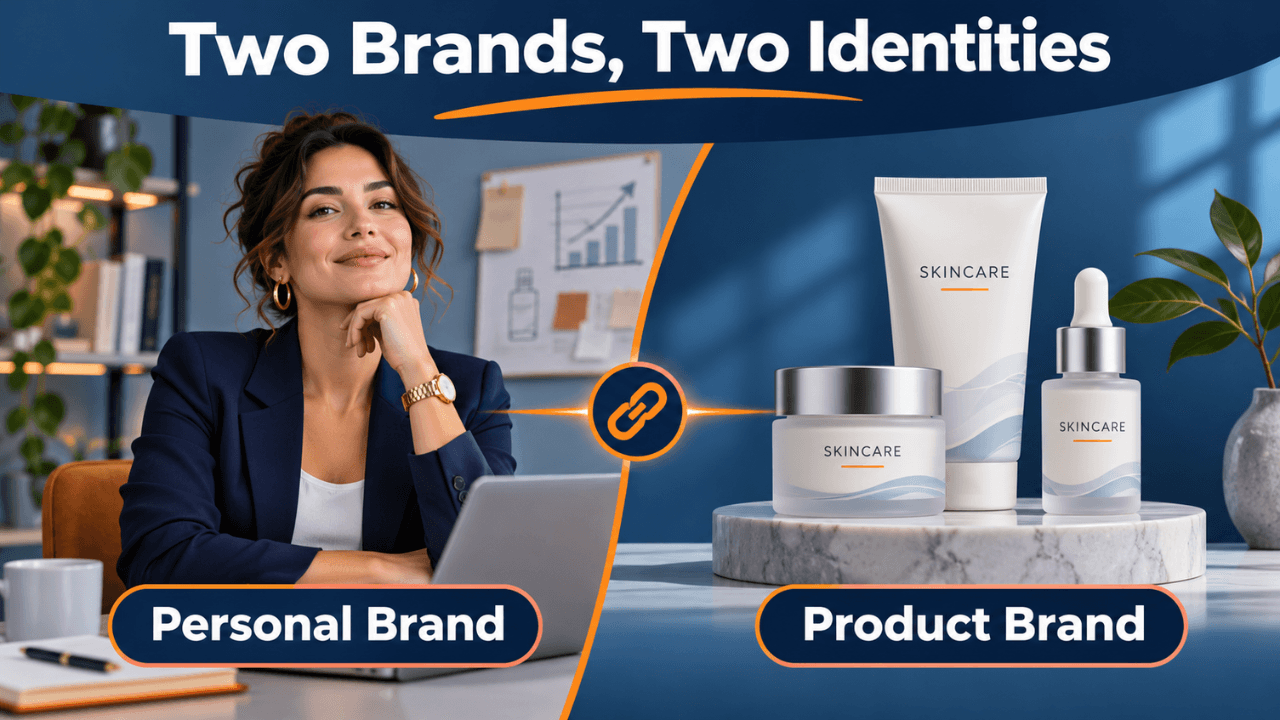
A personal brand identifies a founder's professional identity, while a product brand identifies goods or services offered to customers. Both can contribute to business growth, but their commercial roles and ownership structures may differ.
| Feature | Personal Brand | Product Brand |
|---|---|---|
| Identity | Founder's name or professional identity | Product or service name |
| Main purpose | Establish professional recognition | Identify commercial offerings |
| Example | Maya Carter | LumaGlow |
| Potential use | Consulting or educational services | Skincare products |
| Possible owner | Founder or business entity | Company or another legal owner |
| Trademark consideration | Must identify the source of goods or services | Must distinguish commercial offerings |
The examples are fictional.
How a Founder's Identity Creates Commercial Value
A founder's reputation may attract customers, establish credibility, and introduce potential buyers to a business.
For example, Maya Carter might provide paid skincare workshops under her name.
If customers recognize MAYA CARTER as identifying those educational services, it could function as a service mark.
However, appearing in a company biography or maintaining a social media profile does not necessarily establish trademark use.
The USPTO explains that a trademark identifies the source of particular goods or services.
Why a Separate Product Identity Matters
Suppose Maya also owns LumaGlow, a skincare business selling moisturizers and cleansers.
Customers may recognize LumaGlow independently of Maya's personal reputation.
A distinct commercial identity can help the company maintain customer recognition when its leadership or ownership changes.
Registering Maya's personal name would not automatically register LumaGlow. Each mark requires an individual assessment based on its commercial use.
Can Founders Trademark Their Personal Names?

Yes. A founder may register a personal name as a trademark when it identifies specific goods or services and meets federal registration requirements.
However, having a recognizable name or a large online following does not automatically establish trademark eligibility.
When a Personal Name Qualifies for Protection
A personal name may function as a trademark when used to identify:
- Consulting or professional services
- Educational courses and workshops
- Branded merchandise
- Certain entertainment services
- Other commercial offerings
The important distinction is how customers encounter the name.
If Maya Carter appears only as an employee or founder in a company biography, that reference may not qualify as trademark use.
If customers recognize MAYA CARTER as identifying her paid educational services, the name may serve as a service mark.
The USPTO also considers other registration requirements, including whether a mark is primarily merely a surname or conflicts with earlier rights.
Consent Requirements for Living Individuals
Applications involving a living person's name, signature, or likeness may require additional documentation.
According to the USPTO's personal-name guidance, written consent is generally required when a mark identifies another living person.
When the application includes the applicant's own name or likeness, consent is generally presumed.
Founders should also distinguish trademark rights from privacy and publicity rights, which may separately address unauthorized commercial uses of someone's identity.
For additional filing guidance, see Trademark Engine's How to Trademark a Name.
How to Protect a Product Brand Before Launch
Founders can begin protecting a product brand before its commercial launch by selecting a distinctive name, researching existing marks, and determining the appropriate filing basis.
These decisions are especially important before investing in packaging, advertising, or ecommerce listings.
Choose a Distinctive Commercial Name
A trademark should help customers distinguish one business's products from those of another.
The USPTO generally considers fanciful, arbitrary, and suggestive marks more distinctive than names that merely describe products.
For example, "Natural Face Cream" describes a type of product. A fictional coined name such as "LumaGlow" may be more distinctive, although its availability and registrability still require evaluation.
A memorable name should identify your commercial offering rather than simply describe its ingredients or benefits.
Search for Potentially Conflicting Marks
A comprehensive trademark search examines more than identical names.
Marks may create conflicts when they have similar sounds, appearances, meanings, or overall commercial impressions and identify related goods or services.
The USPTO's clearance search guidance recommends investigating multiple sources.
Founders should review:
- Registered and pending federal trademarks.
- Alternative spellings and pronunciations.
- Related goods and services.
- State trademark databases.
- Existing marketplace and unregistered business uses.
For example, another skincare business using a similar-sounding version of LumaGlow could raise concerns even if the spelling differs.
An available website domain or social media username does not establish trademark clearance.
Choose the Appropriate Filing Basis
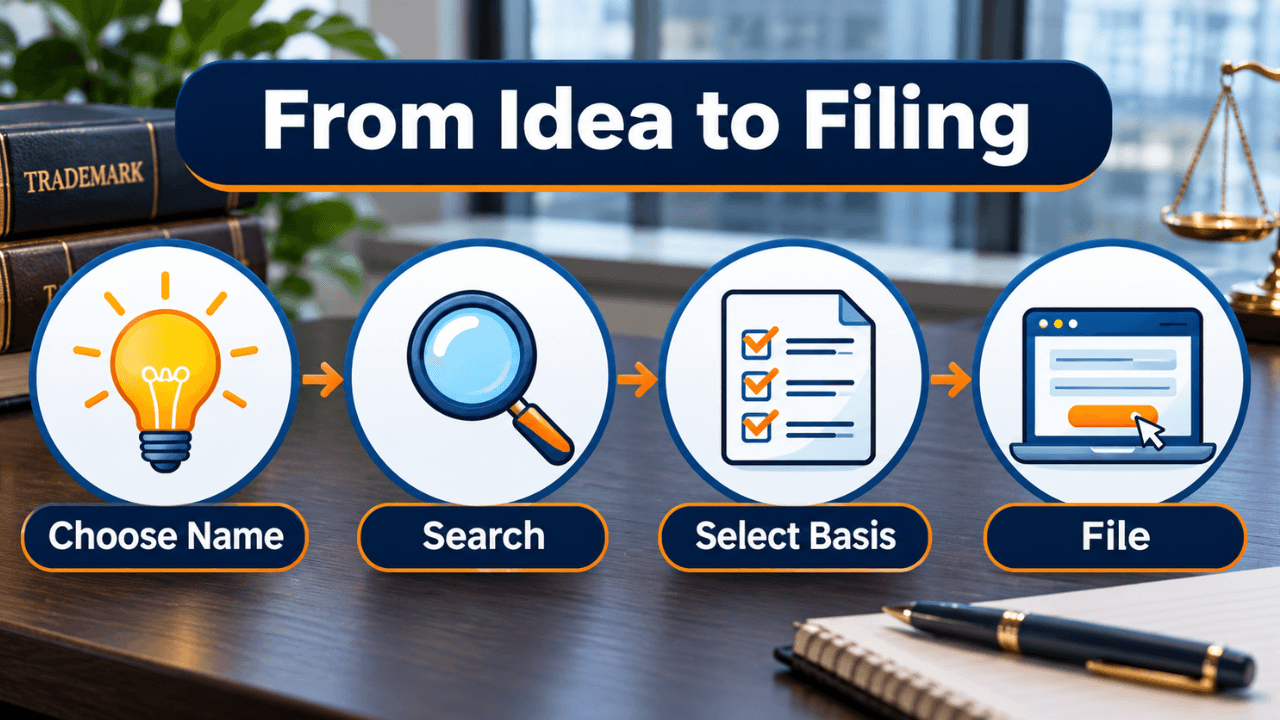
Founders may qualify for federal trademark filing before their products reach the market.
The filing basis depends on whether qualifying commercial use has started.
| Filing Basis | When It May Apply | Main Requirement |
|---|---|---|
| Section 1(a): Use in Commerce | The mark is already used in qualifying commerce | Evidence of actual trademark use |
| Section 1(b): Intent to Use | The applicant genuinely plans to use the mark | Bona fide intent, followed by timely proof of use |
An intent-to-use application requires a genuine commercial plan.
Evidence of product development, packaging preparation, or supplier discussions may help demonstrate that intention if questioned.
However, the application cannot mature into registration without satisfying the required use procedures.
The USPTO's intent-to-use guidance explains the applicable Statement of Use and extension requirements.
For more startup-focused guidance, read Trademark Engine's Startup Trademark Guide.
Trademark Ownership: Should the Founder or Company Apply?
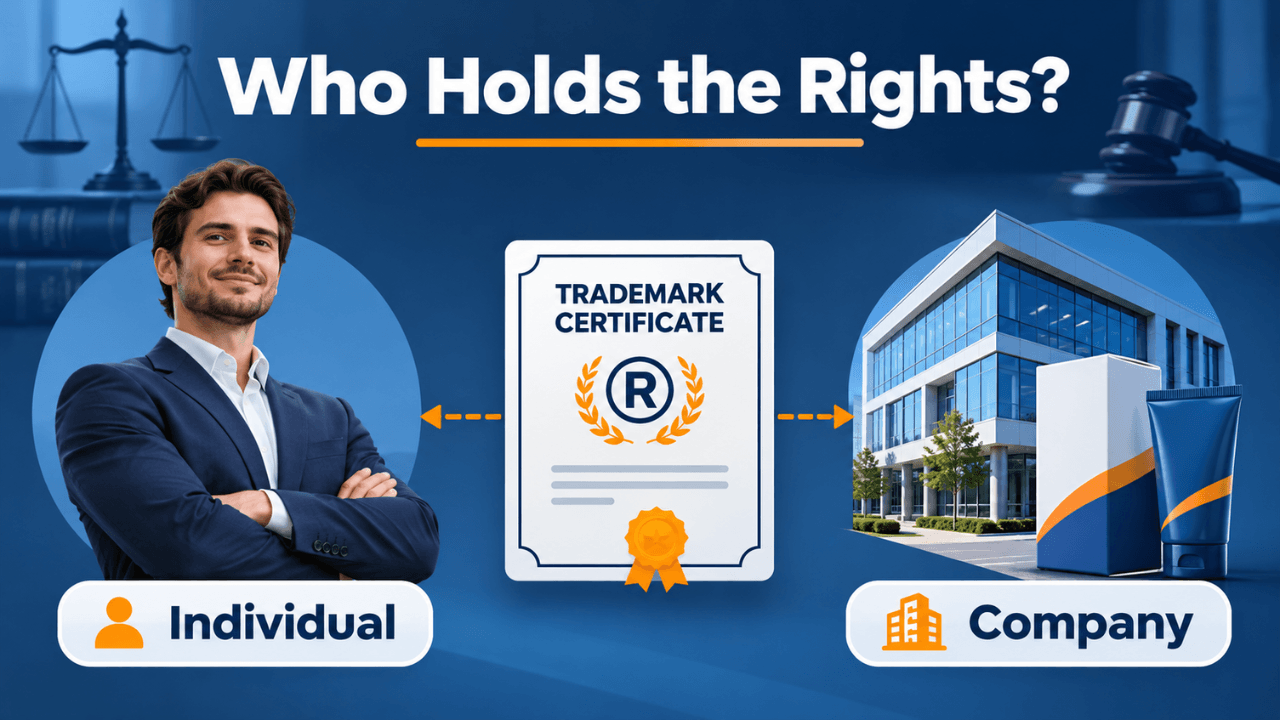
The correct trademark applicant depends on the legal ownership of the mark. For use-based applications, the applicant must be the actual owner. For intent-to-use applications, the applicant must have the required bona fide intention to use the mark in commerce.
A founder does not automatically own a trademark simply because they created its name.
Individual Ownership vs. Business Ownership
Ownership arrangements depend on commercial use, control, and existing agreements.
| Business Situation | Ownership Consideration |
|---|---|
| Founder independently operates a consulting brand | Individual ownership may be appropriate |
| LLC owns and controls a product line | LLC may be the proper applicant |
| Founder creates a name before incorporating | Ownership and later transfers need review |
| Company licenses a founder's separate mark | A written license may be appropriate |
| Multiple founders develop a commercial identity | Rights should be established clearly |
For example, if Maya's LLC owns and controls LumaGlow, the company may be the appropriate applicant.
If Maya independently operates a separate educational brand, that mark may have a different owner.
The USPTO's guidance on application problems identifies naming the wrong trademark owner as an error that can invalidate an application.
Three Questions to Ask Before Filing
Founders should consider three questions when identifying the appropriate applicant:
- Who operates the business using the mark? Identify the person or entity responsible for the relevant offerings.
- Who controls its commercial use? Consider branding decisions, licenses, and responsibility for product or service quality.
- What do existing agreements say? Review any assignments, licenses, or founder agreements affecting the mark.
These questions can reveal potential ownership issues before filing.
Complex arrangements may require an experienced trademark attorney to evaluate the legal facts.
Document Rights Through Written Agreements
Founders should establish clear arrangements for important commercial identities.
Depending on the circumstances, relevant documents may include:
- Founder or shareholder agreements
- Intellectual property assignments
- Trademark licensing agreements
- Business acquisition agreements
Licensing arrangements should also address appropriate quality control.
Clear documentation helps establish which party may use a mark, under what conditions, and whether rights can be transferred.
What Happens to Brand Rights When a Founder Leaves?

Trademark rights do not automatically follow a departing founder. The outcome depends on ownership, contracts, licenses, and the terms of any business transaction.
This distinction matters when someone sells a company but wants to continue operating a separate professional business.
Protecting Rights During a Business Sale
Suppose Maya sells the company that owns LumaGlow but continues offering independent educational services.
Whether she can retain her personal-brand trademark depends on her existing rights and the sale agreement.
Before completing a transaction, the parties should identify:
- Which trademarks belong to the company.
- Which assets are included in the purchase.
- Whether existing licenses will continue.
- Whether the founder can use particular names afterward.
- Which ownership changes require documentation.
Trademark assignments generally transfer marks with their associated goodwill.
The USPTO's assignment guidance explains how ownership transfers can be recorded.
Certain intent-to-use applications also face restrictions on assignment before an allegation of use is filed, with a limited exception for qualifying business successors.
Reviewing these matters before signing a sale agreement can help clarify the rights each party retains.
Common Trademark Mistakes Founders Should Avoid
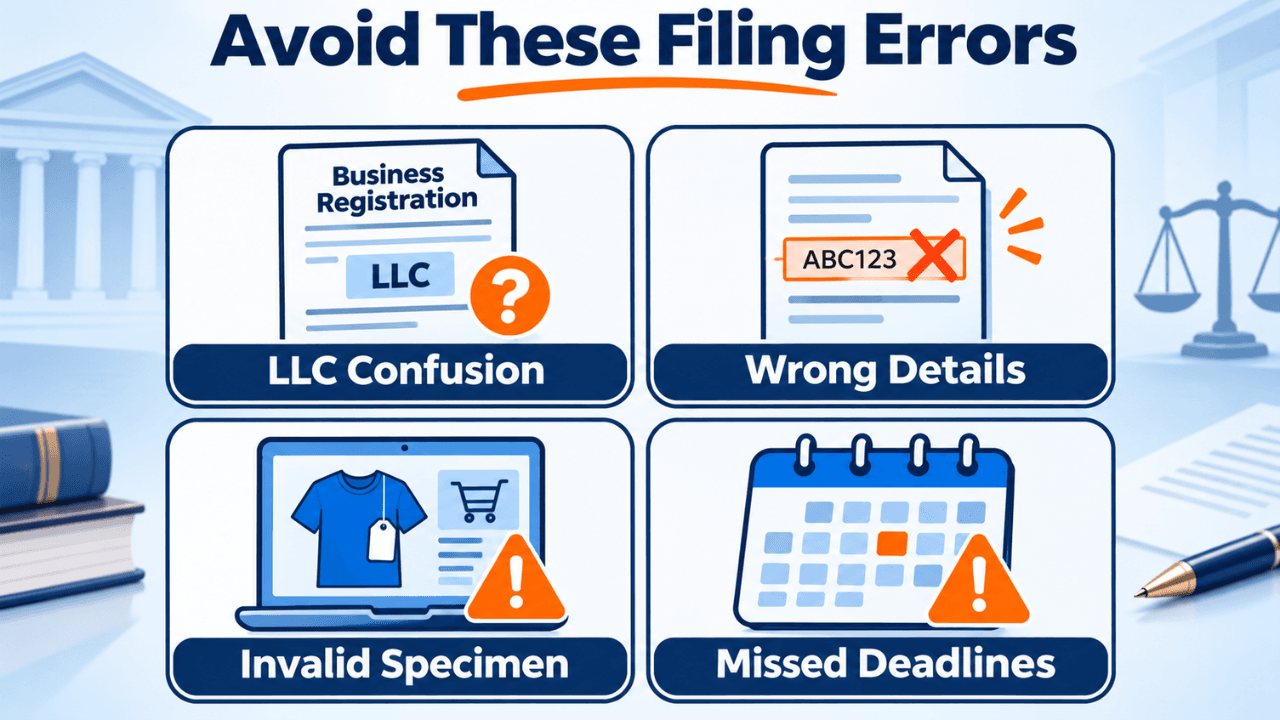
Several misunderstandings can create filing problems or weaken a business's trademark strategy.
Assuming LLC Registration Protects Every Name
Forming an LLC establishes a legal business entity under state law. It does not automatically create federal trademark registration.
Business formation and trademark protection serve different legal purposes.
Using Inaccurate Goods or Services Descriptions
Applications must identify the goods or services connected with the mark.
For example, skincare products and educational workshops may involve different trademark classes.
Inaccurate descriptions can cause filing problems or affect the scope of protection.
Filing for Every Product Name
Not every product requires a separate trademark application.
A business may sell multiple products under one umbrella brand.
Separate filings become relevant when individual product names function as distinct trademarks and justify protection.
Submitting Product Mockups as Evidence
A proposed package design does not necessarily demonstrate actual trademark use.
For goods, acceptable specimens may include genuine product labels, packaging, or qualifying ecommerce pages associated with goods available for purchase.
The USPTO's specimen guidance explains why unused mockups and digitally altered specimens generally do not qualify.
Missing Post-Registration Deadlines
Federal trademark registrations require ongoing maintenance.
According to the USPTO's maintenance requirements, owners of most U.S. registrations must submit required documents between the fifth and sixth years after registration and meet later renewal requirements.
Missing applicable deadlines can result in cancellation.
A Practical Brand Protection Checklist for Founders
A useful trademark strategy converts research into clear filing decisions. Founders should document the information they have confirmed and resolve important uncertainties before applying.
Use this checklist:
- Identify your commercial marks. List personal names, business names, product brands, and logos.
- Determine their functions. Distinguish source-identifying marks from ordinary descriptions or personal references.
- Prioritize important identities. Focus on names linked to current revenue or planned expansion.
- Complete clearance research. Investigate potential conflicts across relevant sources.
- Confirm the legal applicant. Identify the appropriate individual or business entity.
- Prepare application details. Select accurate goods or services, classes, and filing bases.
- Organize ongoing records. Maintain ownership documents, evidence of use, and important deadlines.
Understand Federal Filing Costs
As of November 2026, the USPTO's published base filing fee is $350 per class for a qualifying Section 1 or Section 44 application.
Additional government fees may apply depending on the application and subsequent filings.
For example, two separate marks, each filed in one class and qualifying for the base fee, would have combined initial government filing fees of $700.
That amount excludes additional government charges and optional service fees.
Founders should review the current USPTO fee schedule before applying.
Conclusion
Protecting personal and product brands requires understanding how each name functions, who legally owns it, and which trademark rights may apply. A clear strategy can help founders avoid filing mistakes and prepare for future business changes.
Start with important commercial identities, investigate potential conflicts, and document ownership arrangements. These steps can support long-term brand protection while helping you make informed decisions about federal trademark registration.
Protect Your Business Identity With Trademark Engine
Your personal identity and product brand may need different trademark strategies.
Trademark Engine offers trademark search tools and registration assistance to help business owners investigate potential conflicts and prepare federal trademark applications.
Explore Trademark Engine's trademark services and take the next step toward protecting your brand.
Trademark Engine Editorial Team
Frequently Asked Questions
Yes. The ™ symbol can generally indicate a claim of trademark rights without federal registration. The ® symbol is reserved for marks registered with the USPTO and used for the goods or services covered by the registration.
You may apply for a combined name-and-logo mark or submit separate applications. A standard-character registration can protect the wording without limiting it to a particular font or design, while a design-mark registration covers the mark's specific visual elements.
Sometimes. The key issue is whether consumers are likely to be confused. Different industries may reduce conflict risks, but related products, overlapping customers, and existing trademark rights can still matter.
No. U.S. federal registration generally does not provide automatic protection worldwide. Founders planning international expansion may need to consider trademark applications in other countries or use available international filing systems.
Potentially. A social media handle may qualify when consumers recognize it as identifying goods or services. Merely reserving or using a username does not automatically establish trademark rights.
Yes. A slogan may qualify for trademark protection when it identifies the source of goods or services and meets registration requirements. Ordinary advertising phrases or informational messages may not function as trademarks.
Get Trademark Tips and Compliance Guidance
Subscribe for updates, insights, and resources that help you stay compliant and grow your mission.