Holiday Pop-Up Shops: Do You Need to Register or Trademark Your Business Name?

Published on November 14, 2026 | Updated on November 19, 2026
Estimated Read Time: 11 minutes

Key Takeaways
- Temporary retail businesses may need local licenses and tax permits.
- A DBA registers an assumed operating name but does not create a legal entity.
- An LLC is generally optional for a seasonal retail business.
- Business-name registration and federal trademark protection serve different purposes.
- A trademark search can help identify conflicts before investing in branding.
- Federal registration may benefit sellers expanding beyond seasonal markets.
Quick Answer: A holiday pop-up shop may need a business license, seller's permit, or DBA, depending on state and local rules. An LLC or federal trademark registration is generally not mandatory for a temporary shop, but trademark registration can provide additional protection if you plan to grow your brand.
Holiday markets offer small businesses an opportunity to reach customers and test new products. According to the U.S. Census Bureau's October 2026 retail sales report, U.S. retail and food services sales reached $745 billion in September 2026, up 6.3% from September 2025.
For entrepreneurs opening a holiday pop-up shop, the excitement of seasonal sales also comes with legal responsibilities.
Do you need a business license, DBA, or trademark before opening? The answer depends on your location, products, and business structure.
This guide explains the essential requirements and helps you decide how to protect your business name.
Do You Need to Register a Holiday Pop-Up Shop?

A temporary retail store may require business registration even if it operates for only a weekend. The requirements depend on your business structure, operating name, and location.
Pop-up businesses can operate from Christmas market booths, shopping mall kiosks, rented storefronts, or seasonal community events.
According to the U.S. Small Business Administration, registration requirements depend on how your business operates and where it is located.
For example:
- Sole proprietors: You may operate under your legal name without forming a separate entity, subject to applicable rules.
- Existing businesses: Your current company may operate a temporary location, although additional registrations may apply.
- New brand names: You may need an assumed-name filing if you operate under a name different from your legal business name.
Consider a seller opening a two-week candle booth called Winterwick Studio. If the seller operates under that name rather than their personal legal name, local DBA rules may apply.
The key is to identify the applicable requirements before signing a venue agreement or spending money on branded materials.
What Licenses and Permits Does a Holiday Pop-Up Shop Need?
A seasonal retail business may need local licenses, temporary event permits, and sales-tax registration. These requirements depend on the venue, products, and applicable state or local laws.
Business Licenses and Temporary Vendor Permits
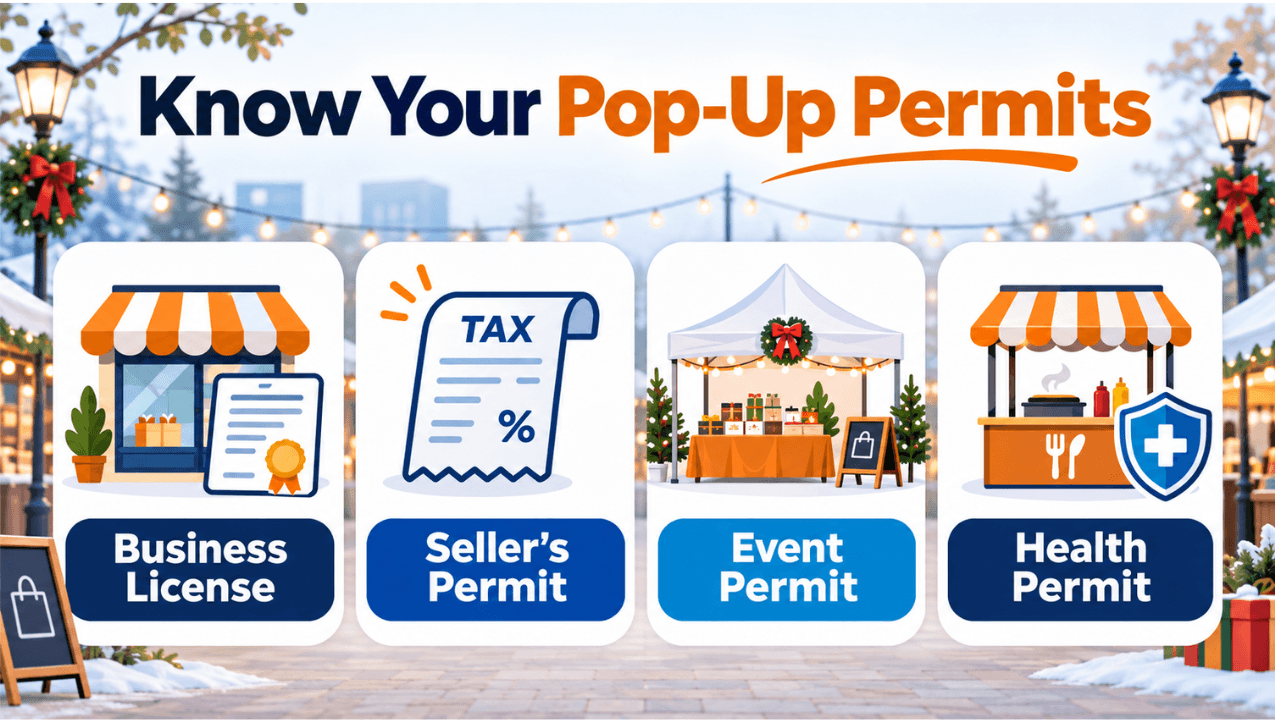
If you're asking, "Do I need a business license for a pop-up shop?" the answer may be yes, even for a one-day event.
Depending on your location, pop-up shop permits may include:
- General business or temporary vendor licenses
- Special-event or temporary-use permits
- Zoning and signage approvals
- Fire safety or building clearances
- Health permits for regulated food activities
A clothing booth inside a mall may face different requirements from an outdoor food stall using cooking equipment.
Contact your city or county licensing office and ask the event organizer which approvals are already covered.
Seller's Permits and Sales Tax
A seller's permit generally relates to collecting and reporting applicable sales tax. It does not replace a business license.
The California Department of Tax and Fee Administration explains that many temporary sellers of taxable merchandise need seller's permits.
California also offers temporary permits for qualifying sellers, while some existing permit holders may need to register an additional selling location.
Rules differ across states, so confirm whether your business needs a seller's permit for a pop-up shop, temporary registration, or event-specific reporting.
How to Identify the Required Approvals
| Requirement | Primary Purpose |
|---|---|
| Business license | Authorizes certain business activities |
| Seller's permit | Supports sales-tax compliance |
| Event permit | Addresses temporary event operations |
| Health permit | Covers regulated food activities |
| Business insurance | Helps manage financial risks and satisfy venue requirements |
Not every requirement applies to every seller. Check the rules for your specific event before opening.
Should You Register a DBA or Form an LLC?
A DBA and an LLC serve different purposes. A DBA allows a business to use an assumed name, while an LLC creates a separate legal entity.
When Is a DBA Required?
DBA stands for Doing Business As. It may also be called an assumed or fictitious business name.
For example, Sarah Miller might sell holiday decorations under Winterwick Studio rather than her personal legal name.
Depending on state or county requirements, she may need to register that name.
A DBA does not create a new company, provide personal liability protection, or automatically establish trademark rights.
Is an LLC Necessary for a Seasonal Shop?
You generally do not need an LLC simply to operate a temporary retail business.
Some sellers begin as sole proprietors to test demand. Others choose an LLC because they plan to operate regularly or want liability protection.
Consider an LLC if you expect to:
- Run the business throughout the year
- Expand into multiple markets
- Take on greater financial obligations
- Separate business liabilities from personal finances
An LLC can provide liability protection, but legal exceptions apply. Formation also involves state-specific fees and ongoing obligations.
Which Business Setup Fits Your Situation?
| Seller Situation | First Step to Consider |
|---|---|
| Selling under your legal name | Check local licenses and tax obligations |
| Using a new seasonal name | Review DBA requirements |
| Operating through an existing LLC | Confirm location-specific registrations |
| Building a year-round ecommerce brand | Evaluate long-term entity and brand needs |
The right structure depends on your circumstances, not simply the number of days you plan to sell.
DBA vs. Trademark: What Protects Your Business Name?
A DBA records an operating name, while a trademark identifies the source of particular goods or services. Registering one does not automatically provide the benefits of the other.
| Registration | Main Purpose | Federal Trademark Protection |
|---|---|---|
| DBA | Registers an assumed business name | Not automatically |
| LLC | Creates a separate business entity | Not automatically |
| Federal trademark | Registers a distinctive brand identifier | Provides federal registration rights |
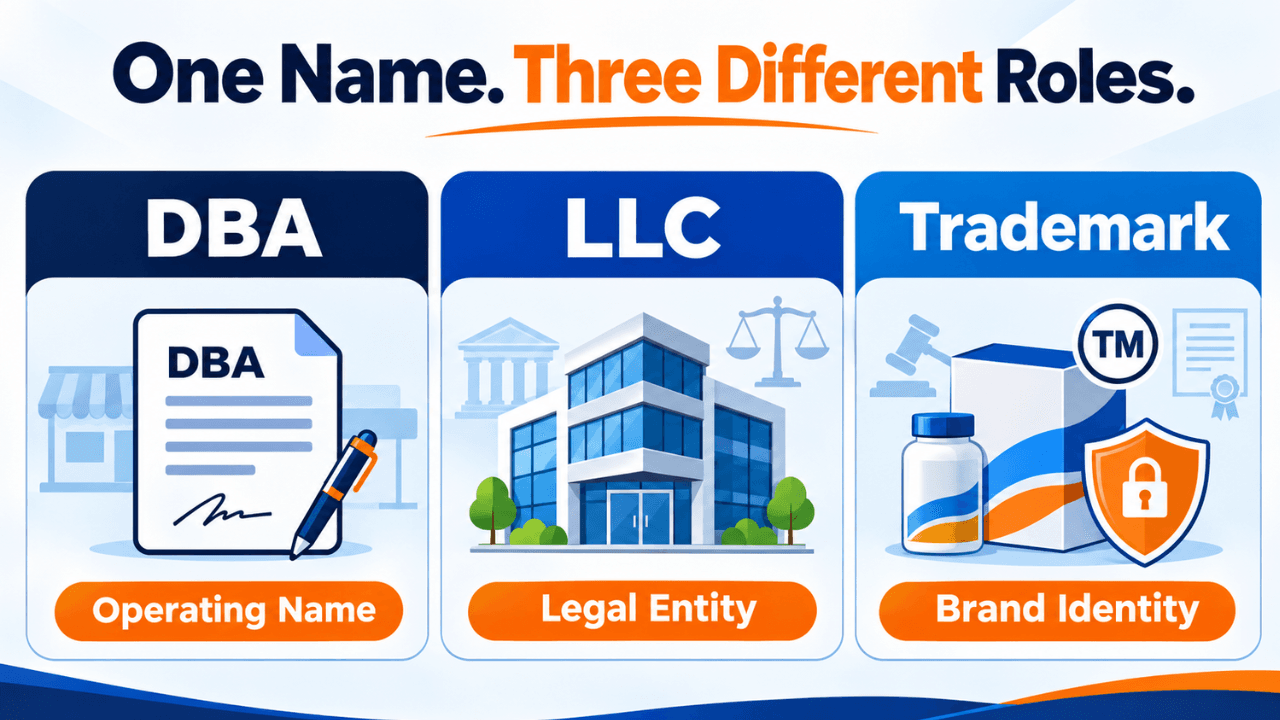
According to the USPTO, a trademark distinguishes your goods or services from those offered by others.
For example, your state might approve Winterwick Studio LLC even though another business owns a confusingly similar trademark for related products.
That existing mark could create legal concerns despite your approved business-name registration.
Trademark rights can also develop through qualifying commercial use without federal registration. These are known as common-law rights, and their scope depends on the circumstances.
Learn more about how to trademark a business name.
Should You Trademark Your Holiday Pop-Up Shop Name?
Federal trademark registration is generally optional, but it may be valuable if you plan to build a recognizable brand beyond one seasonal event.
The USPTO explains that federal registration offers benefits, including nationwide legal presumptions of ownership and rights associated with the registered goods or services, subject to applicable limitations.
When Federal Registration May Be Worth Considering
Trademark registration may make sense when you:
- Plan to reopen under the same name each holiday season
- Sell branded products through an e-commerce website
- Expand into additional geographic markets
- Invest significantly in distinctive packaging or advertising
- Want to build customer recognition around your brand
A seller testing products at one weekend market may have different priorities from a company planning nationwide online sales.
Before applying, consider whether your name is distinctive and whether similar trademarks already exist.

Can You Apply Before Your First Sale?
Yes. The USPTO allows an intent-to-use application if you have a genuine intention to use the mark in qualifying commerce.
However, you must later provide acceptable evidence of trademark use before registration can be completed.
The USPTO's intent-to-use guidance explains these requirements.
A single local sale does not automatically satisfy the federal use-in-commerce requirement in every situation.
How Much Does Federal Registration Cost?
As of November 2026, the USPTO's base filing fee is $350 per class for qualifying applications under Sections 1 and 44.
For example, a candle brand applying in one class may pay a $350 base filing fee. Additional classes generally require separate fees.
Other possible costs include:
- Additional fees for incomplete applications or certain custom product descriptions
- A $150 per-class statement-of-use or amendment-to-allege-use fee
- A $125 per-class fee for certain intent-to-use extension requests
- Optional professional or trademark service fees
Government application fees are generally nonrefundable.
Review the USPTO trademark fee schedule for current costs.
For more guidance, see small business trademark registration.
How to Conduct a Trademark Search Before Opening
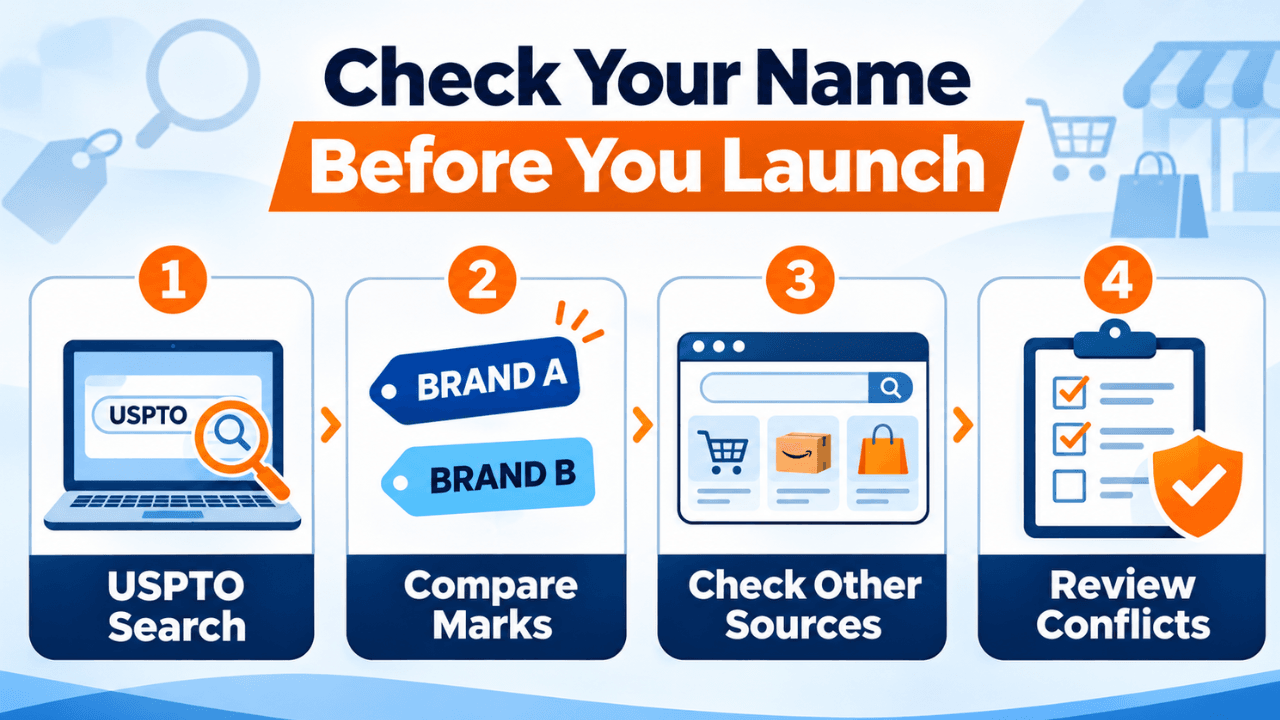
A trademark search before naming your business helps identify existing brands that may conflict with your proposed name.
Finding no identical federal registration does not guarantee that your name is available.
Step 1: Search the USPTO Database
Begin with the official USPTO Trademark Search system.
Search your proposed name, alternative spellings, similar pronunciations, and distinctive word combinations.
For example, a search for Winterwick Studio should include names that sound or look similar.
Step 2: Compare Related Goods and Services
Two marks do not need identical spelling to create a conflict.
The USPTO considers whether similar names used with related goods or services could confuse customers.
For example, candle products and certain home-fragrance products may be related even when they belong to different product categories.
Step 3: Check Additional Sources
A comprehensive trademark search should also consider:
- State trademark databases
- Existing commercial websites
- Online retailers and marketplaces
- Business directories and other evidence of commercial use
The USPTO's comprehensive clearance guidance recommends checking sources beyond federal trademark records.
Step 4: Review Potential Conflicts
If you find a similar mark, investigate its current use, associated products, and trademark status.
An abandoned federal application does not necessarily mean that the business stopped using the brand.
When results are unclear, a more detailed search or advice from an experienced U.S.-licensed trademark attorney may be helpful.
Read more about when a basic trademark search is not enough.
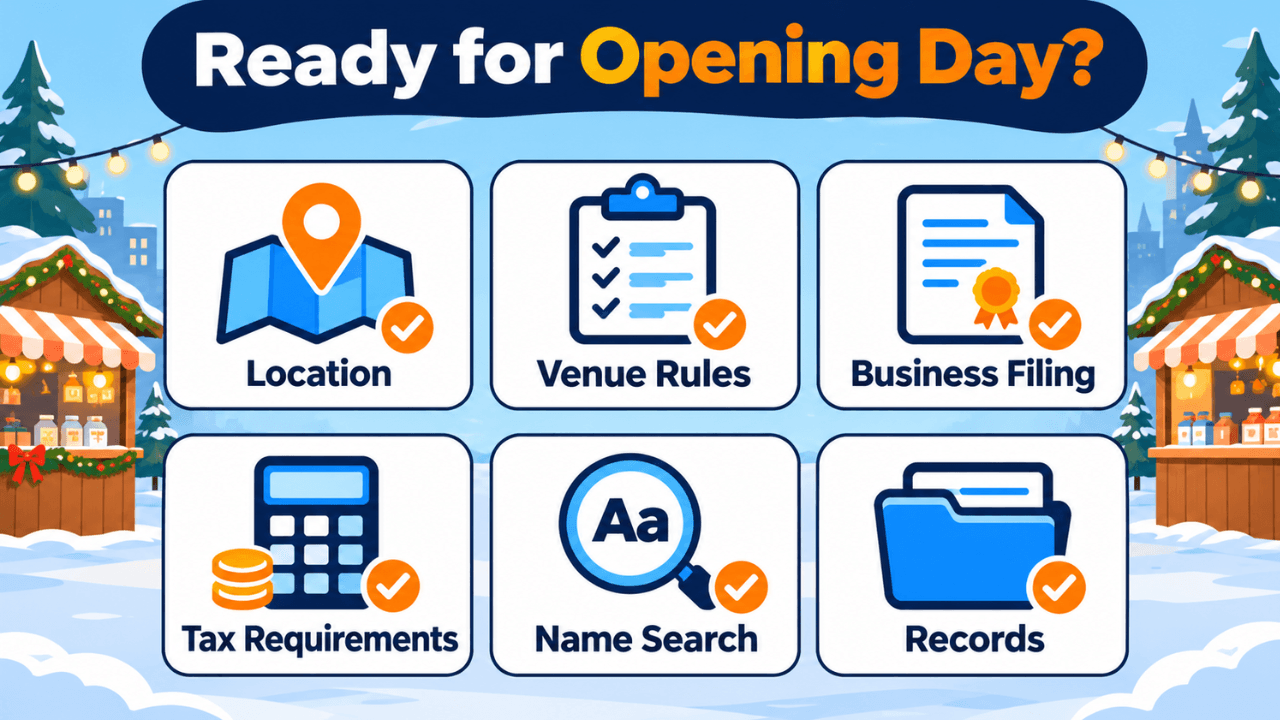
Holiday Pop-Up Shop Legal Checklist Before Opening
Before launching your seasonal shop, complete these practical steps:
- Confirm your location. Identify the city, county, and state where you will sell.
- Contact the organizer. Ask which permits, insurance requirements, and approvals apply.
- Verify business filings. Check whether your operating name or business structure needs additional registration.
- Review tax obligations. Confirm state sales-tax registration and reporting requirements.
- Complete a name search. Investigate potential trademark conflicts before ordering branded materials.
- Keep essential records. Save approvals, tax documents, venue agreements, and evidence of commercial activity.
If you plan to return for another holiday season, check renewal requirements and any changes in local rules before reopening.
Conclusion
A holiday pop-up shop can help you test products and reach new customers without opening a permanent store. However, temporary operations may still require business registration, permits, and tax compliance.
A DBA, LLC, and federal trademark serve different purposes, so choose each based on your needs. Before launching, confirm local requirements and research your business name to reduce avoidable risks and support future growth.
Protect Your Business Name With Trademark Engine
Your brand name may remain valuable long after the holiday market closes.
Trademark Engine offers trademark search and registration services to help business owners explore their options.
Start with Trademark Engine's trademark search tools or explore its registration services before making a long-term investment in your brand.
Trademark Engine Editorial Team
Frequently Asked Questions
Yes. You may generally use the ™ symbol to claim trademark rights without federal registration. The ® symbol is reserved for federally registered marks and must be used according to applicable rules.
Not always. Some sole proprietors do not need an Employer Identification Number for federal tax purposes. Businesses with employees or certain tax obligations generally need one.
Possibly. Home-based retail sales may be subject to zoning rules, local licenses, homeowner association restrictions, and product-specific requirements. Verify local regulations before inviting customers or hosting an event.
It depends on what you want to protect. A standard-character trademark generally protects wording without tying it to a particular design. A separate design-mark application may be useful for protecting a distinctive logo.
A seasonal break does not automatically cause trademark abandonment. However, stopping use without an intention to resume can affect your rights. Under federal law, three consecutive years of nonuse can create a presumption of abandonment.
Possibly. Geographic separation may matter when evaluating certain common-law rights, but it does not automatically prevent conflicts. Federal registrations, earlier trademark use, related products, and likely customer confusion can affect whether both businesses may use their names.
Get Trademark Tips and Compliance Guidance
Subscribe for updates, insights, and resources that help you stay compliant and grow your mission.