Do You Need Separate Trademarks for Different Products Under the Same Brand?

Published on November 12, 2026 | Updated on November 18, 2026
Estimated Read Time: 9 minutes

Key Takeaways
- One trademark may cover several goods sold under the same brand.
- Trademark classes determine how products are grouped for filing.
- The USPTO generally charges application fees per class, not per item.
- Individual product brands and logos may need separate registrations.
- Existing registrations cannot simply be expanded to include new goods.
- Conducting a trademark search helps identify possible conflicts before filing.
Quick Answer: No, you do not need a separate trademark for every product under the same brand. One application can cover multiple goods, including products in different trademark classes. However, distinct product names or logos generally require separate applications for registration.
Your clothing brand starts with T-shirts and hoodies, then expands into handbags, skincare, and accessories. Does every new product need its own trademark?
Trademark filings continue to grow. According to the USPTO's April 2026 report, the agency received 431,734 trademark application classes during the first half of fiscal year 2026, a 7% increase over the same period in 2025.
For growing businesses, understanding trademark coverage is essential. One registration may protect several products, but additional filings sometimes make sense. This guide explains trademark classes, separate product names, filing costs, and how to protect new product lines without unnecessary applications.
Can One Trademark Cover Multiple Products?
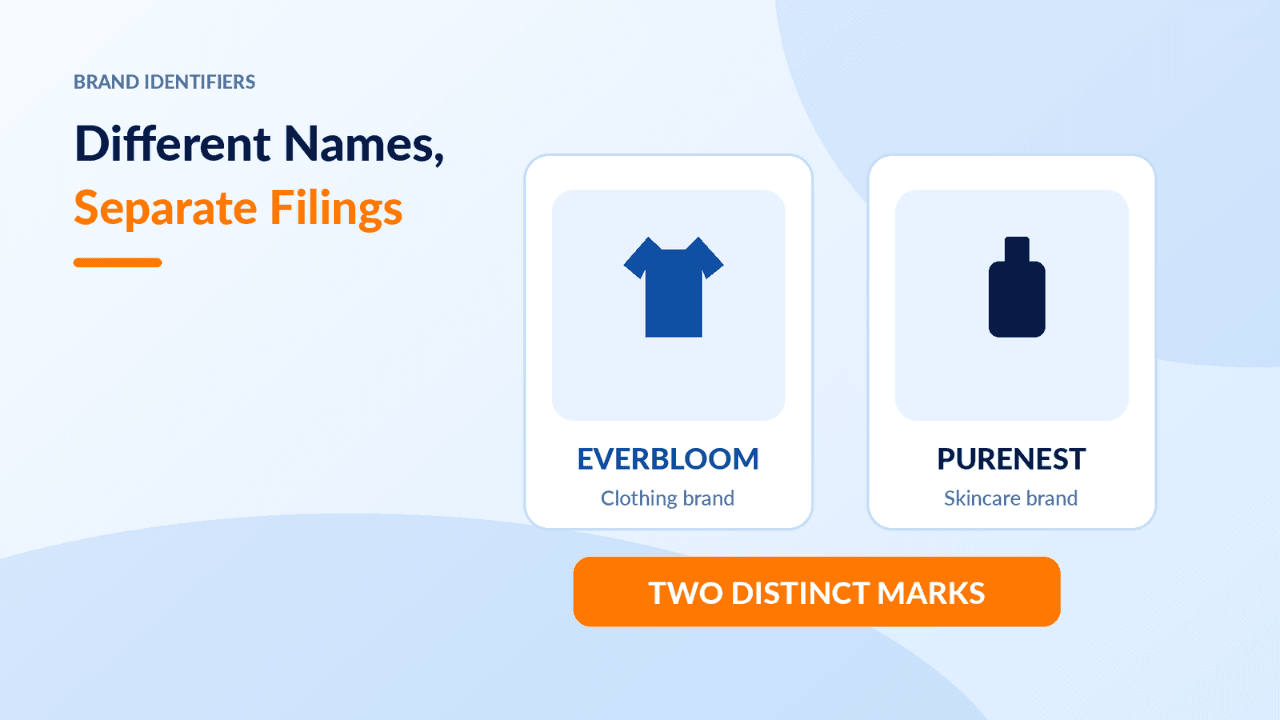
Yes. A single trademark application can include several products when the same mark identifies their commercial source and the application correctly lists the goods.
Imagine a fictional clothing brand called EverBloom. It sells T-shirts, hoodies, jackets, and baseball caps under the EverBloom name.
Instead of filing four individual applications, the business may include these products in one application because they generally belong to the same trademark class.
The important factor is the relationship between the mark and the goods, not the number of products in your catalog.
What Rights Does a Single Registration Provide?
A trademark protects a brand identifier, such as a business name or logo. It does not grant ownership of the products themselves.
Federal registration provides important rights associated with the goods or services identified in the registration. Depending on the circumstances, those rights may also help prevent confusingly similar uses involving related products.
For example, registering EverBloom for clothing does not automatically register the same name for cosmetics.
The USPTO's trademark protection guidance explains how the goods and services connected to a mark affect its protection.
Business owners should therefore examine the exact product descriptions in their registrations when assessing whether additional protection is appropriate.
How Do Trademark Classes Affect Multiple Product Lines?
Trademark classes organize goods and services into categories for federal registration.
The USPTO recognizes 45 international classes, including 34 for goods and 11 for services.
Businesses selling several types of products may need more than one class, even when every item carries the same brand name.
Products Within One Class
Items such as shirts, jackets, hoodies, and hats generally fall under Class 25.
If EverBloom sells these products under one mark, it may include them in a single Class 25 application.
However, selecting Class 25 does not automatically register the mark for every item in that class. The application must identify the particular goods.
Products Across Different Classes
Suppose EverBloom introduces cosmetics, handbags, and drinkware.
The products generally fall into the following categories:
| Product Category | Examples | Trademark Class |
|---|---|---|
| Clothing | T-shirts, jackets, hats | Class 25 |
| Bags | Handbags, tote bags | Class 18 |
| Cosmetics | Skincare creams, lotions | Class 3 |
| Drinkware | Coffee mugs, drinking cups | Class 21 |
The business may include these classes in one application for the EverBloom mark, provided it meets the applicable requirements.
The USPTO's multiple-class application guidance explains how applicants must organize goods and pay class-specific fees.
You can also review Trademark Engine's guide to trademark classes for further information.
Remember that classification does not determine whether two similar trademarks can coexist. Goods in different classes may still be related enough to create consumer confusion.
When Are Separate Trademark Applications Necessary?
Separate trademark applications are generally needed when a business wants to register different brand identifiers.
A single application may cover several goods or services, but it generally includes only one distinct trademark.
Independent Names for Product Collections
Consider EverBloom launching a skincare collection under the name PureNest.
EverBloom remains the parent company, but customers recognize PureNest as a separate product brand.
If the business wants federal registration for both marks, it generally needs separate applications.
However, not every name printed on a product qualifies as a trademark.
For example, "Daily Moisturizing Cream" may describe the product rather than identify its commercial source. A distinctive name that consumers recognize as a brand has a stronger basis for trademark protection.
Before filing, consider whether customers identify the name as a brand or simply as a description of the product.
Trademark Engine's guide on how to trademark a name explains the importance of choosing a distinctive mark.
Protecting Brand Names and Logos
A standard-character word mark generally protects the wording without restricting it to a particular font or design.
A design mark protects the logo as depicted in the application, subject to the registration's scope.
For example, EverBloom may display its name on packaging while using a distinctive flower symbol on clothing labels.
If both elements independently identify the business, separate registrations may provide useful protection.
Changing ordinary packaging details does not automatically require another application. The question is whether the trademark itself has changed in a legally significant way.
How Much Does Trademark Registration Cost for Multiple Products?

The USPTO generally calculates trademark application filing fees according to the number of classes included.
As of November 2026, the base fee for a qualifying application filed under Section 1 or Section 44 is $350 per class.
USPTO Government Filing Fee Comparison
| Number of Classes | Base Application Fee |
|---|---|
| 1 | $350 |
| 2 | $700 |
| 3 | $1,050 |
| 4 | $1,400 |
These amounts exclude additional USPTO charges, later intent-to-use fees, and optional professional service fees.
Suppose EverBloom applies for clothing in Class 25 and handbags in Class 18.
Its base government application fee would generally be $700.
If the company submits another application for PureNest, the separate mark would incur its own applicable filing fees.
The USPTO's official trademark fee schedule explains the charges, including additional fees for certain application deficiencies and custom goods descriptions.
Selecting appropriate classes and preparing accurate product identifications can help businesses manage costs.
How to Register One Brand Across Several Products
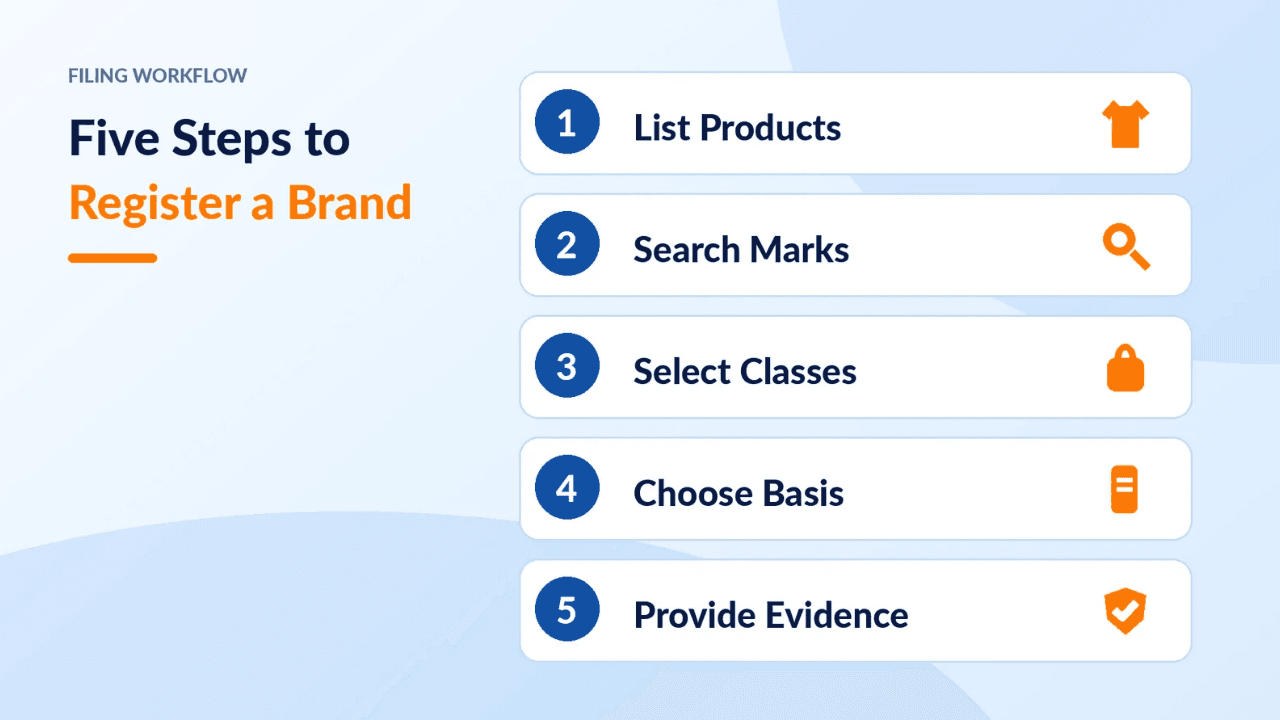
Registering one brand for multiple products requires a clear inventory of goods, the correct filing basis, and accurate application information.
The following steps help you prepare for federal registration.
Step 1: Identify Your Brand Assets
List the products sold under your main brand, including those you genuinely intend to introduce.
Record which items carry your primary trademark and which use a separate product-line name.
Also identify whether your business uses an independent logo that may need protection.
This helps you determine which marks to prioritize.
Step 2: Search for Similar Trademarks
Before applying, investigate existing trademarks that could conflict with your proposed mark.
Search beyond exact name matches. Similar spellings, sounds, meanings, and overall commercial impressions can raise concerns.
The USPTO's likelihood-of-confusion guidance explains why the relationship between goods and services matters.
Trademark Engine's comprehensive trademark search can help you investigate potential conflicts before filing.
Step 3: Prepare Accurate Goods Descriptions
Use the USPTO Trademark ID Manual to identify the appropriate goods and classes.
Your descriptions should reflect products you sell or genuinely intend to sell.
Avoid vague terms when the USPTO requires more specific wording.
An accurate identification can reduce avoidable examination issues and potential additional fees.
Step 4: Choose Your Filing Basis
Two common filing bases are:
- Use in Commerce: You already use the trademark with the identified goods in qualifying commerce.
- Intent to Use: You have a genuine intention to use the mark but have not yet begun qualifying commercial use.
An intent-to-use application can support a planned product launch. However, you must meet the applicable use requirements before registration can issue.
The USPTO filing-basis guide explains these options.
Step 5: Submit the Required Evidence
Use-based applications generally require a specimen showing how customers encounter your trademark in the marketplace.
Examples may include product labels, packaging, and qualifying ecommerce sales pages.
When proof of use is required in a multiple-class application, the USPTO generally requires an acceptable specimen for each class and may request additional evidence.
For website specimens, the page must meet specific requirements, including a suitable way to order or purchase the goods.
What Should You Review Before Expanding Your Product Range?
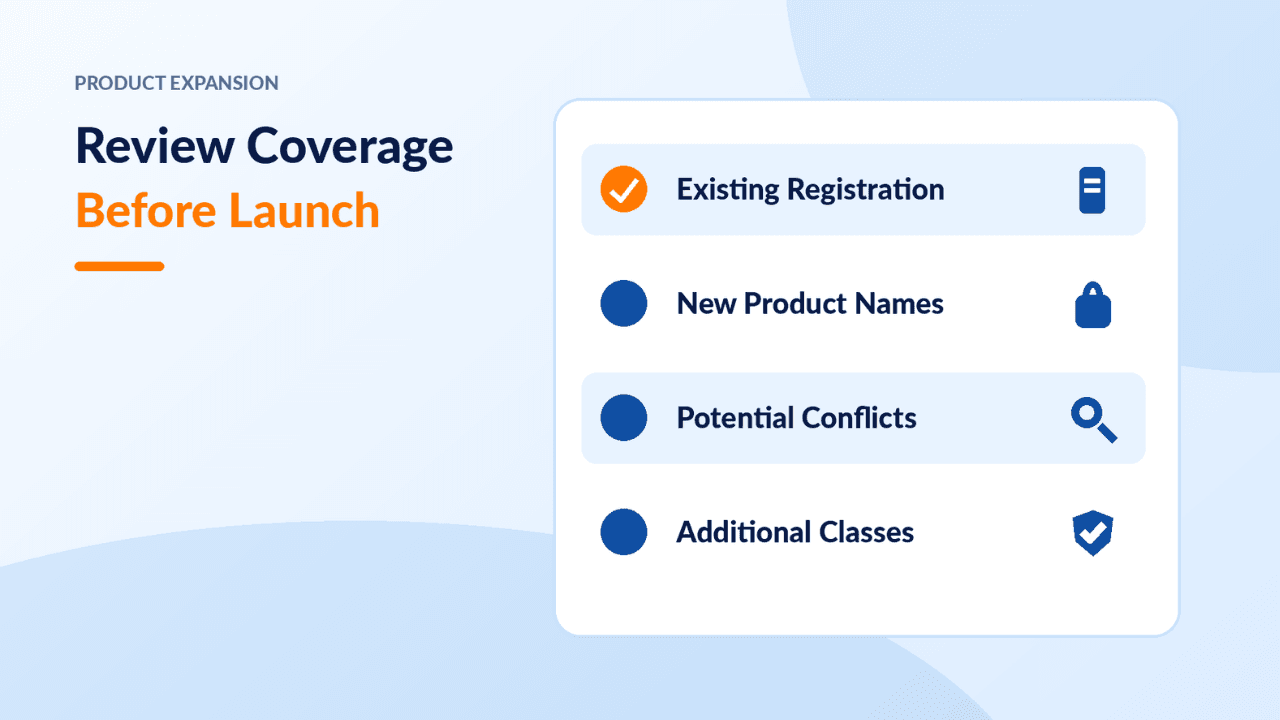
Before launching new products, examine whether your existing federal registration identifies the additional goods.
The USPTO generally does not permit an applicant or registrant to broaden the goods or services in an existing filing through an amendment.
For example, an EverBloom registration covering T-shirts and hoodies does not automatically list jackets merely because all three products fall under Class 25.
Your registration may still provide rights relevant to related goods, but its identification cannot simply be expanded to list new products.
The USPTO's correction and amendment guidance explains the limitations on changing goods and services.
Before introducing a major new category, review:
- The exact goods listed in your existing registration
- Whether the new items use the same trademark
- Potential conflicts involving similar marks
- Whether a new application would provide useful coverage
Also confirm that your registered trademark remains in qualifying use with the relevant goods.
This review can help businesses identify protection gaps before investing in manufacturing, advertising, or new product packaging.
Conclusion
One trademark can cover several products under the same brand, but its registration depends on the specific goods, classes, and brand identifiers involved. As your business expands, review your existing coverage and decide whether new marks or product categories justify additional filings.
A clear strategy helps you prioritize valuable brand assets and manage registration costs.
Ready to protect your growing brand?
Explore Trademark Engine's trademark registration services to review your options and begin the filing process.
Trademark Engine Editorial Team
Frequently Asked Questions
Sometimes. Similar marks may coexist when consumers are unlikely to confuse their sources. However, even goods in different classes can be considered related, so businesses should evaluate potential conflicts before using a similar name.
No. Forming an LLC establishes a business entity under state law but does not provide federal trademark registration. Trademark rights may arise from qualifying commercial use, while federal registration offers additional legal benefits.
Yes. You can generally use ™ to indicate claimed trademark rights before federal registration. The ® symbol is reserved for federally registered marks and must be used consistently with the registration.
No. Class 35 includes certain retail services, not automatic registration coverage for the products sold. Depending on how the mark is used, a business may need goods classes, retail-service coverage, or both.
Generally, U.S. federal trademark registration provides rights within the United States. Businesses entering foreign markets may need additional protection abroad. The Madrid Protocol provides one process for seeking trademark registration in participating countries.
Yes, potentially. Stopping qualifying trademark use without an intention to resume can raise abandonment issues. Registration maintenance filings also require accurate information about goods still in use, and unsupported products may need to be deleted.
Get Trademark Tips and Compliance Guidance
Subscribe for updates, insights, and resources that help you stay compliant and grow your mission.