Can You Trademark a Chatbot Name? Rules, Classes, and Filing Steps

Published on November 14, 2026 | Updated on November 19, 2026
Estimated Read Time: 11 minutes
Key Takeaways
- Chatbot names can qualify for trademark protection when they identify a commercial product or service.
- Invented and suggestive names generally offer stronger protection than generic or descriptive terms.
- AI-generated names must satisfy the same trademark requirements as other brand names.
- Searches should include similar names, pronunciations, and related software products.
- Classes 9 and 42 commonly apply to downloadable software and online AI services.
- An intent-to-use application may allow founders to apply before launching their chatbot.
Quick Answer: Yes, you can trademark a chatbot name if it identifies your software or services and meets U.S. trademark requirements. Choose a distinctive name, check for conflicting marks, and select the appropriate class before filing with the USPTO.
According to the U.S. Census Bureau's October 2026 Business Formation Statistics, Americans submitted 534,947 seasonally adjusted business applications in September 2026. With new businesses entering the market, choosing a distinctive brand name remains an important consideration for founders launching AI-powered products.
If you're developing a chatbot for customer support, ecommerce, or business operations, its name may become a valuable brand asset. However, creating a memorable name doesn't automatically establish trademark rights.
This guide explains how to trademark a chatbot name, evaluate naming risks, search existing marks, choose the correct class, and navigate federal registration requirements.
Can a Chatbot Name Qualify for Trademark Protection?
Yes. A chatbot name may qualify for federal trademark registration when it identifies the commercial source of specific goods or services.
The U.S. Patent and Trademark Office (USPTO) explains that trademarks help consumers distinguish one business's offerings from another's.
For example, imagine an ecommerce company launching an AI shopping assistant called Velunexa. If customers recognize Velunexa as identifying a particular software product or service, it may function as a trademark.
However, registration depends on whether the name meets applicable legal requirements, including distinctiveness and the absence of disqualifying conflicts.
Product Brand vs. Feature Label
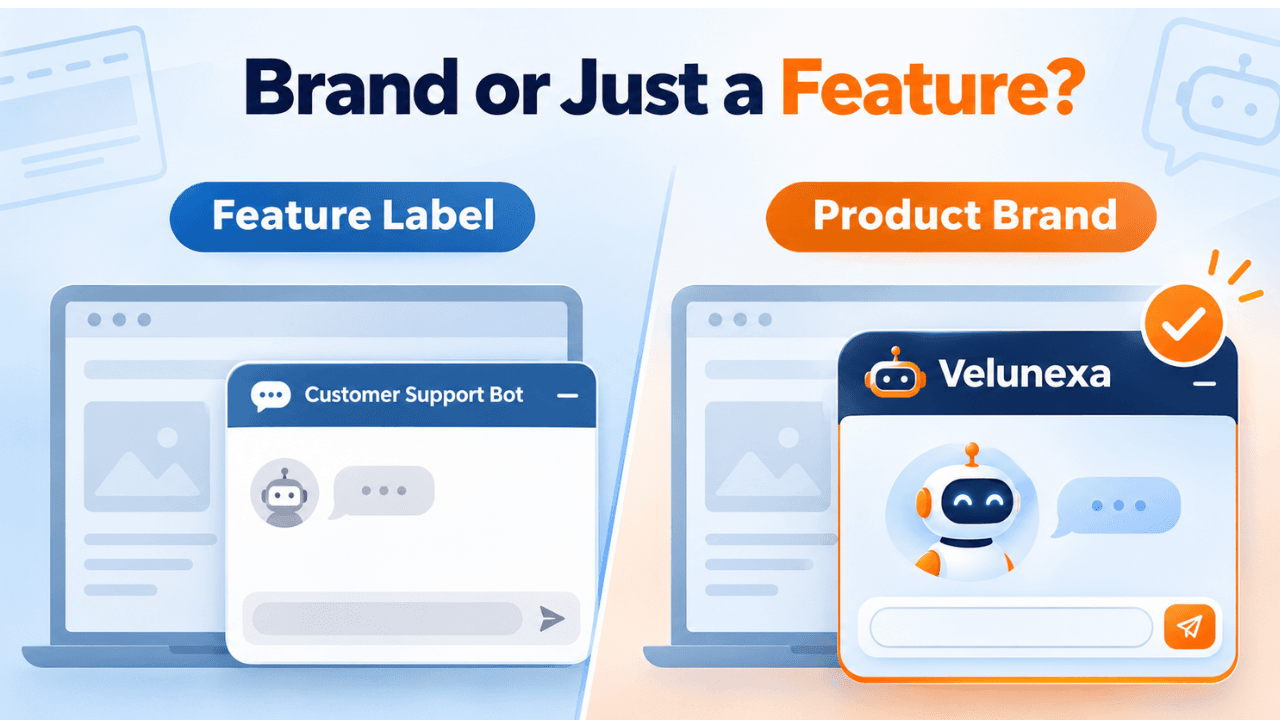
A chatbot's name must function as a brand rather than merely describe a website feature.
Consider these examples:
- Feature label: A store displays a chat window called "Customer Support Bot." The wording primarily describes the tool's function.
- Product brand: A business markets "Velunexa" as a recognizable shopping assistant under its own brand identity.
The second example may present a stronger case for trademark protection because it identifies a commercial offering.
This distinction matters for businesses that build chatbots into existing websites but do not market them as separate software products or services.
Does AI-Generated Naming Affect Eligibility?
Generally, no. A name suggested by an AI tool is not automatically excluded from trademark protection.
Trademark eligibility focuses on whether the name functions as a source identifier and meets relevant legal requirements. This differs from copyright rules involving human authorship.
However, an AI naming tool may suggest wording already used by another business.
Founders should investigate potential conflicts before adopting an AI-generated name, regardless of how original it appears.
What Makes a Chatbot Name Distinctive?
A distinctive chatbot name helps customers identify your business rather than simply understand what the software does.
The USPTO generally considers fanciful, arbitrary, and suggestive marks stronger than generic or merely descriptive wording.
Strong and Weak Naming Examples
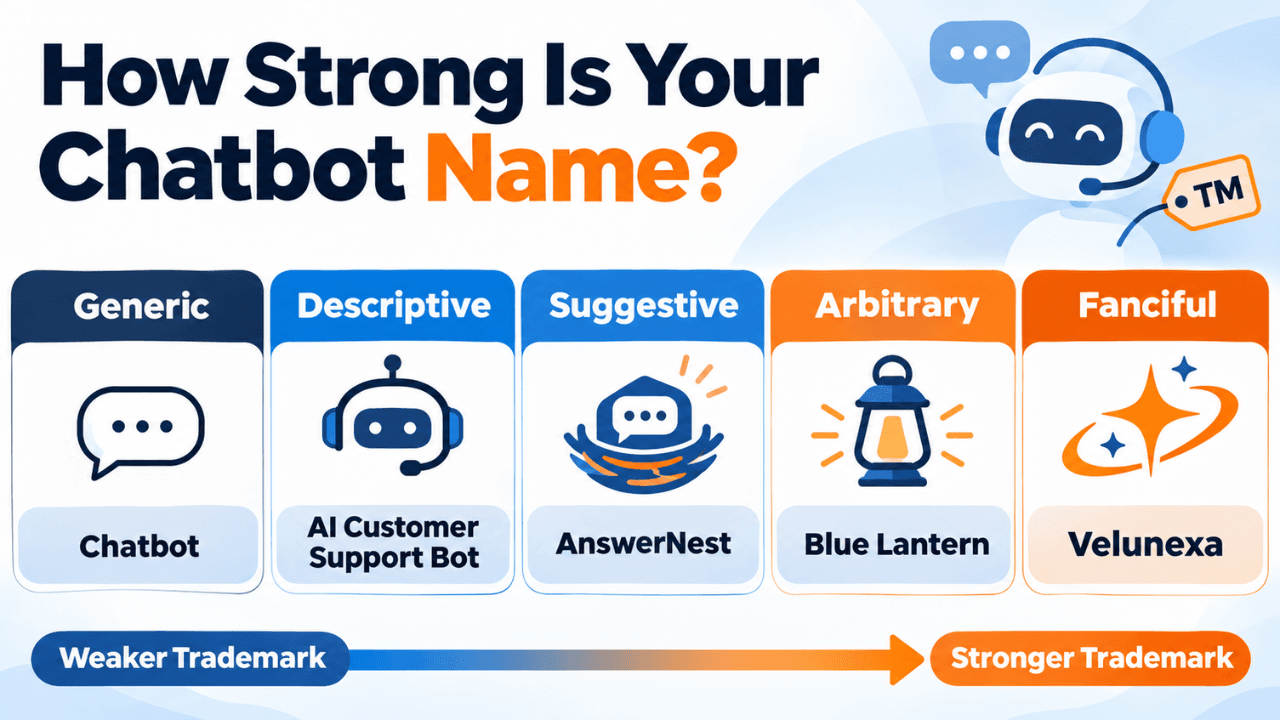
| Illustrative Name | Category | Trademark Consideration |
|---|---|---|
| Chatbot | Generic | Names the product category |
| AI Customer Support Bot | Descriptive | Directly explains the software's function |
| AnswerNest | Potentially suggestive | Hints at a benefit without directly describing the product |
| Blue Lantern | Potentially arbitrary | Uses familiar words unrelated to chatbot software |
| Velunexa | Potentially fanciful | Invented wording with no obvious descriptive meaning |
These fictional examples illustrate trademark principles. They have not been cleared for availability.
Generic terms cannot function as trademarks for the goods or services they name.
Merely descriptive marks may face registration refusals unless the applicant establishes acquired distinctiveness or qualifies for another available registration route.
Read the USPTO's guidance on strong trademarks for further details.
How to Evaluate Your Proposed Name
Adding words such as "AI," "Chat," or "Bot" does not automatically make a descriptive name distinctive.
Before selecting your chatbot's name, consider:
- Recognition: Can customers remember and identify the name?
- Distinctiveness: Does it communicate a brand rather than simply describe a feature?
- Confusion: Could customers associate it with another software company's product?
- Flexibility: Will the name still work if your product expands?
A name such as "AI Product Helper" may be difficult to distinguish from similar descriptive phrases. More imaginative wording could offer a stronger starting point, provided it does not conflict with existing trademark rights.
For more guidance, see Trademark Engine's article on choosing a trademarkable AI tool name.
How to Search for Existing Chatbot Trademarks
A chatbot name trademark search helps identify potential conflicts before you spend money on branding, software development, or a federal application.
An available domain name or social media handle does not establish that a name is legally available.
Step 1: Review USPTO Records
Start with the official USPTO Trademark Search system.
Enter your proposed name and examine potentially similar applications and registrations.
For each relevant result, review:
- Mark wording: Compare spelling, pronunciation, meaning, and overall impression.
- Record status: Identify live applications, registrations, and dead records.
- Goods and services: Check whether the offerings relate to your chatbot.
- Ownership: Identify the person or business associated with the mark.
Expand the search to include alternative spellings, abbreviations, and similar-sounding words.
For example, searching only "TalkNexa" could overlook a similar mark such as "TalkNeksa."
A dead record does not automatically mean the name is available because earlier commercial use may still create rights.
Step 2: Assess Consumer Confusion
The USPTO considers whether consumers might mistakenly believe that related goods or services come from the same business.
Two similar names used for conversational AI products may create a greater concern than names used for unrelated offerings.
However, different trademark classes do not automatically eliminate confusion.
The USPTO's likelihood-of-confusion guidance explains the factors involved.
Step 3: Check Other Commercial Sources
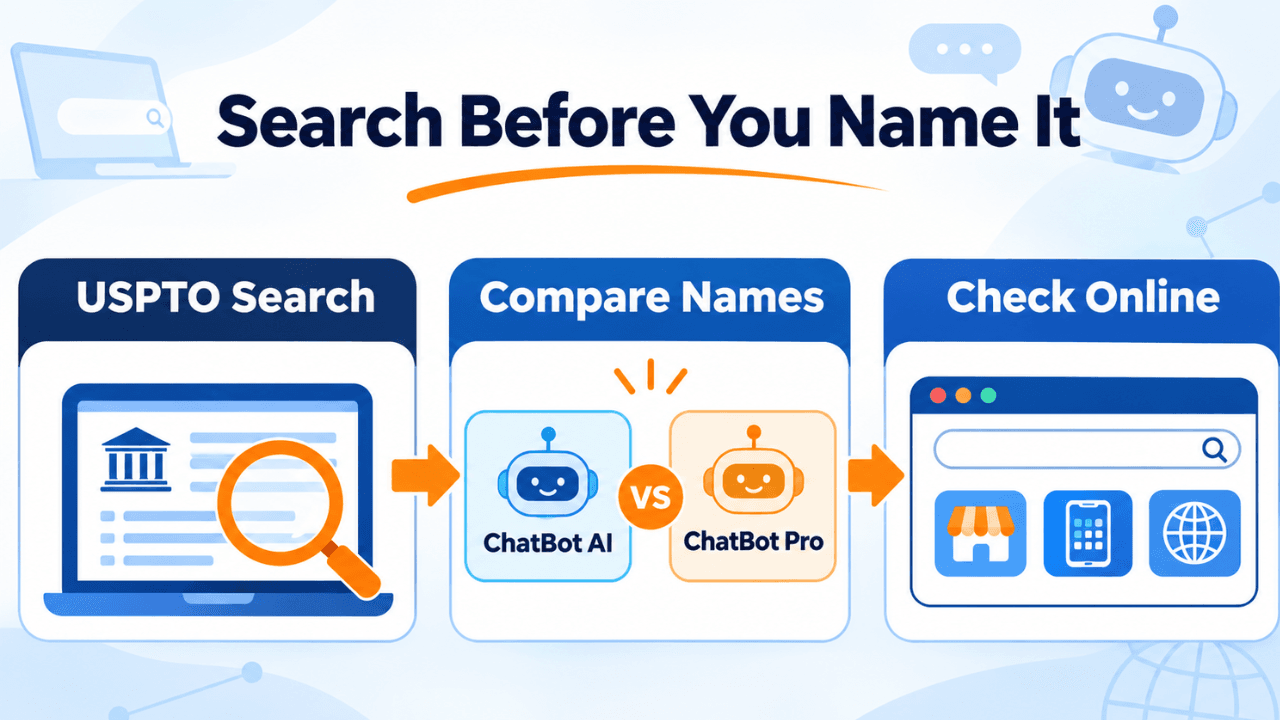
Federal records are only one part of a comprehensive clearance search.
Also review:
- State trademark records.
- App stores and software marketplaces.
- Existing company websites.
- Search engine results.
- Relevant business directories and commercial social media accounts.
Some businesses may hold trademark rights based on qualifying commercial use without federal registration.
Document potential conflicts and investigate significant concerns before committing to the name.
The USPTO's comprehensive clearance search guidance explains why searching multiple sources matters.
Which Trademark Classes Apply to AI Chatbots?
The appropriate chatbot trademark class depends on what your business provides and how customers access the software.
The USPTO uses international classes to organize goods and services. Classes 9 and 42 are common starting points for AI chatbot businesses.
Class 9: Downloadable Software
Class 9 generally covers downloadable computer software, including qualifying desktop and mobile applications.
A company distributing a downloadable chatbot application may need to consider this class.
Class 42: Online Software Services
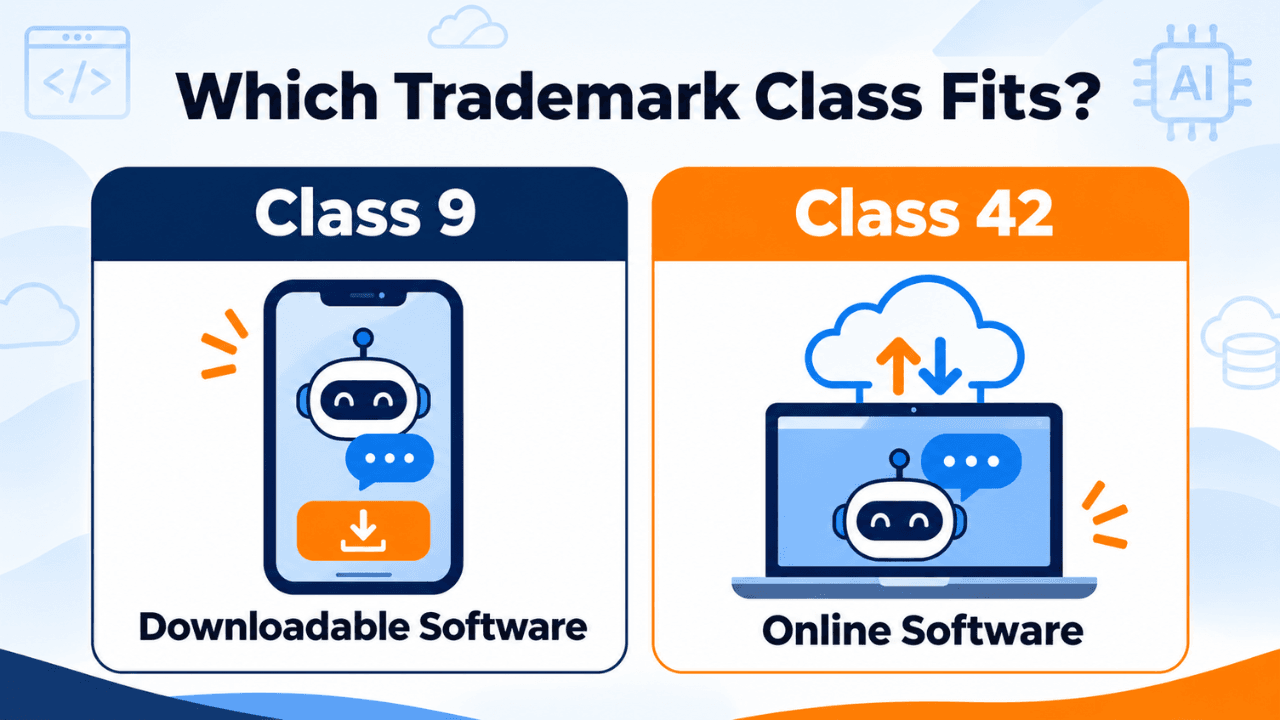
Class 42 commonly covers technology services, including providing temporary use of online non-downloadable software.
A business offering a browser-based chatbot through a SaaS platform may need to consider Class 42.
| Business Offering | Potential Class |
|---|---|
| Downloadable chatbot application | Class 9 |
| Browser-based, non-downloadable AI assistant | Class 42 |
| Downloadable software and separately offered SaaS services | Potentially both |
These classifications are illustrative. Additional classes may apply when a business offers other products or services.
Use the USPTO Trademark ID Manual to find descriptions that accurately reflect your offering.
How to Register a Chatbot Name With the USPTO
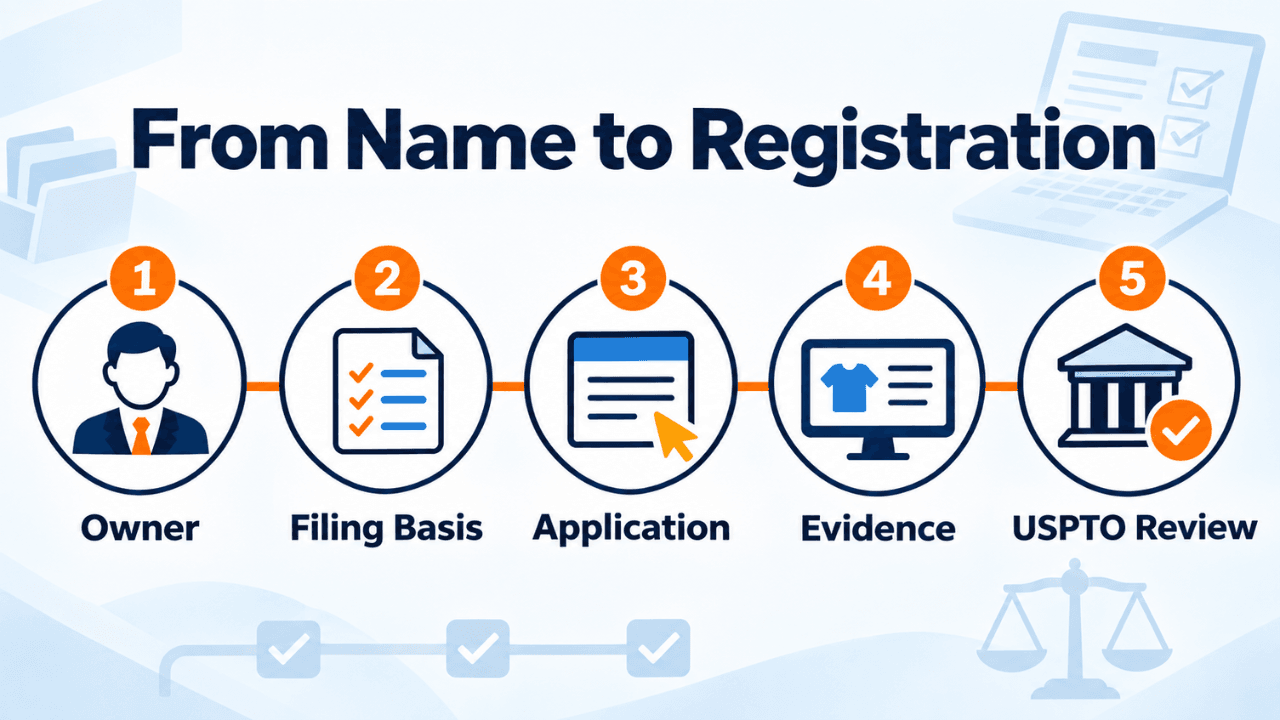
Federal trademark registration requires accurate ownership information, appropriate goods or services descriptions, a filing basis, and any necessary evidence of use.
The process generally involves five steps.
For related guidance, read Trademark Engine's article on trademark classes.
Step 1: Confirm the Legal Owner
Determine whether the trademark belongs to you individually or to an existing business entity.
The application must identify the correct legal owner. Incorrect ownership details may create serious filing problems.
An LLC is not always required, but accurate owner information is essential.
Step 2: Choose the Filing Basis
Two common filing bases are:
Use in Commerce — Section 1(a): You already use the mark in qualifying commerce for the identified goods or services.
Intent to Use — Section 1(b): You have a genuine intention to use the mark commercially but have not yet begun qualifying use.
An intent-to-use application may help founders apply before launching.
However, the applicant generally must establish qualifying use and complete additional requirements before registration.
Step 3: Prepare the Application
Gather the required information:
- Proposed trademark.
- Correct owner details.
- Accurate goods or services descriptions.
- Applicable trademark classes.
- Filing basis.
- Required declarations and supporting documents.
You should also decide whether to protect the wording itself or a particular logo design.
A standard character application generally protects qualifying wording without restricting it to one specific font or visual presentation.
Step 4: Submit Acceptable Evidence of Use
A specimen shows how customers encounter your trademark in real commercial use.
For downloadable software, an appropriate specimen may include a qualifying software display or download page showing the mark in association with the software.
For online chatbot services, a website screenshot may qualify when it clearly connects the mark to the services being offered.
A webpage that merely mentions the chatbot's name may not be sufficient. Promotional mockups created only for filing generally do not establish actual trademark use.
Website specimens must also meet applicable URL and access-date requirements.
Review the USPTO specimen guidelines before submitting evidence.
Step 5: File and Monitor the Application
Submit your application through the USPTO's Trademark Center.
An examining attorney reviews the application and may issue an office action identifying issues that require a response.
Applications that pass examination generally proceed to publication, allowing third parties an opportunity to oppose registration.
Filing does not guarantee approval.
For more general guidance, see Trademark Engine's article on how to trademark a name.
Can You Trademark a Chatbot Name?
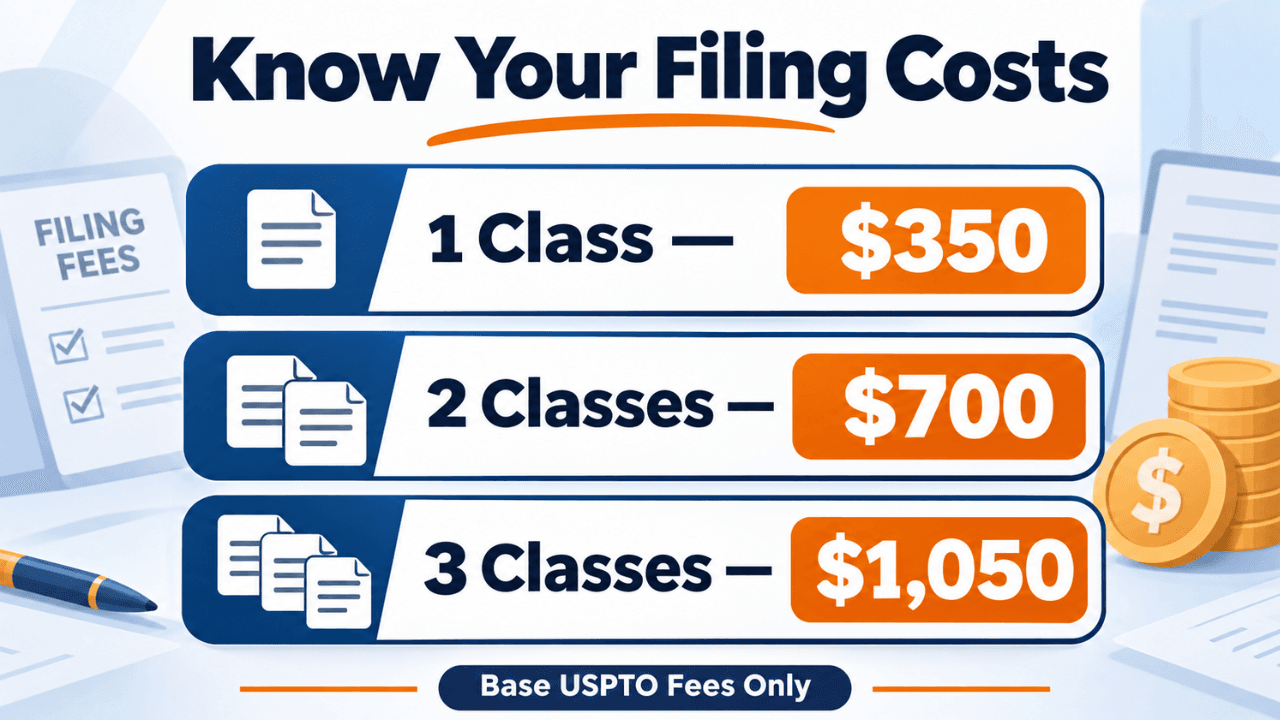
The USPTO's base application fee for qualifying Section 1 and Section 44 applications is $350 per class, as of November 2026.
The total depends on the number of classes and whether additional fees apply.
| Application Example | Base USPTO Fee |
|---|---|
| One class | $350 |
| Two classes | $700 |
| Three classes | $1,050 |
Additional government fees may include:
- $100 per class for insufficient required information.
- $200 per class for using a free-form goods or services description instead of the Trademark ID Manual.
- $150 per class for an applicable amendment to allege use or statement of use.
Other circumstances, including certain extension requests, may involve additional charges.
These amounts exclude optional third-party service fees.
Check the current USPTO trademark fee schedule before filing.
What Happens After Your Trademark Is Registered?
After registration, you must continue using your trademark appropriately and meet applicable maintenance requirements.
Use the same recognizable name across your chatbot interface, website, app listings, and marketing materials.
You may use ™ for a claimed trademark without federal registration. Reserve ® for federally registered marks used with the covered goods or services.
For most U.S. registrations, maintenance filings are required between the fifth and sixth years after registration, between the ninth and tenth years, and every ten years afterward.
Failure to submit required filings can result in cancellation.
Review the USPTO's trademark maintenance guidance for details.
Conclusion
A chatbot name can qualify for trademark protection when it identifies a commercial offering and meets U.S. registration requirements. Choosing distinctive wording, investigating potential conflicts, and selecting accurate software classifications can help build a stronger foundation for your brand. Before filing, review ownership details, your filing basis, and any required evidence. Taking these steps early can help protect your AI product's identity as your business develops and expands.
Ready to Protect Your Chatbot Name?
Before investing further in your AI brand, explore Trademark Engine's trademark search options to investigate potential naming conflicts.
When you're ready to move forward, review its trademark registration services to understand your filing options and prepare your next steps.
Trademark Engine Editorial Team
Frequently Asked Questions
Potentially, yes. Using another company's AI technology does not automatically prevent you from protecting your own chatbot brand. However, review the technology provider's naming and branding terms, avoid suggesting an unauthorized affiliation, and make sure your proposed mark meets applicable trademark requirements.
Using a famous character's name may raise trademark, copyright, or other legal concerns, depending on the circumstances. Creating a chatbot based on an existing character does not automatically grant permission to use that character's protected identity commercially.
Yes. Businesses may seek trademark protection in multiple jurisdictions, subject to applicable local requirements. U.S. federal registration does not automatically provide worldwide protection. International expansion may require separate national applications or an appropriate international filing strategy.
Yes. Your chatbot's trademark and website domain do not have to match. However, consistent branding can help customers recognize your product. Domain ownership alone does not establish federal trademark registration or exclusive rights to the corresponding name.
Generally, yes. Trademark rights may be transferred through a valid assignment, but the transfer must include the goodwill associated with the mark. Buyers should review ownership information, registration status, and relevant agreements before completing the transaction.
Generally, no. Copyright does not ordinarily protect names or short phrases. Trademark law is the more relevant framework for protecting a name that identifies commercial goods or services. Copyright may separately protect qualifying original creative elements associated with the chatbot.
Get Trademark Tips and Compliance Guidance
Subscribe for updates, insights, and resources that help you stay compliant and grow your mission.