Business Rebranding in 2027: Do You Need a New Trademark?

Published on November 2, 2026 | Updated on November 11, 2026
Estimated Read Time: 10 minutes
Key Takeaways
- A completely new brand name generally requires a separate application for federal registration.
- Minor logo changes may qualify for amendment if they preserve the registered mark's essential character.
- Changing your company's legal name is different from changing the trademark customers recognize.
- Existing registrations may remain valuable when the original marks stay in commercial use.
- A trademark clearance search helps identify possible conflicts before launch.
- A coordinated filing and launch plan can reduce unnecessary rebranding costs.
Quick Answer: Do you need a new trademark when rebranding? Not always. A new brand name or substantially different logo generally needs a separate application for federal registration. Minor visual updates or changes to your company's legal name may not require one.
Rebranding your business in 2027 may help you reach new customers, refresh your identity, or expand into different [email protected]. However, changing your name or logo can affect your trademark rights.
According to the USPTO's April 2026 report, the agency received 431,734 trademark application classes in the first half of fiscal year 2026, a 7% increase from the same period in 2025.
These figures highlight growing trademark filing activity, making early brand clearance an important consideration.
This guide explains when rebranding requires a new application, how existing registrations may be affected, and what to check before launching your updated identity.
Do You Need a New Trademark When Rebranding?
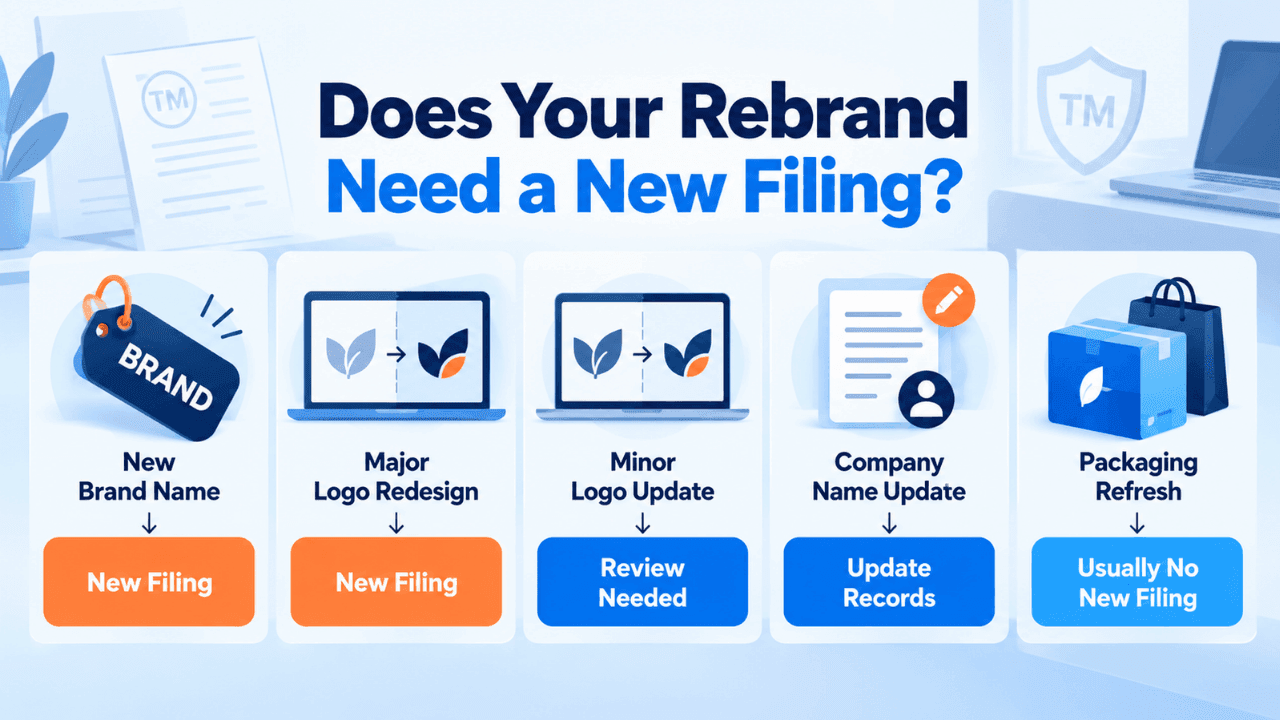
A new application is generally necessary when you adopt a substantially different trademark that you want to register federally. Changes that do not alter the registered mark may not require another filing.
The correct approach depends on the mark shown in your registration, the changes you plan to make, and the goods or services involved.
How Different Rebranding Changes Affect Registration
Business Change | Typical Trademark Action |
Completely new brand name | Apply to register the replacement name |
Minor logo adjustment | Review eligibility for a nonmaterial amendment |
Substantially redesigned logo | Generally file a new application for the design |
Updated website or packaging colors | Usually no new filing if the registered mark remains unchanged |
Legal company name change | Update owner information where appropriate |
Transfer to another business entity | Review assignment requirements |
Additional product categories | Consider new registration coverage |
These are general guidelines rather than automatic outcomes.
The USPTO generally does not allow amendments that materially alter a registered mark. The updated version must preserve the essential character of the original trademark.
For example, imagine a fictional skincare business called BloomLeaf.
Changing its website layout while continuing to use the registered BloomLeaf word mark may not require a new application. Replacing that name with PureNest introduces a different mark that would need its own registration to obtain federal protection.
The USPTO's material alteration guidance explains the limits on modifying existing registrations.
What Happens to Your Trademark When You Change Your Brand Name?
Changing a customer-facing brand name does not automatically update the trademark registration for your previous name. Federal registration applies to the identified mark, not every future name the business adopts.
This distinction matters because business owners often confuse their registered legal entity with their commercial brand.
Brand Name Changes vs. Legal Business Name Updates
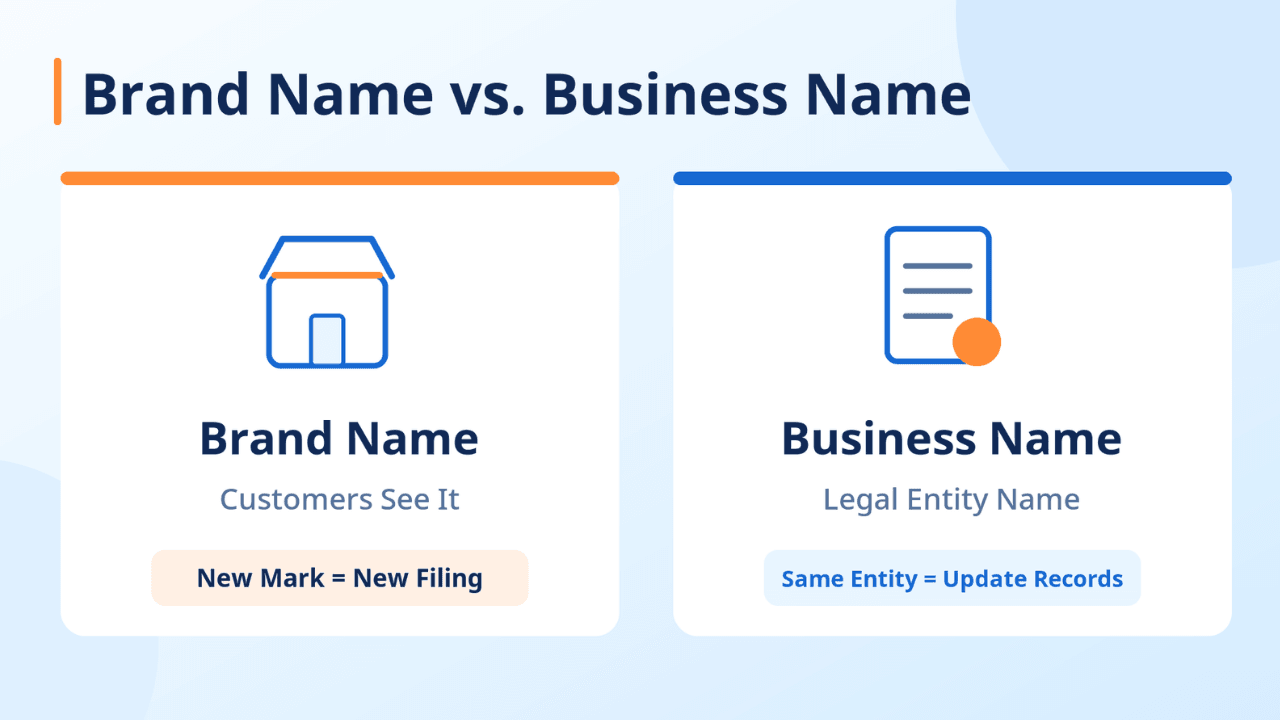
A brand name is the identity customers recognize on products, websites, and advertising. A legal business name identifies the entity operating the company.
Suppose UrbanThread LLC changes its legal name to Everloom LLC but continues selling products under the registered trademark UrbanThread.
If the same legal entity remains the owner, the business may only need to record an owner-name change with the USPTO.
However, if it replaces the UrbanThread brand itself with Everloom, the replacement name must be evaluated as a separate trademark.
When another legal entity acquires a mark, an assignment may be required. Trademark assignments generally transfer rights together with the associated business goodwill.
The USPTO provides guidance for recording ownership transfers and name changes.
Preserving Rights in Your Original Identity
A business can maintain an older trademark while introducing new branding, provided it continues genuine commercial use and meets applicable maintenance requirements.
For example, a retailer might adopt a new corporate identity while retaining an established product line under its original name.
The earlier registration may remain useful for that product line.
However, permanently discontinuing use without an intent to resume can eventually result in abandonment of trademark rights.
Before retiring an established brand, review its remaining commercial value, existing registrations, and plans for future use.
Can You Modify a Registered Logo Without Applying Again?
Some logo updates may be made without filing a new trademark application. The deciding factor is whether the revised design materially changes the mark's overall commercial impression.
The USPTO evaluates proposed amendments individually rather than treating every visual update the same way.
Understanding Material Alterations
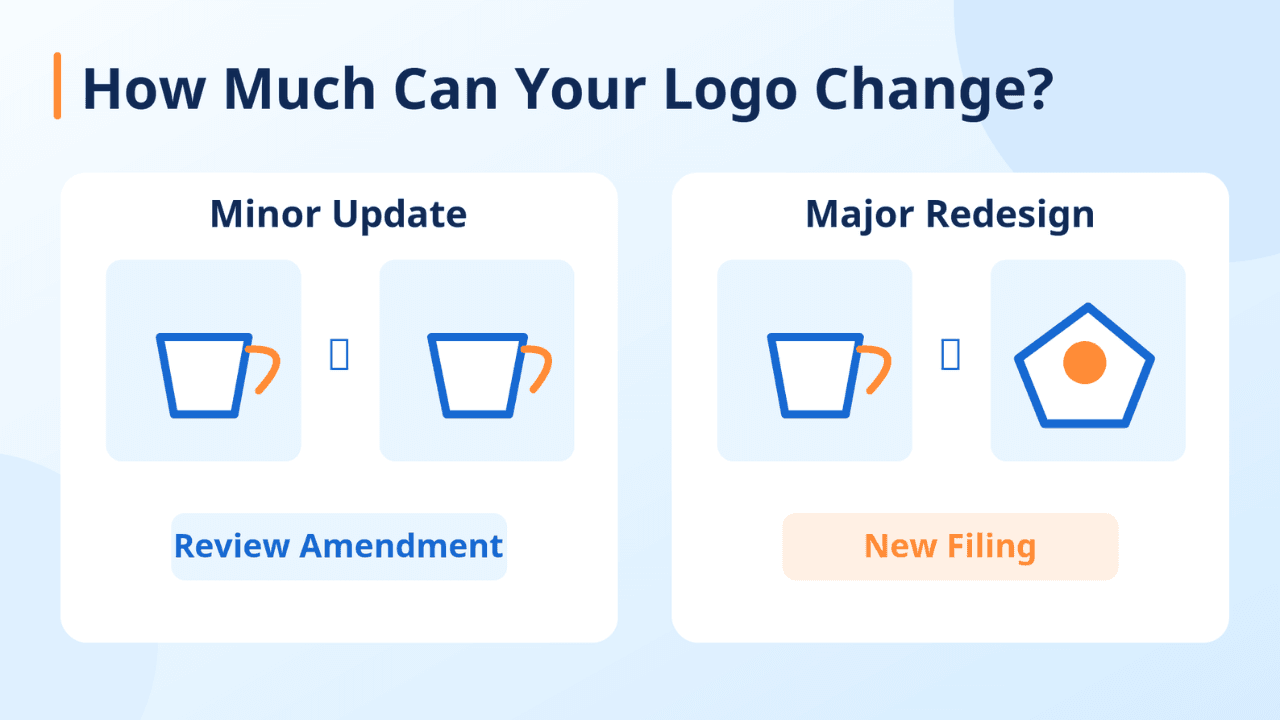
Imagine a coffee company's registered logo featuring its name alongside a distinctive cup illustration.
A minor adjustment to spacing might preserve the logo's essential appearance.
By contrast, replacing the illustration, lettering, and arrangement with an entirely different design could create a new commercial impression.
The second change would generally require a separate application to register the redesigned mark.
Even small alterations are not automatically acceptable. The USPTO compares the proposed amendment with the mark as originally registered.
Standard-Character and Special-Form Registrations
The original filing format also influences how much flexibility a business has when updating its branding.
Registration Type | Protection Focus | Practical Consideration |
Standard-character mark | Wording without a claim to a particular font, style, size, or color | Allows flexibility in presenting the registered words |
Special-form mark | Specific stylized wording, logo, or design | Changes to the registered appearance require closer review |
A standard-character registration does not automatically register every accompanying graphic element.
Similarly, a special-form registration identifies a particular visual presentation rather than every possible redesign.
The USPTO's drawing and specimen guidance explains these formats.
When preparing new artwork, consult Trademark Engine's trademark logo and specimen guidelines to understand how trademark drawings differ from evidence of commercial use.
How to Protect Your Trademark During a Business Rebrand
A legally informed rebrand begins before the public launch. Business owners should investigate potential conflicts, review existing registrations, and determine whether their filing strategy matches the planned identity.
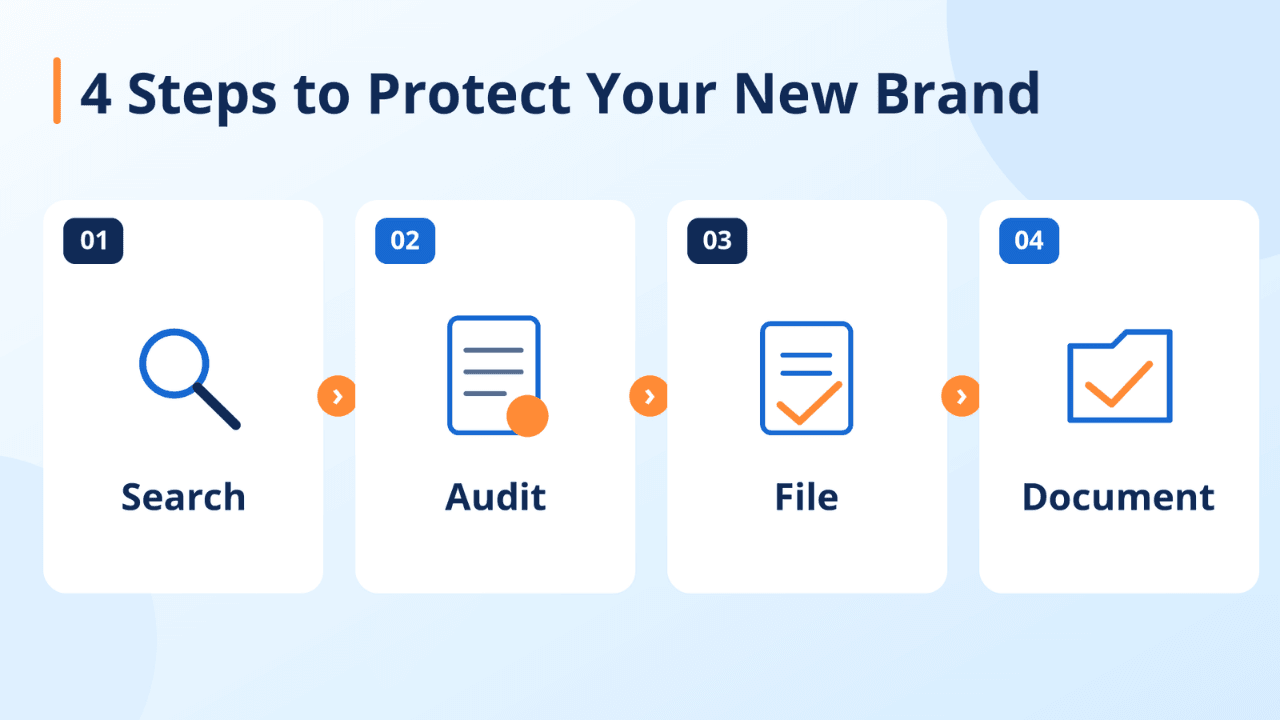
Step 1: Conduct a Comprehensive Trademark Search
Before committing to a new name, examine whether another business already uses a confusingly similar mark.
A clearance search should consider:
- Similar spellings and pronunciations.
- Marks with related meanings.
- Similar visual designs.
- Earlier marks covering related goods or services.
- Relevant marketplace and state-level use.
An identical match is not necessary for a trademark conflict.
The USPTO's likelihood of confusion guidance explains how similarities between marks and their associated goods or services can affect registration.
You can begin with Trademark Engine's free trademark search for initial screening.
A comprehensive trademark search may help identify broader potential conflicts, including those not evident from a basic federal database search.
Step 2: Audit Your Existing Registrations
Review your current trademark portfolio before deciding what additional protection to pursue.
Check the registered mark, legal owner, listed goods and services, registration status, and upcoming maintenance deadlines.
For businesses with multiple product lines, this review can help distinguish marks that remain relevant from those affected by the rebrand.
You can examine federal application and registration records through the USPTO's Trademark Status and Document Retrieval system.
Step 3: Select the Appropriate Filing Basis
If a new application is necessary, the filing basis depends partly on whether qualifying commercial use has started.
Use-based application — Section 1(a): May apply when the trademark is already used in qualifying commerce.
Intent-to-use application — Section 1(b): May apply when you have a bona fide intention to use the mark but have not yet established qualifying use.
An intent-to-use application allows eligible businesses to begin seeking federal registration before their launch. However, registration generally requires later proof of qualifying commercial use.
The USPTO's application process explains these filing requirements.
Step 4: Prepare Evidence of Genuine Trademark Use
A trademark specimen demonstrates how customers encounter a mark in commercial activity.
For physical goods, acceptable examples may include labels, tags, or packaging displaying the trademark.
For ecommerce products, a qualifying product webpage may serve as evidence when it associates the mark with the goods and includes the required purchasing information.
Keep accurate records of product photographs, relevant website screenshots, and commercial launch dates.
A specimen should reflect genuine business activity rather than artwork created solely to support an application.
Trademark Rebranding Checklist for 2027
A practical checklist can help coordinate legal decisions with the operational work of introducing a new identity.
Before launching, complete these checks:
- Define the scope: Identify the names, logos, slogans, and product lines affected.
- Confirm ownership: Verify which legal entity owns each registered trademark.
- Check availability: Review federal, state, and marketplace records for potential conflicts.
- Evaluate coverage: Determine whether planned goods or services fall within existing registrations.
- Schedule filings: Coordinate application dates with your intended launch.
- Review brand assets: Update packaging, product listings, website content, and marketing materials.
- Preserve evidence: Maintain appropriate records showing commercial use of relevant marks.
- Complete a final review: Confirm that your selected identity and filing information are consistent.
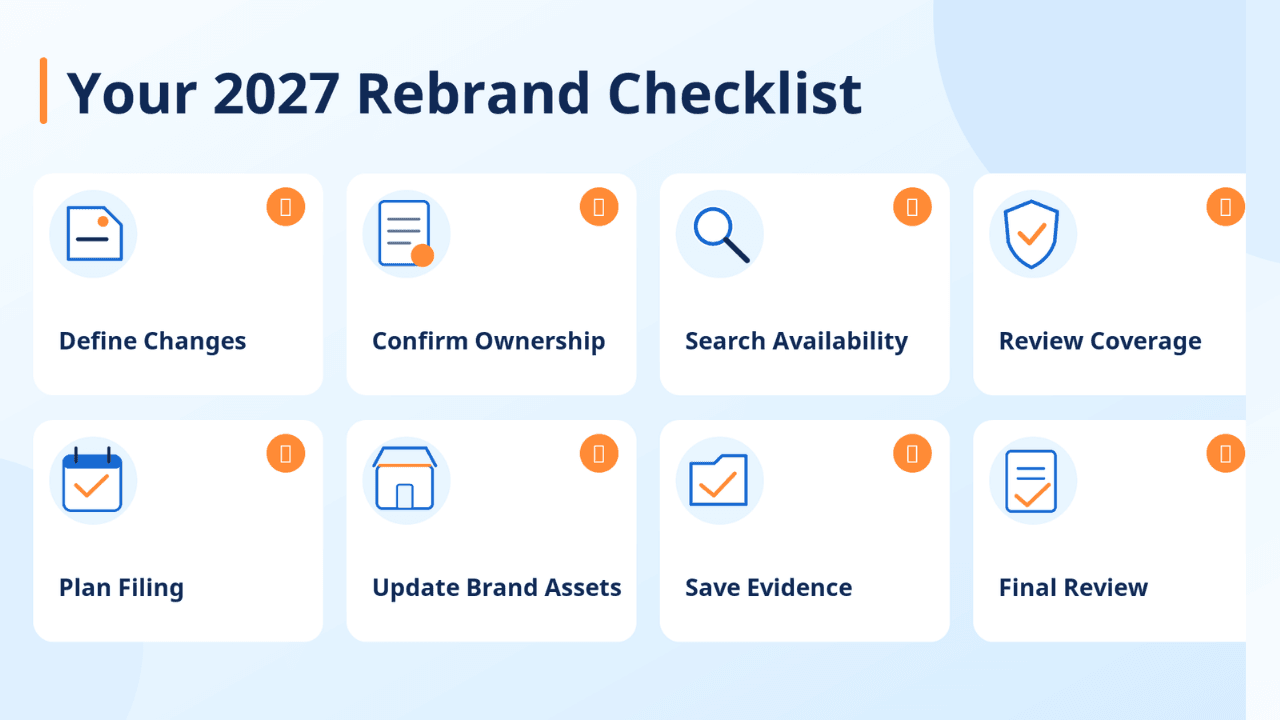
This business rebrand trademark checklist is particularly useful for ecommerce companies coordinating several changes at once.
For example, ordering large quantities of packaging before completing trademark clearance could create unnecessary replacement costs if a significant conflict is discovered.
Addressing potential problems before production helps businesses make better-informed spending decisions.
Common Trademark Mistakes to Avoid During Rebranding
Business owners can reduce avoidable trademark problems by recognizing several common assumptions that may not be legally correct.
Assuming a Domain Name Establishes Trademark Rights
Registering a domain name does not automatically establish exclusive rights to use the corresponding name as a trademark.
Similarly, forming an LLC under a particular name does not provide the same protection as federal trademark registration.
Trademark clearance should be considered separately from domain availability and state business-name registration.
Overlooking New Goods and Services
An existing registration may not cover every product category introduced during a rebrand.
For example, a clothing retailer expanding into skincare should examine whether its trademark rights and registrations adequately cover the new offerings.
The USPTO generally permits applicants to narrow listed goods or services but does not allow them to broaden an existing identification by adding new categories.
Additional applications may be appropriate for expanded coverage.
Missing Registration Maintenance Requirements
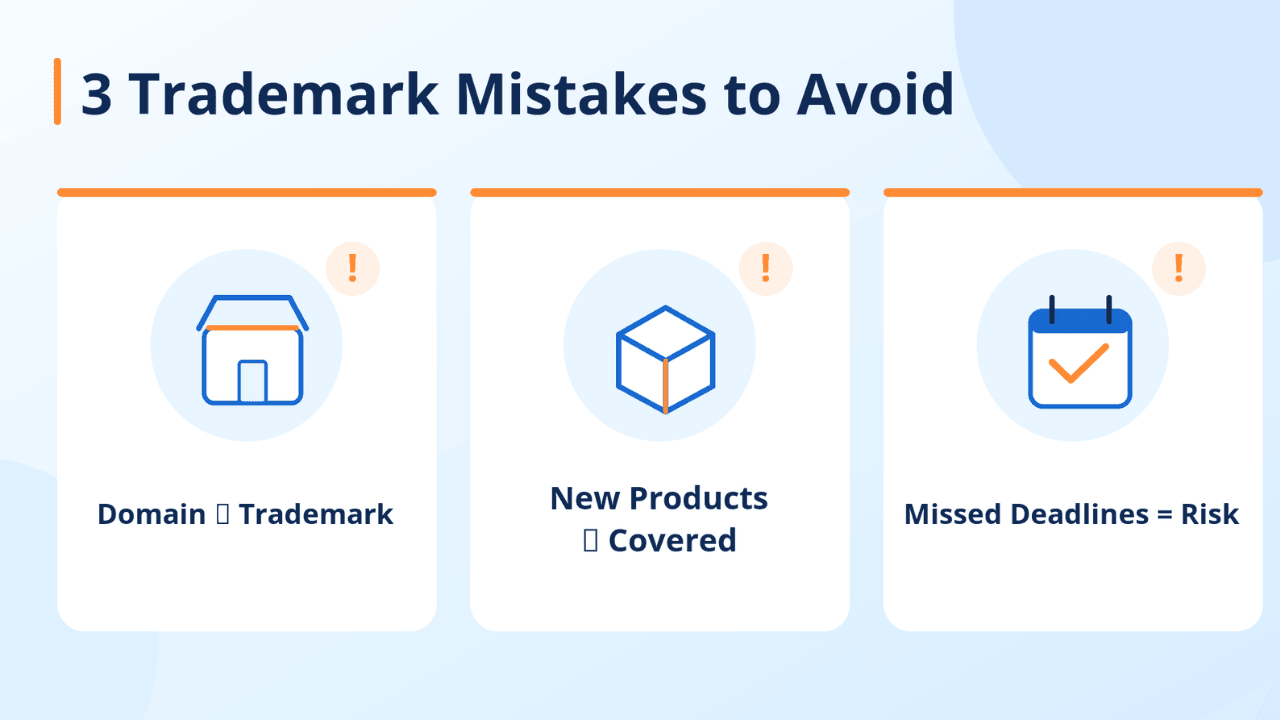
Federal registrations require ongoing maintenance.
For most U.S. registrations, owners must file a declaration of use between the fifth and sixth years after registration. Later maintenance and renewal filings are generally required between the ninth and tenth years and every ten years afterward.
Missing applicable deadlines can result in cancellation or expiration.
The USPTO's registration maintenance guidance explains the requirements and available filing windows.
Rebranding does not remove these obligations for registrations a business intends to maintain.
Conclusion
Rebranding your business in 2027 does not always require a new trademark. The appropriate approach depends on your updated identity, existing registrations, and future business plans. Reviewing these details before launch can help you avoid unnecessary filings and potential conflicts while preserving valuable trademark rights.
If you're preparing a new identity, explore Trademark Engine's trademark registration services to understand your filing options and take an informed next step toward federal protection.
Trademark Engine Editorial Team
Frequently Asked Questions
As of October 2026, the USPTO's base application fee for qualifying Section 1 and 44 filings is $350 per class. Additional fees may apply. Check the official fee schedule before filing in 2027.
Yes. Businesses can generally use ™ to indicate a claimed trademark before federal registration. The ® symbol is reserved for federally registered marks used with the goods or services covered by the registration.
There is no fixed approval timeline. Processing depends on the USPTO's workload, examination findings, possible objections, and additional filing requirements. Review current processing information when planning your launch.
Yes. Another business may submit an application for a similar name, but filing first does not always establish superior trademark rights. Earlier qualifying use and other legal factors may affect priority.
Yes. A slogan may qualify for trademark registration if consumers recognize it as identifying the source of goods or services. Common advertising phrases or purely decorative wording may not qualify.
Get Trademark Tips and Compliance Guidance
Subscribe for updates, insights, and resources that help you stay compliant and grow your mission.